
 E-Paper



‘Next year, we will perform even better,’ says Delhi CM Rekha Gupta
Over 700,000 Ayushman Bharat, Vay Vandana cards issued; ₹45.38 crore disbursed, CM Rekha Gupta told HT.

 Prefer HTon Google


As the Bharatiya Janata Party (BJP)-led Delhi government completes its first year in office on February 20, chief minister Rekha Gupta speaks to Snehil Sinha and Saloni Bhatia about her government’s key achievements, the challenges she faced in her first year, the recent tragic death in Janakpuri, and efforts to tackle air pollution and clean the Yamuna. Edited excerpts:
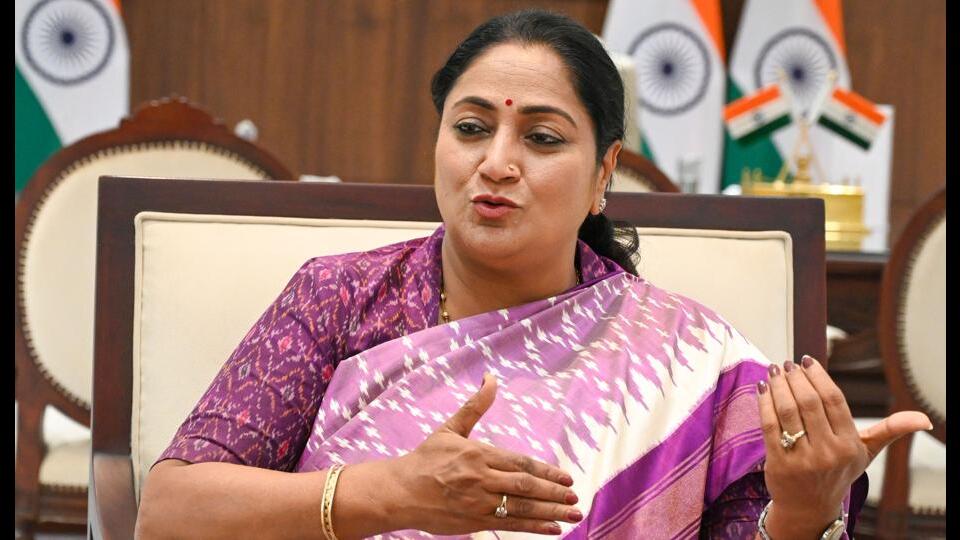
The Delhi government will complete a year on February 20. As you look back at the past year, what have been your biggest achievements?
I feel that in the last year we have taken several steps to improve the quality of life of Delhi’s residents. I will not claim that we achieved everything, but implementing the Ayushman Bharat Yojana and the Vay Vandana Yojana were major milestones. A total of 703,000 Ayushman Bharat and Vay Vandana cards have been issued. Around 200 hospitals have been empanelled under these schemes, and over ₹45.38 crore has been disbursed to beneficiaries.
After a hard day’s work, a labourer or a construction worker deserves a proper meal. Through the launch of Atal Canteens, we are providing nutritious meals at ₹5, and we aim to reach 100,000 people. Currently, we serve about 50,000 people daily. From a humane perspective, this is significant.
Delhi’s electric bus fleet has reached 4,200 – the largest in the country. We are also working to enhance Metro infrastructure and have allocated ₹5,000 crore for Metro projects. Infrastructure development remains a priority.
If you look back, is there anything you think could have been done better?
The first summer, monsoon and winter were challenging. We began preparing for waterlogging as soon as we assumed office. Minto Bridge, a chronic waterlogging spot, has been addressed. The initial months were about assessing issues and finding long-term solutions. We spent a year understanding things. These problems cannot be tackled only when the season arrives.

We undertook extensive desilting — something never done at this scale before. Nearly 200,000 metric tonnes of silt were removed from drains. Next year, we aim to perform even better.
Has the government benefitted from triple-engine governance? Is coordination with the bureaucracy better?
The three-tier system is a privilege, but it also brings 100% responsibility. We are grateful that people entrusted us with it. Administrative work is carried out by the bureaucracy, and they are fully capable. We are giving them space, without interference. We have prioritised transparency, moved to e-filing, and digitised records and files. Transparency and communication are key to a corruption-free government. When such an environment exists, it creates comfort and efficiency.
How has improved Centre-state coordination helped?
The Centre and the Delhi government are now working in sync. We are receiving better support. When the Centre provides direction and assistance on projects such as Yamuna cleaning and pollution control, work progresses smoothly. Blaming other states does not solve problems. Solutions emerge through dialogue and cooperation.
Previous government could only point fingers, and it deliberately stayed away from multiple centrally assisted projects. The Central Road and Infrastructure Fund (CRIF) for infrastructure, National Clean Air Programme (NCAP) funds for pollution, Prime Minister E-drive scheme for electric buses are all low hanging fruits that the Centre provided to all states. The Aam Aadmi Party (AAP) government did not utilise these effectively, which slowed Delhi’s development.
Despite this better coordination and all departments under the Delhi government now, an incident like Janakpuri happened where a young man lost his life due to an uncovered pit and road work. But accountability has still not been fixed. What is the government doing?
This is a very tragic incident. But everyone has seen that our government does not shift blame like the previous government. We have taken full responsibility. An investigation is also underway. Whoever is found guilty will not be spared by our government. We have issued an eight-point directive to all departments detailing mandatory safety measures at construction sites. We have also sought reports on all excavation sites across the city.
What challenges have you faced as a woman leader?
The only challenge I face as a woman leader – which many men may not – is balancing professional and personal responsibilities. I can manage work all day while running the entire state, but at the back of my mind, I also think about my home and whether my children have eaten. That instinct is natural.
By entrusting me with the responsibility of chief minister, Prime Minister Narendra Modi has shown respect to the women of Delhi. He gave me a challenging responsibility and, in doing so, honoured women across the city.
The Mukhyamantri Mahila Samriddhi Yojana was a key poll promise. When will ₹2,500 be rolled out to beneficiaries?
We are working on it, but there are many things that still need to be done. The eligibility criteria are being finalised as we want to ensure that the scheme benefits those who actually need it. We have realised that all welfare schemes are centred around ration cards and the same set of people are getting the benefits. How it spreads and actually reaches those who need it is our focus. Since it is also going to be a continuous scheme, we have to make financial arrangements accordingly. Whatever is implemented here in the national capital should be a model for others and its benefit should reach those who actually require it.
There are complaints that the Delhi government only organised festivals and indulged in photo opportunities, without much development work. What do you say about that?
The Opposition has an issue with our motto of “Vikas Bhi, Virasat Bhi.” Delhi’s greatest strength is its multicultural character. We consider the co-existence of various customs and ethnicities as our assets. Some states have beaches or mountains as their USP; Delhi’s USP is its heritage. People from Rajasthan, Uttar Pradesh, Bihar and Uttarakhand live here – in that sense, Delhi is mini-India.
In the 356 days we have been in power, we have worked every day towards the goal of Viksit Delhi. We have developed a work culture. The gates of Delhi Secretariat were closed for the citizens, but now they come here to seek solutions for their problems. The chief minister is working among people, meets them, stays among them 24x7. They (Opposition) are not able to digest this fact.
How do you see the role of opposition in the last year?
They have been left completely unemployed. They are politically directionless and make statements just for the sake of staying relevant. They give political statements without any accountability. There are two kinds of courts. Their cases, scams are being tried in a court of law. However, there is also janata ki adalat (court of people), which gave its verdict and threw them out of power. The court verdicts are awaited and I feel they will face action for the corruption they did. The AAP received a strong mandate twice – in 2015 and then again in 2020. The question is: what did they deliver? They left Delhi in a dire state.
You referred to “legacy” issues with Delhi’s infrastructure. What are these problems and what has the government done to address these in the last year?
The previous government left behind a legacy of mismanagement and failure to deliver on their promises, leaving Delhi’s infrastructure in shambles. We have spent the past year clearing over 10 years of debts. The Delhi Transport Corporation (DTC)’s losses were nearly equivalent to the government’s annual budget.
Over 186,000 beneficiaries of the previous Ladli scheme were not paid their claims. We identified them and enhanced the scheme under the Lakhpati Bitiya scheme.
Desilting was neglected for years. In the Capital of this country only half the population had water connections. Why did the previous government not expand that? Most colonies do not have sewer connections. These are the kind of backlog in basic civic facilities that we have started work on this year.
During its election campaign, the BJP had attacked AAP over the previous CM residence and said that it would be opened to the public. What is the investigation in the matter?
[Arvind] Kejriwal had built a Sheesh Mahal for himself while leaving the people of Delhi grappling with crumbling basic civic necessities. There are many excesses in the construction of that “house of corruption”. We have still not decided what can be done with the structure and are yet to take a call.
Despite announcements and plans, air pollution levels in the city have continued to increase. Are there serious efforts being made to control pollution or are we limited to announcements?
We have prepared a scientific roadmap with short-, medium- and long-term measures. Automated misting machines have been installed, and regular water sprinkling is underway. Tenders have been floated for dust-free roads with end-to-end paving and greening.
We are also converting our entire bus fleet to electric. Delhi already has the largest electric bus fleet in the country. We are also soon introducing the EV policy that will further encourage EV uptake. Having said that, I have always maintained that pollution is a legacy issue and cannot disappear overnight.
Short-term steps were taken during Chhath for cleaning of Yamuna but the froth has returned. What is being done for the cleaning of Yamuna?
Cleaning the Yamuna remains the government’s top priority. We have stated that it will take three years. I can assure that the people of Delhi will see a better, cleaner Yamuna every year.
We have already procured a WaterMaster dredging machine. We are setting up 35 decentralised sewage treatment plants at the mouth of drains so that sewage and silt is caught before it enters the Yamuna. Additionally, no government ever thought that cow dung from thousands of cattle in the city directly goes into the river. We have set up the city’s first biogas plant and will consistently increase the number.
The government announced the EV policy, excise policy and other schemes. But none of these have rolled out yet. When will these see the light of day?
Our first year was focussed on drafting sound policies. The coming year will focus on implementation. Most of these policies are ready and the EV policy is going to be announced very soon, along with the Saheli pink cards for free travel of women in buses. The excise policy will also be introduced soon after.

Stay updated with all top Cities including, Bengaluru, Delhi, Mumbai and more across India. Stay informed on the latest happenings in World News along with Delhi Election 2025 and Delhi Election Result 2025 Live, New Delhi Election Result Live, Kalkaji Election Result Live at Hindustan Times.


