
 E-Paper



Delhi to get comprehensive road-grid plan within 3-4 months, says Centre
The new master plan represents a shift from Delhi’s earlier model of acquiring large tracts of land to a system of land pooling.

 Prefer HTon Google


The Capital is set to get a comprehensive road-grid plan within months as the Centre moves to implement the city’s new master plan, a senior Union housing and urban affairs ministry official said on Tuesday.
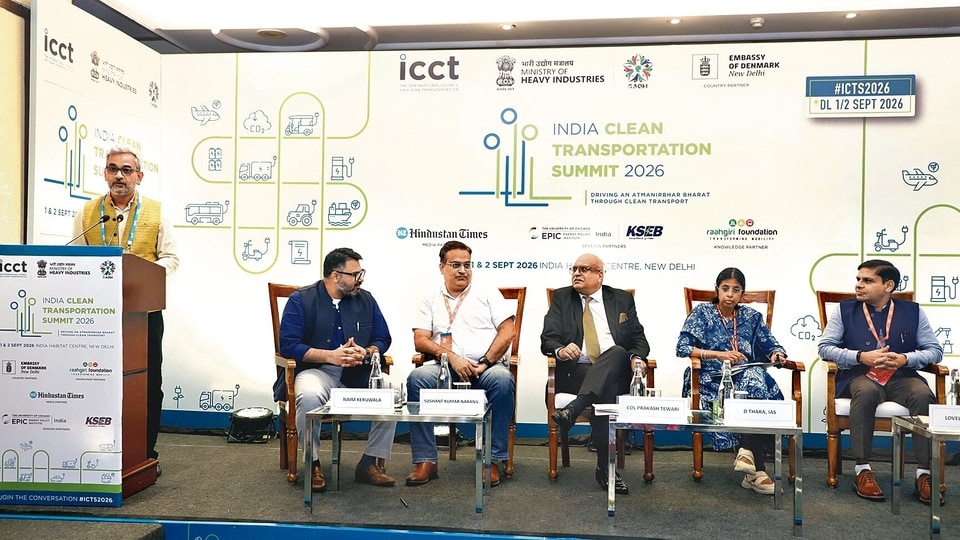
Speaking at a panel discussion at the India Clean Transportation Summit 2026, D Thara, secretary, department of capital development, Union ministry of housing and urban affairs, said: “Within the next three or four months, you will see the complete road network of Delhi on the grid route. Even now, most of it is there, but we will do it.”
She said the new master plan represented a shift from Delhi’s earlier model of acquiring large tracts of land, preparing layouts and then developing infrastructure. She said the city could no longer rely on large-scale acquisition as its primary approach to development.
Also Read I Delhi master plan: FAQs, creatives rolled out for public outreach
“Delhi had the unique thing of earlier getting and acquiring land and doing the layout then, which led to a situation now we cannot acquire so much land,” she said.
Instead, the plan envisages partnership-based development, including land pooling. Under this approach, portions of land are used for roads, utilities, green areas and other infrastructure, while landowners retain developed plots. Thara said the Delhi Development Authority (DDA) would invest in infrastructure such as roads and water supply, while landowners would contribute land needed for infrastructure and reorganisation.
The approach also acknowledges the changing character of the city, she said. Unlike earlier planning models that more rigidly separated residential, commercial and other land uses, market forces have resulted in increasing commercial activity along major roads.
A changing cityscape
The master plan broadly divides Delhi into acquired and planned areas and policy-led development zones. These include town planning schemes, transit-oriented development and low-density development areas.
“What we have done is we have placed density on the metro corridor. We have taken the low density to create a green buffer,” she said.
She said institutional development such as universities, schools and research centres could also come up in low-density areas, reflecting Delhi’s institutional and service-based economy.
Also Read I Delhi hikes solar panel subsidy, free panels for homes using up to 400 units: CM Rekha Gupta
The plan also addresses connectivity between green spaces and walking infrastructure. Thara referred to a proposed park connector network and said the Urban Extension Road was being used as a logistics hub.
“There has to be an understanding that ultimately the city has to operate as a single organism,” Thara said. “It cannot operate in its own ways.”

Stay updated with all top Cities including, Bengaluru, Delhi, Mumbai and more across India. Stay informed on the latest happenings in World News along with Delhi Election 2025 and Delhi Election Result 2025 Live, New Delhi Election Result Live, Kalkaji Election Result Live at Hindustan Times.


