
 E-Paper



Life in a city that can’t breathe
The needle on Delhi’s toxic air has only moved towards the deep red in the past decade, a period that has seen two election cycles.

 Prefer HTon Google


When millions across Delhi vote on February 5 -- 15.5 million are eligible and registered to vote -- a host of electoral issues will run through their minds as they queue up before electronic voting machines: crime, traffic, urban decay, water, power, sanitation will all come into play, as will freebies, which have emerged as the dominant issue in elections across India.
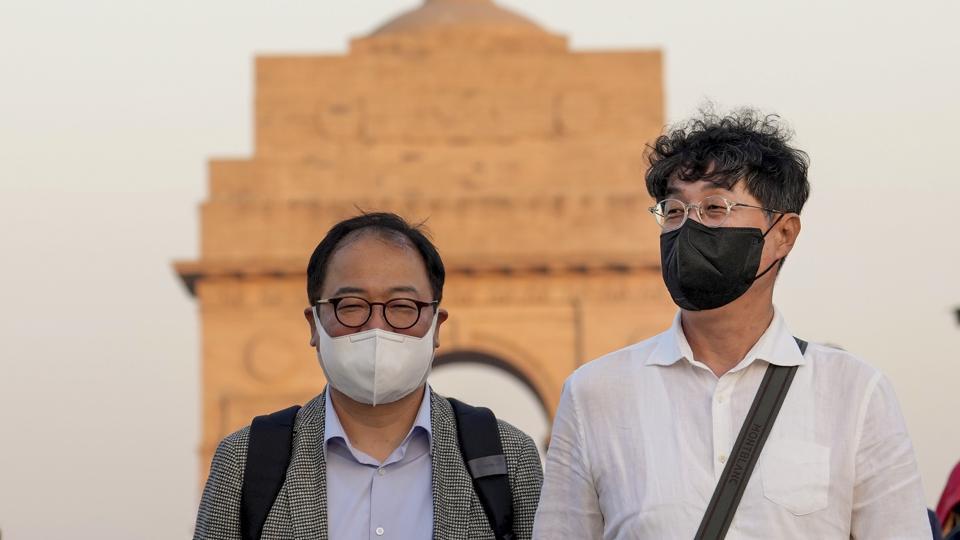
One issue outweighs the rest in terms of the effect it has on the lives of the city-state’s residents, and the reputational damage it inflicts, year after year, on the Capital of a country that will shortly be the world’s third largest economy.
Strangely, it is an issue that seems relevant only to the vocal middle class -- although it affects the poor even more -- and, consequently, is one that is not of concern to most political parties.
The needle on Delhi’s toxic air has only moved towards the deep red in the past decade, a period that has seen two election cycles.
It exacerbates illnesses in elderly people and those with chronic diseases; it stunts growth in newborns and children and gnaws away at their immunity; it even affects the young and healthy in insidious ways that researchers and experts are still to fully grasp.
Yet, voters are unlikely to hold their breath over an issue that leaves a deep imprint on every inhabitant of or visitor to this city of many wonders. Pollution is also absent as an electoral factor in the city’s polity – the Aam Aadmi Party (AAP), Bharatiya Janata Party (BJP) and Congress have all largely steered clear of offering any remedies for the crisis.
The mayhem is year-long and ever-present – Delhi’s average daily air quality index (AQI) last year was 209, a level at which most countries declare public health emergencies. Then there are dramatic spikes that manifest around early winter, fuelled by smoke from farm fires in upwind Punjab that drive the AQI into the “severe zone”, a number above 400. At that point, every breath is a death sentence.
So where does Delhi’s pollution problem stem from and why is there no reprieve, year after year? The answer is four-fold. One, there’s painfully little data on source apportionment, so Delhi has little idea what’s causing the pollution. Two, authorities have no long-term plan to snuff out bad air and instead turn to harried quick-fixes and snake-oil cures once pollution gauges turn severe. Three, Delhi’s topography acts as a sink for bad air, requiring structural and behavioural fixes. And finally, nightmare meteorological conditions compound the chaos.
Cloud over the data
A major hurdle for Delhi in its seemingly never-ending joust with bad air is that the city doesn’t quite know what it is fighting, on a granular level. A raft of studies, systems and models have for years tried and failed to pinpoint the sources of Delhi’s pollution.
Experts have stressed the importance of accurate, real-time and clean data to formulate targeted interventions. But that’s not been the case with Delhi for a while now.
For instance, the Delhi government in February 2023 cast aspersions on the reliability of a source-apportionment study by the Indian Institute of Technology, Kanpur that was started in November 2022. It then shelved a contract with the institution in 2023.
In August 2024, the government asked the Delhi Pollution Control Committee to take the equipment used in that study. But the agency, in turn, struggled to find a suitable institute to operate the machinery, which has been inactive since November.
A few years prior, the government junked a programme with Washington University in 2020 citing “unsatisfactory results”. Data from that study was never made public.
This means that Delhi is left with only one model – the Decision Support System (DSS) under the Union ministry of earth sciences, which can only “estimate” the contribution of pollution sources and relies on a three-year old emissions inventory.
“It is clear Delhi needs more such models in place for greater transparency. It is not only important to operationalise Delhi’s real-time source apportionment study again, but make sure the data we get is accurate and can assist decision-making.” said Sunil Dahiya, founder, Envirocatalysts.
What plan? What enforcement?
The absence of data notwithstanding, Delhi’s residents are held back by the lack of a long-term, umbrella plan designed to tackle a problem that persists throughout the year and recurs like clockwork.
Agencies such as the Commission for Air Quality Management (CAQM) in the National Capital Region (NCR) formed with the express purpose of quelling the pollution crisis largely ignore the AQI for much of the year and only react, with short-sighted solutions, when the number starts ticking upwards in October.
The Capital’s poor air is supercharged by farm fires in October and dipping temperatures in January, the two months when the city’s air is routinely among the worst in the world – but the air is objectively toxic for most of the remaining 10 months as well. However, agencies have no answer for any of these situations.
For instance, the Graded Response Action Plan (Grap) was redesigned in 2022 to make the response more proactive and less reactive. Yet, CAQM routinely rolls out stages of the plan based on the day’s AQI. This not only takes residents and local authorities by surprise, but also – given that the AQI is a volatile number that evolves every hour – defeats the purpose of predictable, proactive measures meant to keep pollution from spiralling out of control rather than responding to it.
And even when a plan is put in place, enforcement on the ground is largely absent and entirely unscientific. For instance, bans on manual road-dust sweeping, as prescribed under Grap stages II and above, are barely ever enforced. Curbs on schools and limits on older vehicles fly under the radar just easily. That these bans come and go every few days doesn’t help.
Professor SN Tripathi from IIT Kanpur, who is a part of the steering committee of the National Clean Air Programme (NCAP), said that year-round action, particularly on the vehicular front is important. “We need to promote public transport and so improving that is essential, if we want private vehicles and congestion off Delhi’s roads. Locally, action against dust is also important and year-round planning is needed, particularly for troublesome stretches,” he said, adding even though DSS is being implemented in NCR, it is based on a US-model.
“Foreign models, if at all used, need to be adjusted based on our climatological conditions. Therefore, it is important to have an indigenised model,” he added.
Delhi’s dented design
The Capital sprawls across an ancient plain between the towering Himalayas and the parched Thar desert, sitting like a shallow bowl into which the emissions of its 20 million inhabitants and hundreds of industries steadily collect.
The city once had a natural defence , the Aravalli Range to its southwest, which acted as a barrier against desert winds. But decades of illegal mining and deforestation have steadily eroded this protective shield. It cannot be rebuilt, but it is important to protect what remains.
Even more significant is Delhi’s location within the Indo-Gangetic plains, one of the world’s most densely populated river basins. Here, the Capital finds itself surrounded by vast, productive farmlands where crop residue burning is common practice. This location proves particularly treacherous from an atmospheric perspective: cold northerly winds from the Himalayas and westerly winds from Rajasthan, Pakistan, and Iran compete for dominance throughout winter.
These conflicting air masses often stagnate, their effect amplified by a winter phenomenon known as thermal inversion.
This lethal combination of geography, topography and atmospheric conditions transforms Delhi, especially in winter, into a chamber of toxic air -- one that traps pollutants not just from its own inhabitants, but from millions more in the surrounding regions.
The weather mess
The national capital is held hostage by the weather, which catalyses the ill-effects of its unfortunate topographic location and the administrative lethargy.
After the monsoon makes its way out, long-range transport winds (that blow several metres high in the atmosphere) switch direction and blow in from the northwest, just as farmers in Punjab, and Haryana to a lesser degree, begin setting their paddy stalks alight ahead of the winter crop.
As large swathes of farmland across north India go up in flames, these northwesterly winds sweep smoke from these blazes into Delhi, crusting the Capital in a dark smog of microscopic chemicals and soot.
There are no breathers after the fires stop. Come late December and January, the dark-red AQI, once fuelled by farm fires, is instead driven upwards by dipping temperatures. The atmospheric cold traps in local pollutants, largely from road dust, vehicular pollution and small bonfires, giving Delhi another tryst with hazardous air, albeit one that isn’t as visually obvious.
“Delhi is certainly not helped by its location and geography. It receives northwesterly winds from Punjab and Haryana where farm fires occur; has a naturally dusty terrain and to make matters worse, winds can die down in the region in the winter months, which traps pollutants over the capital, which is practically gridlocked by surrounding pollution sources,” said Dipankar Saha, former head of CPCB’s air laboratory.
The absence of political action
Delhi’s most pressing troubles, from crime to traffic, have at one point or another been addressed by societal movements and shifts, which in turn translated into some form of legislative action. But this public anger has largely been missing from societal and electoral discourse.
Even as political leaders swiftly trade barbs over a range of issues, pollution and the climate have still not been able to find a meaningful way into this discourse.



Stay updated with all top Cities including, Bengaluru, Delhi, Mumbai and more across India. Stay informed on the latest happenings in World News along with Delhi Election 2025 and Delhi Election Result 2025 Live, New Delhi Election Result Live, Kalkaji Election Result Live at Hindustan Times.


