
 E-Paper



No uniformity in uniform rules: Plea in Supreme Court by Delhi auto, taxi drivers
The auto, taxi drivers said that the incongruence of laws was proving to be a costly affair with the Delhi Police imposing a penalty of ₹10,000 for every violation


A trade union of auto and taxi drivers in Delhi have approached the Supreme Court to seek clarity on the colour of their uniform pointing out to the confusion created by different sets of law operating on ground.
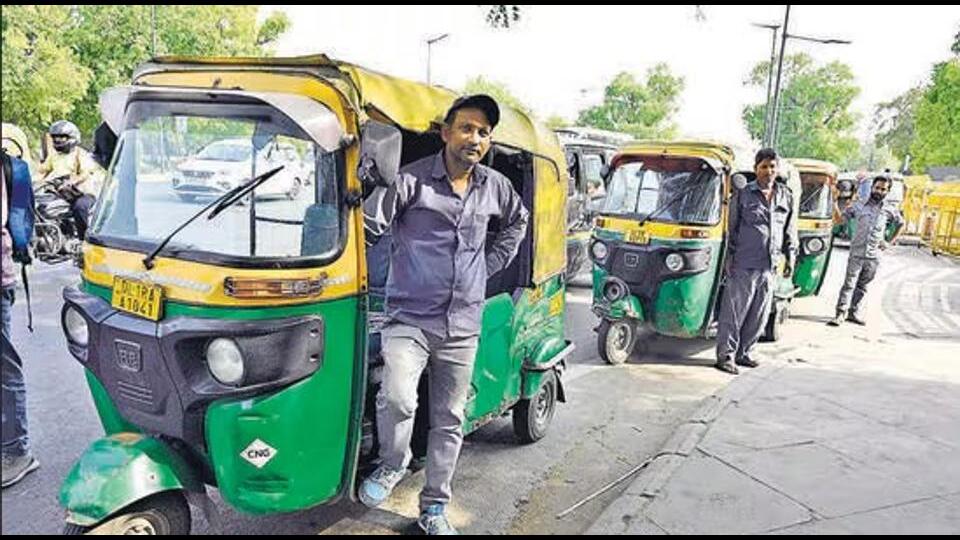
A law enacted by Parliament requires them to dress in khakhi attire while the permit regulations are fixed by the state transport authority prescribes grey or white dress.
The union represented under the banner of Chaalak Shakti got initial success on Friday when a bench of the top court, sitting during the partial court working days, agreed to examine their grievance as they complained that the incongruence of laws was proving to be a costly affair with the Delhi Police imposing a penalty of ₹10,000 for every violation.
A bench of justices PS Narasimha and R Mahadevan issued notice to the Delhi government, the Centre and the Delhi police to examine the conflict of laws. This is their second shot at getting justice as the drivers’ body had initially approached the Delhi high court in 2021 but met with a dismissal order in July 2023. Against this order, the union, claiming to have 1,300 auto and taxi drivers under its fold, have appealed to the top court.
The plea before the top court filed by advocate Shruti Bisht presented the two provisions of law requiring court’s consideration. Rule 7 of the Delhi Motor Vehicle (DMV) Rules, 1993, enacted under a central Act – Motor Vehicles Act, 1988 states that the driver of a public service vehicle, other than driver of State Transport Undertaking, while on duty shall wear khaki uniform with a name plate in Hindi affixed on it.
At the same time, permit conditions of May 23, 2013 issued by the Deputy Commissioner, Auto Rickshaw Unit under the Delhi state transport authority, prescribes that the auto driver shall wear uniform in grey colour along with a Public Service Vehicle badge on the left side of the uniform.
For taxi drivers, by a separate order of June 8, 1989, permit conditions have been issued under Section 88(11) of the Motor Vehicles Act prescribing that drivers of tourist vehicles shall wear white uniform in summers and blue or grey uniform in winters, specifying loose trousers and a bush shirt or coat with two pockets.
Bisht said that the MV Act being a Parliament-enacted law applies to the entire country, including Delhi, and is not a state government rule. This meant that drivers should not be penalised for wearing khaki. She argued that the Delhi government rule is “repugnant” to the central law and should be set aside. Moreover, different shades of khaki and grey are available in the market with the rules failing to specify the fabric colour or whether pant-shirt or kurta-pyjama is to be worn.
The bench, on Friday, observed, “You are a service provider for transportation. A transport provider is to be bound by discipline and uniformity. The uniform is part of that regulation. We will issue a notice.”
However, the question remains, which uniform. The Delhi high court, while examining the issue, said, “The purpose of prescribing a uniform is for identification. The fact that there are different shades available in the same colour and, therefore, this leads to vagueness and is manifestly arbitrary also cannot be accepted.”
The Delhi government had argued in the high court that Section 74 of the MV Act gives power to the Regional Transport Authority to grant a contract carriage permit and it can lay down conditions for grant of such permits. It cited Section 88 of the MV Act, under which the Regional Transport Authority can grant permits in respect of tourist vehicles valid for more than one state. Under these provisions, the 1989 order prescribing regulations for tourist vehicles was issued, it said.
The state also justified Rule 7 of the DMV Rules being a valid piece of legislation enacted by the Delhi assembly in exercise of the powers conferred under Section 28(2)(d) of the MV Act that deals with permit for transport vehicles plying within the state. It explained that the two rules can coexist as Section 28 involves permits for transport vehicles that ply within Delhi while Section 88 deals with permits issued for transport vehicles plying in more than one state.
The high court, thus concluded, “The competence of the central government to issue notifications under Section 88 of the MV Act for tourist vehicles and the competence of state government to lay down rules for uniform to be worn by drivers of transport vehicles in Delhi by exercising its powers under Section 28 of the DMV Rules cannot be questioned.”
It further held, “Rule 7 of the DMV Rules only prescribes that a driver shall wear a khaki uniform with a name plate. Similarly, an order dated June 8, 1989 issued under Section 88(11) of the MV Act prescribes for the colour of a uniform for a driver of tourist vehicle for summer and winter months.”
While the uniform issue is the main highlight of the petition, the trade union has also questioned the steep penalty of ₹10,000 for not wearing the prescribed uniform as per the Regional Transport Authority regulations. The union argued that for auto drivers, who earn a paltry sum daily, such a fine is disproportionate. “Nobody has ever got killed because a driver was not wearing the uniform,” it said, while comparing with over speeding, a major cause for road fatalities, punishable with a maximum fine of ₹2,000 for a light motor vehicle driver.
The petition even hinted at doing away completely with a fixed uniform regulation. With the advent of cab aggregators, the petition said, “Instead of detailing the specifications of the uniforms, the need of the hour is to make them easy and rather leave those to the aggregator-companies, their regular corporate clients or individual drivers or their unions.”

Stay updated with all top Cities including, Bengaluru, Delhi, Mumbai and more across India. Stay informed on the latest happenings in World News along with Delhi Election 2025 and Delhi Election Result 2025 Live, New Delhi Election Result Live, Kalkaji Election Result Live at Hindustan Times.


