
 E-Paper



Pandemic, air pollution kept Delhi schools on edge, students at bay in 2021
Schools have been shut four times since April this year – twice owing to concerns over Covid-19, and twice because of hazardous pollution levels.

 Prefer HTon Google


With the Delhi government announcing the closure of schools as part of curbs on account of rising Covid cases, schools in the Capital have been thrust into uncertainty once again. Schools have been shut four times since April this year – twice owing to concerns over Covid-19, and twice because of hazardous pollution levels.
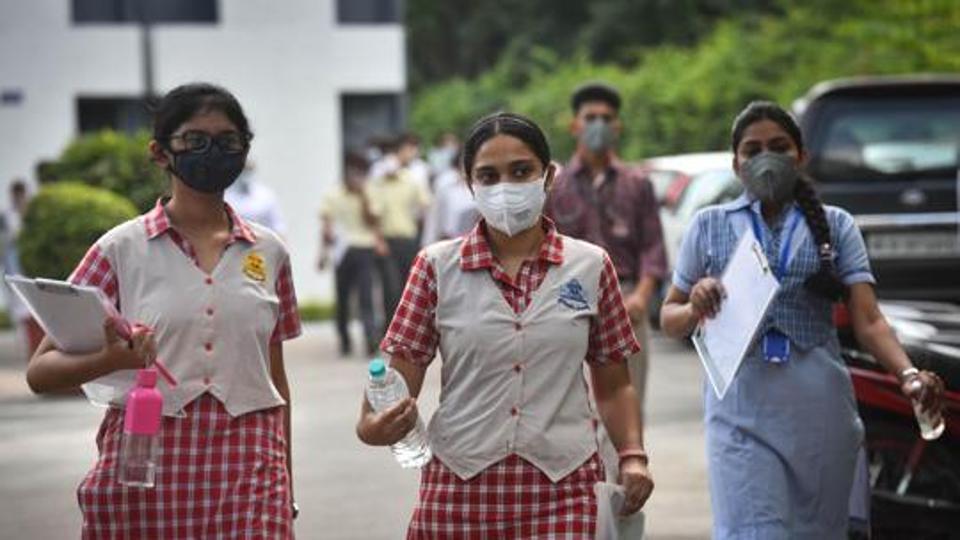
Educators and experts say the prolonged and repeated closures have affected teaching and learning for another year in a row, and adversely impacted the mental development of children, who need peer-to-peer interaction for all-round development.
Also Read | Delhi schools to be closed after ‘Yellow Alert’ curbs imposed
Although online classes continued when schools were shut, many students were deprived of learning due to issues ranging from affordability to accessibility, bringing to fore the digital divide in city schools.
Sudha Acharya, the chairperson of the National Progressive Schools’ Conference, which has over 120 private Delhi schools as its members, said though schools were able to leverage technology for better outreach among parents and students, the need for regular in-person classes was still evident. “There was a lot of uncertainty throughout the year. We couldn’t plan anything properly due to frequent closures. However, on days when children were back in school, the school was lively as before. But the happiness was short-lived every time since we were asked to close soon after we reopened,” said Acharya.
She said that frequent closures and the on-off nature of in-person classes played havoc on the mental health of children who were anxious and uncertain about the future. “The physical and mental well-being of children has been affected since the pandemic began. While we provide counselling, one cannot dispute the fact that online classes can never be a replacement for in-person interactions,” said Acharya, who is also the principal of ITL Public School, Dwarka.
Also Read | Delhi govt readying jabs plan for children aged 15-18 in the city
Schools were first shut in March last year when a nationwide lockdown was imposed to curb the spread of Covid-19. It reopened for classes 10 and 12 for practical work and board preparation in January 2021 and classes 9 and 11 in February. However, barely two months later, schools were once again asked to shut down on April 9 amid another Covid spike. On September 1, schools reopened for students in classes 9-12 and in-person classes were resumed for students of all grades on November 1.
Subsequently, in a series of closures on account of hazardous pollution levels, schools closed on November 13, reopened on November 29, and against shut down on December 2. The Directorate of Education (DoE) allowed schools to restart in-person classes for classes 6 and above from December 18 after the Commission for Air Quality Management (CAQM) allowed schools to reopen. The Directorate of Education (DoE) issued an order on Tuesday shutting down schools “till further orders”.
Administrators pointed out that while Covid concerns were valid, closing schools is not the solution to Delhi’s pollution problem. They urged the government to hold dialogues with stakeholders to come up with a sustainable solution.
“For the last 4-5 years, we have seen the prevalence of peak pollution levels between November and January. It’s a recurring problem but there is no solution in sight. It’s not sustainable to close schools on and off in line with the AQI levels,” said Acharya.
Noting that people continued to venture out for other chores even as schools were closed on account of various reasons throughout the year, Tania Joshi, principal of The Indian School, said the uncertainty around closure and resumption of schools was adversely impacting children, especially younger ones, who needed social and emotional interactions with peers. “Parents keep asking us about the way forward every time schools are asked to shut down. We can’t do much except wait and watch. The uncertainty affects everyone from children to teachers. Children are not interacting the way they did earlier. Students who used to be interactive earlier are now unsure and not confident in online classes. They would have responded differently had they got the chance to study in school along with their peers in the school environment,” said Joshi.
Experts also raised concerns over the lack of peer-to-peer interaction among children and advocate for innovative ways of tackling the challenges that the pandemic has brought forth.
Anubha Rajesh, chair professor at Jamia Millia Islamia’s Centre for Early Childhood Development and Research, said that since the pandemic was likely to go on for a few years, it was necessary to strike a balance between online and offline teaching.
“Online teaching is not the solution but only an alternative in the prevailing situation. We have to focus on online capacity building of teachers as well as sustain peer interaction among students. We need to build small groups between students for the improvement of their psychological and social well-being through sustained engagement so that they have support. However, once the situation improves, the offline mode of learning is the best,” said Rajesh.
Most students said they were eagerly waiting for schools to reopen even as parents said that the concerns surrounding pollution and Covid-19 are hard to ignore.
Mohammad Adil (16), a Class 11 student at School of Specialised Excellence in Kalkaji, said, “Online classes cannot replace the classroom experience. Even though we have online doubt clearing sessions, it’s much easier to understand the concepts when we are in school.”


