
 E-Paper



Shorebird not often seen in Delhi-NCR spotted in Gurugram
The wader bird, also known as the great stone-curlew, was categorised as “near threatened” by International Union for Conservation of Nature

 Prefer HTon Google


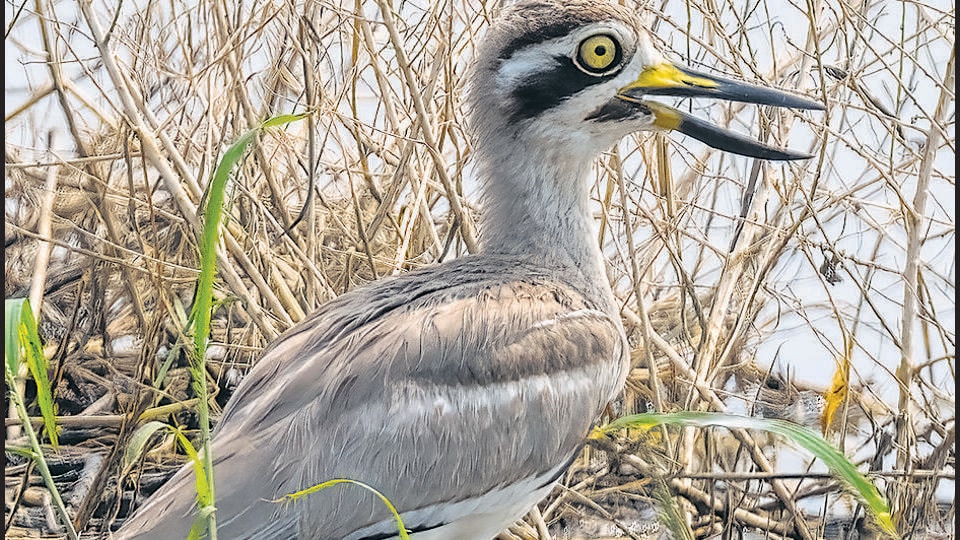
Birders in Gurugram spotted a large resident shorebird — the great thick-knee (Esacus recurvirostris) — which was seen in the National Capital Region (NCR) after nearly 20 years, according to experts. The last confirmed sighting of the bird in Delhi-NCR was reported in 2004, along the Yamuna floodplains. While it is uncommon in NCR, it is commonly seen in other parts of India, they said.
Read here: Man found with carcass of Sarus crane in Greater Noida, held
The wader bird, also known as the great stone-curlew, was categorised as “near threatened” by International Union for Conservation of Nature (IUCN). It is found mainly in tropical South-Asian countries like India, Pakistan, Sri Lanka, and Bangladesh and parts of South-East Asia like China, Thailand, Cambodia, Laos, and Vietnam.
The bird was first spotted in the Chandu Budhera water treatment plant area in Haryana, adjoining the Najafgarh lake on August 18 at 6.30pm by three birders — Gautam Kashyap, Shivam Agarwal, and Mohit Mehta.
“Gautam first spotted the bird and showed us. I have seen it several times before in Uttarakhand, parts of Uttar Pradesh, and also near Pong Dam in Dharamshala. It moved around us and kept going towards the road for about an hour before it finally sat on the bund. I have usually seen it in pairs so it may have wandered off,” said Mehta.
The wader has a dark mask, pale eyes, and a large, heavy, bill along with flashing black and white wingtips. Experts said that the bird used to be common around Delhi till around 30 years ago before their numbers started dwindling.
“The bird itself is not rare but is a “near threatened” species now that sparks interest. Even now, this bird can be seen around the river in Haryana, UP, and Uttarakhand along the banks of the Ganga. It likes large freshwater areas and sandy stony banks. It really likes clean water, which may be a reason that it is not seen around the dirty Yamuna anymore,” said KB Singh, founder of Delhi Birders Group.
Read here: World Nature Conservation Day: Delhi’s eco-warriors hold their swords high
“The bird is a resident breeder in Western UP and Rajasthan along the Chambal river. The heavy rainfall and flood conditions this year could have caused the bird to wander off,” said birder Nikhil Devasar.


