
 E-Paper


Ridge: Experts raise dust, ecology fears as govt plan’s clearing of kikar trees
New Delhi:Large tracts of the Central Ridge forest in Delhi are being cleared of trees and vegetation as part of the government’s plan to remove the invasive vilayati kikar (Prosopis juliflora) and develop themed forests, drawing criticism from environmental experts and activists who warn that the exercise could damage the fragile ecosystem and worsen dust pollution

 Prefer HTon Google


New Delhi:
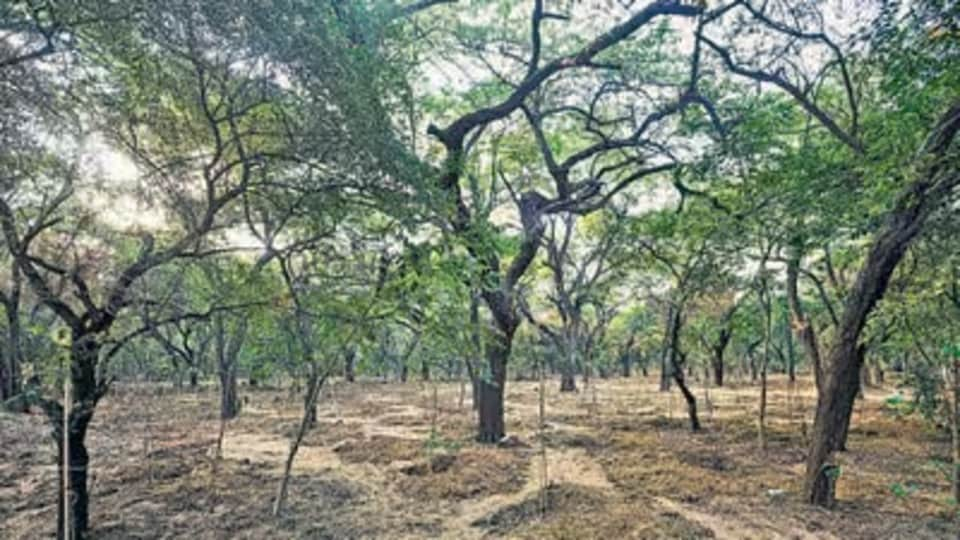
Large tracts of the Central Ridge forest in Delhi are being cleared of trees and vegetation as part of the government’s plan to remove the invasive vilayati kikar (Prosopis juliflora) and develop themed forests, drawing criticism from environmental experts and activists who warn that the exercise could damage the fragile ecosystem and worsen dust pollution.
During a spot check on Wednesday, HT found large patches of previously dense forest along Sardar Patel Marg stripped of vegetation, with pipelines being laid across parts of the cleared land.
The Supreme Court in September allowed the Delhi government to undertake restoration work in the Central Ridge, including the removal of more than 13,000 invasive trees across 70 hectares and their replacement with indigenous species.
However, ecological restoration practitioner and author Pradip Krishen questioned the manner in which the work was being carried out. “The government has cleared huge tracts of forest on the Central Ridge with earth-movers in the name of restoration, and we are greatly concerned because nothing it is doing bears any resemblance to ecological restoration,” he said.
He called the plantation plan unwise and warned that it could destroy the Ridge forest. “All of this loose, churned-up soil is going to cause a big spike in dust in Delhi this winter. All those pipelines you see are because the forest department is planting unsuitable, thirsty trees that do not belong to this ecosystem and will need to be kept alive with irrigation,” he added.
HT had reported in March that the government proposed creating a series of themed plantations, or “special vans”, in pockets of the Central and South Ridge. Officials had said the initiative aimed to enhance green cover by combining ecological restoration with cultural and traditional concepts, while removing invasive species such as vilayati kikar.
Environmental activist Bhavreen Kandhari alleged that the exercise had resulted in the removal of native trees, shrubs and creepers along with the invasive species.
“Native trees, shrubs, ground vegetation and the living topsoil that sustains the forest ecosystem have been clearly damaged. Heavy machinery and excavation have exposed and disturbed the soil, creating the very conditions for dust to become airborne,” she said.
“At a time when Delhi is struggling to breathe, destroying natural vegetation and disturbing forest soil is ecological mismanagement, not restoration. A forest is not a canvas for themed gardens or landscaping projects. We cannot fight Delhi’s air pollution by destroying one of its most important and last natural lungs — the Ridge,” Kandhari added.
Environmental conservation organisation Delhi Grasshoppers also questioned why tree removal and vegetation clearing were continuing even as restrictions were being imposed under the Graded Response Action Plan (GRAP) to control pollution.
It pointed out that measures included curbs on non-conforming vehicles entering Delhi, open waste burning and construction activity, while clearing vegetation in the Central Ridge remained unrestricted. The organisation alleged that the forest department’s activities were adding to dust and particulate matter in the air.
The restoration plan has faced criticism from activists over the past year and has also been challenged legally.
On September 18, a Supreme Court bench headed by Chief Justice of India Surya Kant allowed the Delhi government’s forest and wildlife department to proceed with the work after petitioners had sought to stall it in the Delhi High Court. The department had approached the top court citing the limited plantation window in September.
The bench directed that the work be carried out in accordance with the Delhi Eco-restoration Plan 2026-30, prepared by the Forest Research Institute (FRI), Dehradun, and under the supervision of the Ridge Management Board.
A forest department official said the replacement of vilayati kikar was being undertaken in accordance with the department’s working plan, released earlier this year and valid until 2036-37, which lays down measures to tackle invasive species.
Krishen, however, raised concerns about the methods being used, including the alleged use of toxic chemicals during planting, which he said could kill soil microorganisms and insect life. He also questioned the planting of ornamental species in closely spaced rows and proposals for gaushalas, Miyawaki forests and bonsai gardens in the Ridge. He said the work was taking place behind locked gates, with the public unable to see the extent of the changes.

Stay updated with all top Cities including, Bengaluru, Delhi, Mumbai and more across India. Stay informed on the latest happenings in World News along with Delhi Election 2025 and Delhi Election Result 2025 Live, New Delhi Election Result Live, Kalkaji Election Result Live at Hindustan Times.


