
 E-Paper



Union minister meets Delhi CM: Plan to cut NCR pollution by 15-20% by 2027
The widespread deployment of mechanised, non-diesel road-sweeping machines and handheld vacuum cleaners for smaller roads was also discussed.

 Prefer HTon Google


A high-level review meeting on air pollution in the National Capital Region (NCR), chaired by Union environment minister Bhupender Yadav on Monday, culminated in the announcement of a new scientific study to pinpoint pollution sources and a series of targeted measures aimed at improving air quality by 15-20% by the end of 2026.
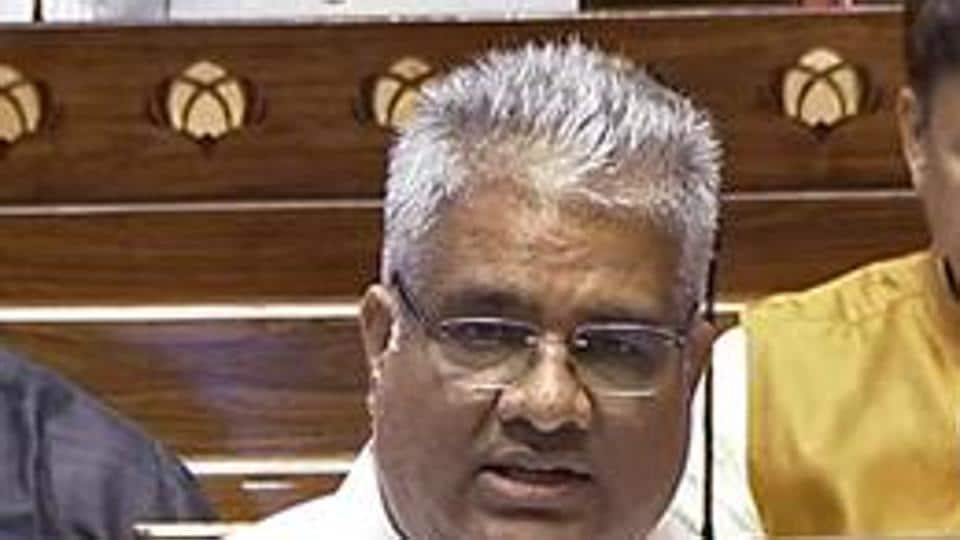
The meeting, attended by Delhi chief minister Rekha Gupta, Delhi environment minister Manjinder Singh Sirsa, and senior officials, assessed Delhi’s action plan under the Centre’s annual review mechanism.
A key outcome of the meeting was the launch of a comprehensive source apportionment study beginning January 2026. The study, which is already underway, is being conducted by premier institutions including The Energy and Resources Institute (Teri), IIT-Delhi, IITM Pune, and Automotive Research Association of India (Arai) to scientifically identify the contributing sources of pollution across the Delhi-NCR airshed, enabling more targeted interventions, according to a statement by the Union ministry of environment, forest and climate change (MoEFCC).
Delhi last conducted source apportionment studies in 2016 and 2018 — by IIT Kanpur and TERI, respectively, however, the data is fairly old. In 2021, the Delhi government suspended a study by Washington University before its data was made public, citing “unsatisfactory” results. The work was reassigned to IIT Kanpur the same year, but that two-year study ended in November 2023 with the government again dissatisfied with methodologies and results. No replacement system has been established since then.
Yadav emphasised during the meeting that pollution in the region is driven by both human activity and meteorological factors, necessitating sustained policy measures over quick fixes. “Long-term policy interventions, rather than quick fixes, were flagged as essential,” an official present at the meeting said.
The meeting dedicated significant attention to vehicular emissions, a major contributor to pollution in NCR, the official cited above said. Plans were discussed to implement smart traffic management at 62 identified congestion hotspots.
Proposed measures also include strict action against polluting vehicles, a special registration drive, installation of Automatic Number Plate Recognition (ANPR) systems at border points, and exploring staggered office timings. Officials also reviewed strategies to incentivise electric vehicles, expand charging infrastructure, and implement a uniform vehicle registration policy for NCR.
Recognising the need to reduce private vehicle dependency, strengthening public transport and last-mile connectivity was flagged as critical. “A pilot project to improve last-mile connectivity at 10 major Delhi metro stations through the integration of e-autos, bike taxis, and feeder cabs is slated for launch by January 31, 2026,” the official said.
Officials stated that orders have been placed for 3,350 electric buses as part of a larger plan to induct 14,000 buses, which will be integrated with the metro network.
On industrial pollution, officials noted that 227 of 240 industrial estates in NCR have switched to cleaner Piped Natural Gas (PNG). However, unplanned industrial activity outside designated zones remains a challenge.
Yadav, according to the official cited above, directed strict action, including sealing, against illegally operating units. The Central Pollution Control Board (CPCB) has issued notices to 88 units lacking mandatory online continuous emission monitoring systems, with closure actions slated to begin January 23, 2026.
“On road dust and PM10 pollution, the minister stressed end-to-end paving, plantation of local shrub varieties in a mission mode and greening drives involving youth groups and civic bodies,” the official said, adding the Delhi government has said it plans to redevelop over 3,300 km of roads in the coming year, with dust control and traffic management built into execution.
The widespread deployment of mechanised, non-diesel road-sweeping machines and handheld vacuum cleaners for smaller roads was also discussed.
Construction and Demolition (C&D) waste management was another focus, with directives to designate C&D waste sites, halt demolition during peak pollution periods, and partner with recycler associations. A C&D waste processing plant at Tehkhand is expected to become operational this year.
The meeting also reviewed progress on legacy waste remediation at the Okhla, Bhalswa, and Ghazipur landfill sites, among others, officials said.


Stay updated with all top Cities including, Bengaluru, Delhi, Mumbai and more across India. Stay informed on the latest happenings in World News along with Delhi Election 2025 and Delhi Election Result 2025 Live, New Delhi Election Result Live, Kalkaji Election Result Live at Hindustan Times.


