
 E-Paper



Delhi to begin production of stubble decomposing solution today
Beginning Tuesday, Delhi is set to start large-scale preparation of a biochemical solution, a new technology that decomposes crop stubble so that it doesn’t need to be burnt.

 Prefer HTon Google


Beginning Tuesday, Delhi is set to start large-scale preparation of a biochemical solution, a new technology that decomposes crop stubble so that it doesn’t need to be burnt. It could prove to be a solution for farmers who otherwise end up burning paddy stubble and causing air pollution during the winter. The solution will be ready within 3-4 days and the first set of trials could be expected over the weekend, said government officials.
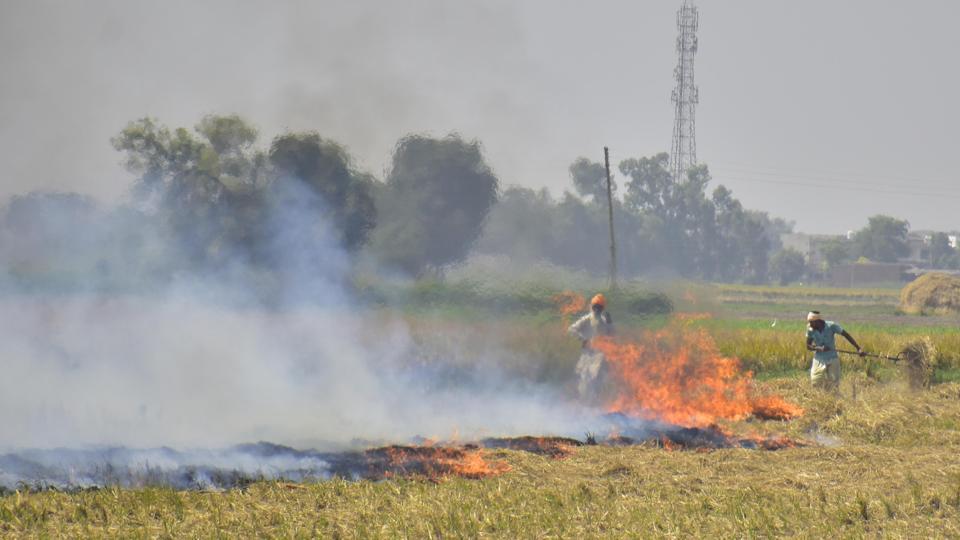
As per Delhi government, at least 800 hectares of farmland in Delhi’s is under cultivation where crop stubble is burnt every year. Delhi chief minister Arvind Kejriwal on Monday while launching a mega campaign against pollution said that a centralised system to produce anti-stubble burning bio-chemicals has been set up at Najafgarh’s Kharkhari Nahar village, under the supervision of scientists from the Indian Agricultural Research Institute (IARI), Pusa, Delhi. The plant will become operational on Tuesday and will be inspected by the CM.
“Production of chemicals will start from October 6 at 400 different camps here under the supervision of IARI scientists, who have developed the technology. Within a few days of starting production, the first round of chemicals will be ready. Based on the demand, we will spray the chemical through tractors at the farm fields,” said Kejriwal during a press conference.
If the experiment is successful this year, the CM said, he will request neighbouring states like Haryana and Punjab to also adopt this strategy.
Air pollution in Delhi spikes every winter, starting October when calmer winds and stagnant weather conditions do not allow dispersion of pollutants. This, coupled with stubble burning in the neighbouring states of Punjab and Haryana, contributes to up to 40% of pollutants according to government data.
Also Read | Farm fires growing in Punjab, plumes of smoke seen over Delhi in satellite images
Last week Delhi environment minister Gopal Rai had said that once the solution is sprayed over the stubble, it will take at least 15 days for it to decompose and convert into manure after which farmers can treat the fields with it.
An IARI scientist, who did not wish to be named, said that the solution decomposes into fertiliser over 20 days of being sprayed and can be used by farmers in the fields.
However, farmers in the city said that the government has so far not started any awareness campaign about the new technology. Many of them also raised concerns over the long window of the chemical decomposing into manure, which may delay sowing. The window between the harvest of paddy and sowing of rabi crop is just about a week, the farmers said.
“I have a 35-acre farm where I grow both paddy and rabi crops. The varieties grown in Delhi are harvested around the second week of November, after which there is just one week left for us to sow rabi crop. If we use the solution, it will delay the sowing while the long gap will also take away the moisture from the field. I don’t know how feasible this technology will be,” said Sukhbir Dagar, a farmer from Delhi’s Dhansa village.
Also Read | EPCA writes to Punjab and Haryana to act against stubble burning
According to Bhupender Bazad, member, Delhi Dehat Vikas Manch, approximately 1 lakh acre farmland is under cultivation in Delhi. At least 165 of the total 360 villages in the city still practise farming. “The government should have started an awareness campaign by now to make farmers familiar with the benefits of the technology. There is just about 10% stubble that is burnt every winter in Delhi. It is an experiment that we are yet to see. If it’s beneficial for the crops and the fields, we will support the initiative,” said Bazad.
Rai had earlier said that last year there was zero stubble burning inside Delhi. But in Punjab, Haryana, Rajasthan and Western UP, massive stubble burning took place which contributed to 45% of overall pollution levels in Delhi. He also said that district officials will reach out to farmers to help them fill up forms to apply for the chemical to be sprayed in their fields.


