
 E-Paper



Gurugram environmentalists hail SC order on sustainable mining in Aravallis
The court observed that the Aravallis act as north India’s crucial green barrier, preventing desertification and supporting key aquifers, wildlife habitats, and local climatic balance.

 Prefer HTon Google


The Supreme Court on Thursday directed the Centre to prepare a district-wise Management Plan for Sustainable Mining (MPSM) across all states that have the presence of the Aravallis, from Gujarat to Delhi, and barred states from issuing any new mining lease until the plan is finalised.
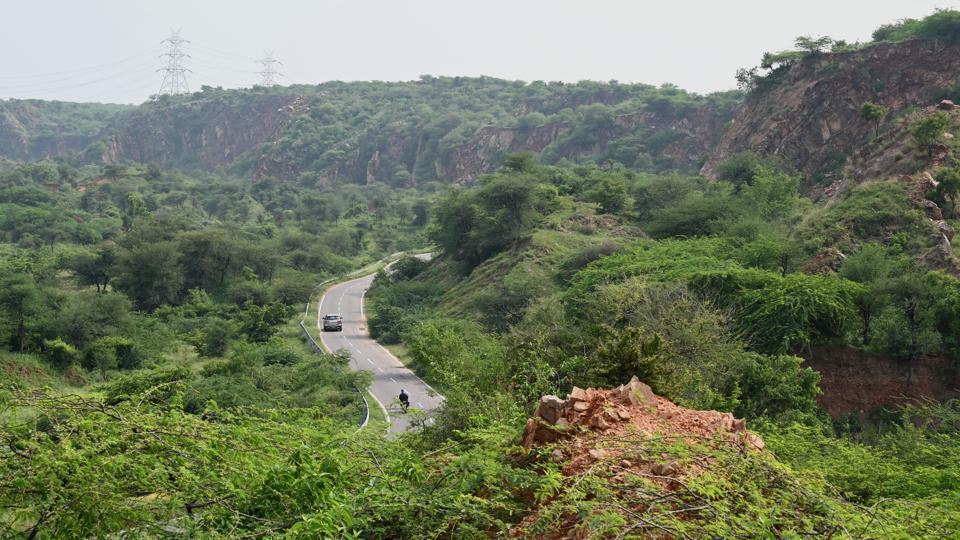
Environmentalists hailed the order as one of the most significant interventions in recent years, particularly for Gurugram and south Haryana, where illegal mining and land degradation have long threatened the ecology.
A three-judge bench headed by Chief Justice of India Bhushan R Gavai, while expressing concern over the “precarious condition” of the Aravallis, said the plan must be scientifically prepared by the Indian Council of Forestry Research and Education (ICFRE). The bench accepted the Centre-appointed expert committee’s recommendation of a uniform definition of the Aravalli hills—designating any landform with an elevation of 100 metres or more from local relief as part of the range.
The order comes amid rapid real estate expansion, shrinking forests, and aggressive mining pressures in its southern belt, from Sohna to the Farrukhnagar region, where environmentalists have repeatedly warned of irreversible ecological damage.
The court observed that the Aravallis act as north India’s crucial green barrier, preventing desertification and supporting key aquifers, wildlife habitats, and local climatic balance.
Gurugram-based environmentalist Vaishali Rana termed it “a long overdue corrective step.”
“This judgment changes the conversation for Gurugram. For years, the Aravallis here have suffered rampant encroachment, deforestation and illegal mining. The SC order finally acknowledges that protection must be scientific, uniform and uncompromising,” Rana said.
She said, “If implemented properly, this could revive groundwater, stabilise air quality and safeguard Gurugram’s last remaining natural heritage.”
The plan will identify permissible mining zones, priority areas for restoration, and ecologically sensitive regions where mining must be completely banned. It will also outline rehabilitation measures for mined land—a step missing in current mining policies in the state.
Gurugram’s environmental groups said that large portions of the district’s Aravalli belt—once quarried heavily before the 2002 total ban—still remain vulnerable to illegal extraction and land-use change. With a clear definition now in place, activists believe that attempts to reclassify hills as “non-Aravalli land” to enable construction or mining will become increasingly difficult.
The court also emphasised India’s obligations under the United Nations Convention on Combating Desertification (UNCCD) and noted the Centre’s ongoing Aravalli Green Wall Project, which aims to restore degraded landscapes across the range.
The ruling may also influence future planning in Gurugram, particularly in areas such as Gwal Pahari, Bandhwari, Mangar and Sohna, where mining, waste management projects and real estate proposals have frequently conflicted with environmental safeguards.
“This is a chance for the administration to rethink development around the Aravallis,” Rana said. “Gurugram can grow, but not at the cost of its lungs.”


Stay updated with all the Breaking News and Latest News from Mumbai. Click here for comprehensive coverage of top Cities including Bengaluru, Delhi, Hyderabad, and more across India along with Stay informed on the latest happenings in World News.


