
 E-Paper



How a man is changing Gurugram, one civic issue at a time
“Gurugram has everything, opportunity, infrastructure, schools, and parks but somewhere along the way, civic discipline got lost. The city moves fast, but its systems lag behind,” said Aggarwal.


When entrepreneur-turned-resident activist Manjeev Aggarwal moved from Ambala to Gurugram in 2015, he imagined a city that represented India’s modern future , a place of opportunity, order, and ambition. What he found instead was a city caught between rapid development and civic disorder due to pothole-ridden roads, chaotic traffic, flooding during every monsoon, and scattered garbage piles.
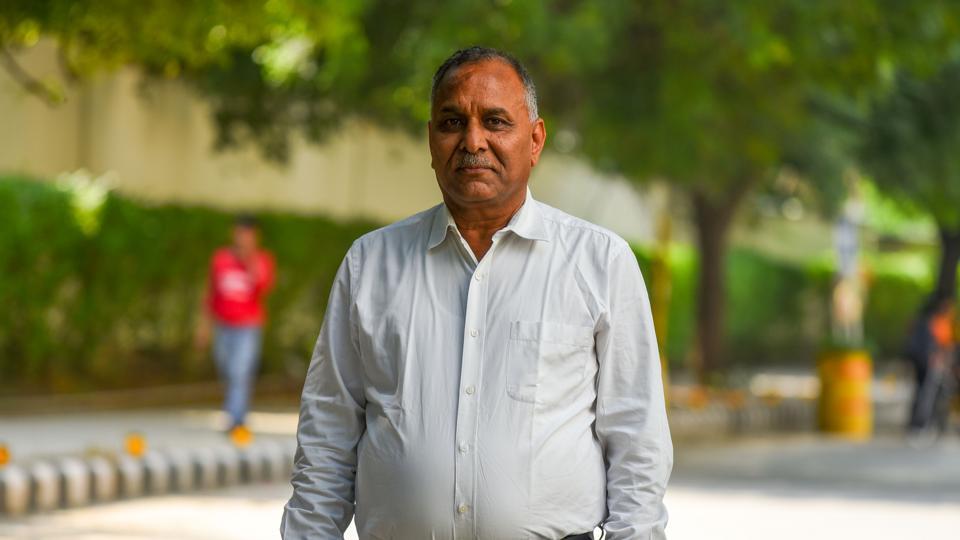
“Gurugram has everything, opportunity, infrastructure, schools, and parks but somewhere along the way, civic discipline got lost. The city moves fast, but its systems lag behind,” said Aggarwal.
Now a long-time resident and general secretary of Tatvam Villas RWA on Sohna Road, Aggarwal has become one of Gurugram’s most active citizen voices, known for his persistence and problem-solving approach. Over the years, his campaigns often beginning with a single letter or filing a Right to Information (RTI) have transformed local infrastructure and inspired broader civic action.
Fixing the roads, one speed breaker at a time
In 2015, Aggarwal led a campaign that resulted in the Public Works Department (PWD) removing several wrongly designed speed breakers on Sohna Road. The structures were damaging vehicles and causing back injuries to commuters.
When complaints to local authorities failed, he wrote directly to the Prime Minister’s Office (PMO) and the Ministry of Road Transport and Highways, highlighting the violations. When there was still no action, he filed a RTI request and gathered photographic evidence. His persistence paid off. The PWD acknowledged the issue and removed the structures from one side of the highway.
“It wasn’t just about inconvenience,” Aggarwal said. “It was about dignity. Citizens shouldn’t have to suffer because of poor planning.”
Tackling floods with colour-codes
Flooding during the monsoon is one of Gurugram’s most persistent civic issues, but in 2024 Aggarwal and fellow residents of Tatvam Villas, Sector 48, devised an innovative solution — a colour-coded system to help drivers navigate flooded areas.
Green markings indicate safe zones, yellow signals caution, and red warns of danger. The markings, placed along key stretches in the community in Sector 4, have dramatically reduced incidents of stranded vehicles and water-related traffic jams.
Aggarwal said the initiative emerged out of necessity. “When the city couldn’t act fast enough, we decided to help ourselves,” he said. The RWA also ensured potholes were filled near their society and installed pumps to channel excess rainwater into the Badshahpur drain, ending years of monsoon waterlogging.
Beyond road safety and flooding, Aggarwal has also focused on improving water quality and civic infrastructure. Working with the Gurugram Metropolitan Development Authority (GMDA) in 2018, he helped Tatvam Villas secure portable water connections, ending years of dependence on groundwater. “Earlier, residents spent nearly ₹3,000 a month on water softeners,” he said. “Now, we have clean and reliable water at a much lower cost.”
Under his guidance, the RWA has also installed new streetlights, built footpaths, and pushed for consistent maintenance of public spaces.
A vision for a better Gurugram
For Aggarwal, Gurugram’s evolution is personal. Having witnessed both its potential and pitfalls, he believes the city’s future depends on collective action. “I came here for a better life and I want Gurugram to live up to that promise,” he said. “We have some of the brightest people here. What’s missing is ownership — people treating this city as their own.”
In a city often defined by chaos and construction, Aggarwal’s journey stands as a reminder that transformation begins not in offices or boardrooms, but in communities that care enough to act.
(Manjeev Aggarwal is a businessman and is director of Lactowin and a resident of Tatvam Villas)


Stay updated with all the Breaking News and Latest News from Mumbai. Click here for comprehensive coverage of top Cities including Bengaluru, Delhi, Hyderabad, and more across India along with Stay informed on the latest happenings in World News.


