
 E-Paper



‘Illegal’ liquor pricing sparks outcry in Gurugram, retailers found selling below MRP
MRSP, under Haryana’s excise policy, is the mandatory floor price for alcoholic beverages—below which no sales are allowed under any circumstances

 Prefer HTon Google


The Gurugram excise department has launched an inquiry into allegations that liquor vends in the city are flouting pricing norms—by undercutting the minimum retail sale price (MRSP) for alcoholic beverages and overcharging bars and pubs well beyond permissible limits.
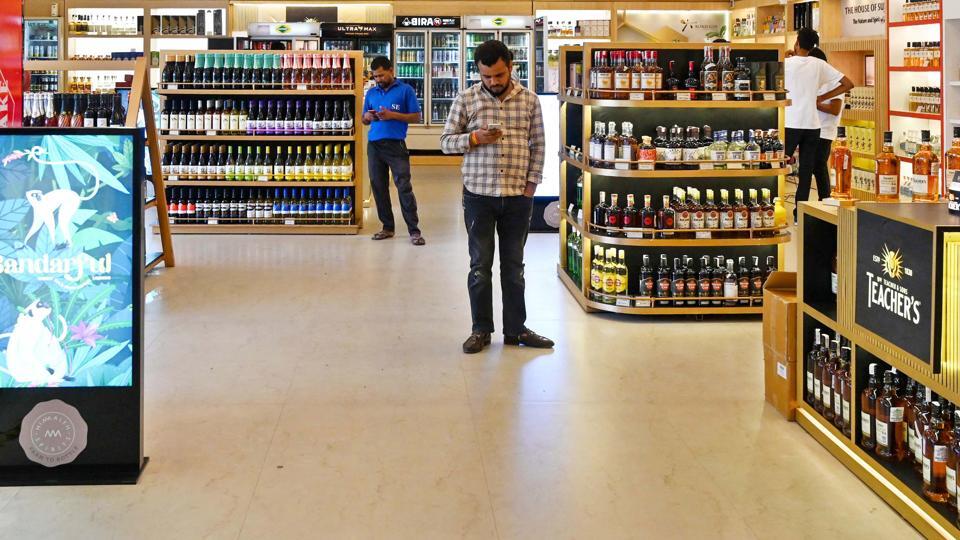
Officials said any violations of MRSP norms may indicate value-added tax (VAT) evasion and raise concerns about the sale of potentially substandard or unauthorised liquor in the market. Social activists and pub owners have also alleged the existence of a parallel, unregulated pricing system.
MRSP, under Haryana’s excise policy, is the mandatory floor price for alcoholic beverages—below which no sales are allowed under any circumstances. Such sale not only distorts market competition but may also indicate that taxes are not being correctly levied or paid on transactions.
In many cases, the violation arises when outgoing L-2 license holders—retail vend operators—attempt to offload old stock by offering steep discounts as their tenure ends. With the new excise policy year beginning on June 12, some vendors are reportedly slashing prices to avoid incurring losses when handing over inventory to new licence holders.
Under the current excise policy, as well as the new policy effective from June 12, 2025 to March 31, 2027, L-2 licensees are barred from offering discounts below the MRSP. The policy also imposes a cap on how much more L-2 vends can charge bars and pubs—no more than 10% above the MRSP.
However,spot checks by HT indicate blatant violations. In one case, a 750 ml bottle of VAT 69 whisky, with an MRSP of ₹1,550, was reportedly being sold for ₹1,000—and in bulk purchases, for as little as ₹700. At the same time, some bars allege they are being charged ₹220 for a 330 ml bottle of Corona beer, which has an MRSP of ₹95—over double the allowed margin.
Supreme Court advocate Rajeev Yadav, who has been raising the issue with the excise department, said, “The dual pricing strategy adopted by these vends is not only unethical but also illegal. Selling below MRSP suggests VAT evasion, while overcharging bars is profiteering. The excise department must initiate audits and take action.”
Pub and bar owners also voiced frustration over the unchecked practices. “We’re being charged nearly double for a single bottle of beer. The vendors tell us to take it or leave it. There’s no enforcement,” said a pub manager from Sector 29, who asked to remain anonymous. Another bar owner from Cyber Hub echoed the sentiment, alleging that complaints to the excise department have gone unanswered. “It feels like the system is compromised,” he said.
In response to the growing chorus of complaints, deputy excise and taxation commissioner (East) Amit Bhatia acknowledged the irregularities. “We will check this activity and issue notices to the concerned L-2 licensees. Breach challans will be served, and further violations will attract stricter penalties,” he said.
But questions remain about how thoroughly these rules are being enforced. Many liquor vends reportedly fail to issue receipts with the name and address of the establishment, in violation of Clause 1.7 of the excise policy, which mandates the use of an integrated Point of Sale (POS) system. Moreover, the policy’s cap on individual liquor purchases—no more than 12 bottles per customer—is being routinely flouted, say consumers.
The excise policy lays down strict penalties for MRSP violations. Clause 7.4 mandates the automatic suspension of the violator’s licence for the day of detection and the following two days. Clause 2.13.5 allows for sealing of vends in cases of major violations. Despite this, vendors accused of undercutting prices and overcharging bars continue to operate.
Amit Khurana, a private sector employee, said the pricing disparities are obvious to regular buyers. “It’s a free-for-all. You find the same bottle at wildly different prices. We’ve complained, but nothing changes,” he said.
The practice not only disrupts fair market competition but also raises concerns about potential revenue loss for the state and questions about the quality and authenticity of discounted products. The Haryana Excise Policy for 2025-27 has introduced stricter penalties for violations, including significant fines and potential license cancellation for repeated offenses related to pricing and advertisement. However, the effectiveness of these measures is being questioned by the public given the ongoing nature of the problem.
Advocate Yadav emphasised the need for accountability, stating, “It’s imperative that the excise department not only penalises the erring vends but also investigates potential collusion within its ranks. The integrity of the system is at stake.”

Stay updated with all the Breaking News and Latest News from Mumbai. Click here for comprehensive coverage of top Cities including Bengaluru, Delhi, Hyderabad, and more across India along with Stay informed on the latest happenings in World News.


