
Sign in

MCG starts mapping garbage burning spots

Residents of areas along the Golf Course Extension Road alleged that there is a constant blanket of smoke, but officials were failing to take action despite sending them videos of sanitation workers involved in collecting and burning waste

Updated on: Apr 12, 2024, 05:32:15 IST
By , Gurugram
Share
Share via
  • facebook
  • twitter
  • linkedin
Copy link
  • copy link

The Municipal Corporation of Gurugram (MCG) on Thursday started mapping areas close to residential areas where there is rampant open burning of waste, following repeated complaints from residents, officials said.
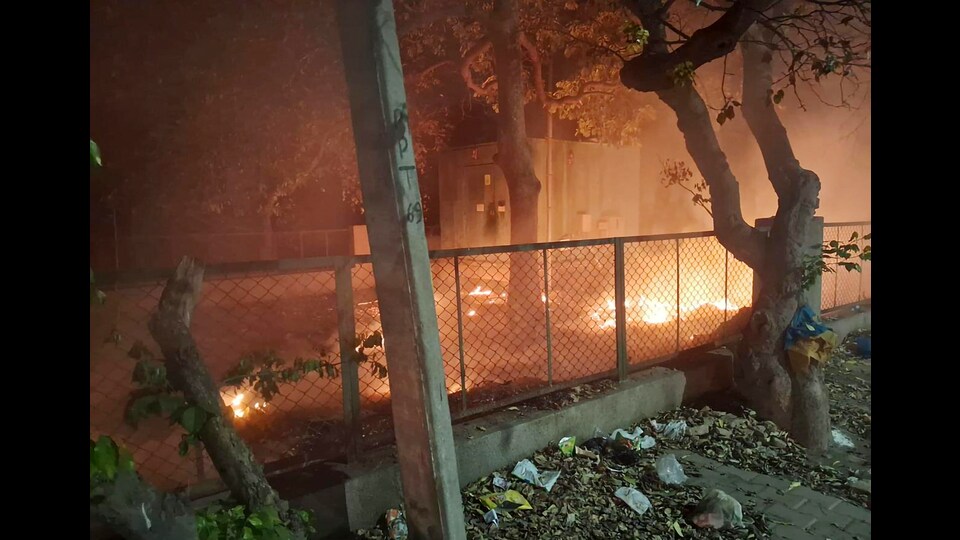
Garbage burning in an open area at Sector-12 green belt near Vivekananda Aarogay Kendra in Gurugram on Thursday. (HT PHOTO)

According to MCG officials, most of the complaints were from sectors 49, 50, 51 and 57, and areas along the Golf Course Extension Road, following which teams were sent to the spot. They said outsourced employees who are supposed to collect and dump waste at secondary dumping points, were, instead, dumping in the open and burning it.

Residents of these areas allege that there is a constant blanket of smoke, but officials were failing to take action despite sending them videos of sanitation workers involved in collecting and burning waste. They alleged a lack of accountability on part of the officials.

MCG joint commissioner Naresh Kumar said that they have penalised 65 offenders, all employees of private agencies, since January 1. “We have shared numbers of the sanitation officers sector-wise with the residents’ welfare associations and are closely coordinating with them. The suspects set garbage on fire either late night or early morning, due to which it is difficult to deploy teams round-the-clock to keep a control on the situation,” he said.

Kumar said they have also started the process of identifying workers involved in garbage burning and they will blacklist them. so that they cannot be not hired by another private agency in the future.

Ruchika Sethi Takkar, founder-member of ‘Why Waste Your Waste’, a civil society movement for a zero-waste city, said that massive fires were noticed at waste collection sites regularly. “Waste is regularly set afire because it is an unmanned unregulated open dump or collection site, as well as because waste is managed through a transportation model and not a waste recovery decentralised model . We cannot afford to breathe this polluted air day-in and day-out. It is indeed a health crime. Accountability remains unfixed,” she said.

Takkar said there is an absence of infrastructure to scientifically manage waste at the ward level and lack of enforcement by civic authorities. “We have no option left and have appealed to the ULB minister to recognise the prolonged exposure of Gurugram residents to poor air due to the unabated waste burning,” she said.

Vartika Nijhawan, a resident of Hibiscus Society in Sector 50, said that daily garbage burning envelops her condominium in smoke and fumes. “We have been running home purifiers 24x7 and still, the pungent smell does not go away. I have been a regular visitor to ENT doctors for allergies due to pollution,” she said.

Satish Tuli, a senior citizen living in Mayfield Gardens Block B, said that the foul smell due to waste burning in the vicinity makes it impossible to take morning and evening walks in the complex. “We are left with no option but to stay indoors or take a walk in afternoons, under the hot sun,” he said.

  • Leena Dhankhar
    ABOUT THE AUTHOR
    Leena Dhankhar

    Leena Dhankhar is Senior Editor and Bureau Chief, Gurugram, at Hindustan Times, where she has spent over 17 years chronicling the transformation of one of India's fastest-growing urban regions. From starting her career as a crime reporter to leading the Gurugram bureau, her journalism has been defined by investigative reporting, in-depth storytelling and an unwavering focus on public interest. Over nearly two decades, she has reported extensively across crime, politics, civic governance, elections, real estate, environment, courts, sports, education and entertainment, covering Gurugram, Faridabad, Nuh and Palwal. Her reporting has exposed several major scams and systemic failures, including insurance frauds, waste management irregularities, illegal arms manufacturing units in Nuh, illegal mining in the Aravallis, organised crime networks and governance lapses affecting millions of residents. Known for her investigative work and exclusive stories, Leena has reported on high-impact national issues, including the Nicaragua charter flight carrying Indian migrants that was turned back amid allegations of human trafficking, exposing the growing network of illegal immigration rackets. Her work has also focused on gang wars, prison administration, juvenile crime, women and child protection systems, the functioning of the Juvenile Justice Board and Child Welfare Committee, and environmental challenges such as pollution, waterlogging and deteriorating civic infrastructure. Beyond hard news, Leena has extensively documented Haryana's rich heritage, forests and wildlife, bringing attention to the state's historical landmarks, biodiversity, conservation efforts and ecological challenges through immersive reportage and feature writing. Her journalism has consistently gone beyond breaking news. She has documented Gurugram's rapid urbanisation through long-form narratives and enterprise reporting on issues ranging from pothole-ridden roads, flooding and waste management to the changing social fabric of India's Millennium City. She also writes widely read feature columns, including The Outsider, Changemaker, and Concern for Gurugram, profiling people, places and ideas shaping the city's identity. Leena is the author of Gurugram School Murder, published by Juggernaut Books, a deeply reported account of one of India's most high-profile school murder investigations. She is currently working on her second book, an investigative work exploring some of India's most significant scams and fraud investigations. Beyond print journalism, she has expanded her storytelling through public speaking and digital media. She is a TEDx speaker and has produced podcasts exploring Gurugram's transformation, civic challenges and untold stories. Her work reflects a commitment to narrative journalism that combines rigorous reporting with compelling storytelling. A law graduate with an MBA in Human Resources, Leena brings a multidisciplinary perspective to her reporting, particularly on governance, public policy and legal affairs. She has travelled extensively across India to pursue investigative assignments, often reporting from remote locations and conflict-prone areas in search of stories that matter.Read More