
 E-Paper



Nearly 85% of homes, 50% of societies lack working rainwater harvesting pits: GMDA report
According to a senior GMDA official, the authority has held its first meeting to review the drainage plan, with more discussions scheduled to finalise the comprehensive strategy.


Nearly 85% of houses and almost half of the residential societies in Gurugram lack functional rainwater harvesting (RWH) systems, the draft drainage plan prepared by the Gurugram Metropolitan Development Authority (GMDA) has revealed. The findings come as GMDA prepares to overhaul the district’s drainage system to curb recurring monsoon flooding.
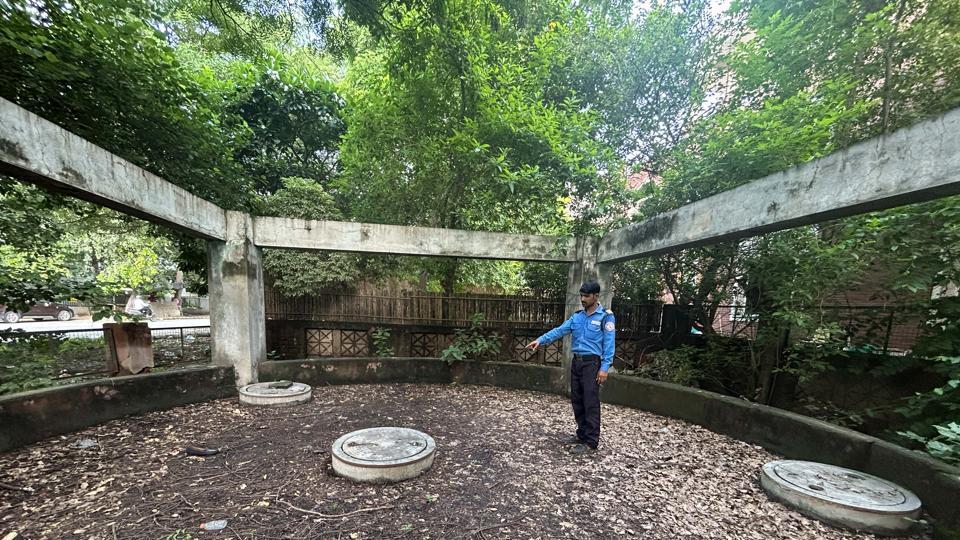
According to a senior GMDA official, the authority has held its first meeting to review the drainage plan, with more discussions scheduled to finalise the comprehensive strategy. “We will work on the basis of this report and ensure that rainwater harvesting structures are made functional,” the official said.
The draft report highlights that “existing recharge wells constructed by individuals in respective plots, by RWAs in common areas, and in public buildings and group housing societies need to be made functional with proper storage capacities for at least one hour and desilting chambers.” It assessed that 85% of the recharge pits in individual houses and 50% of those in residential societies are currently nonfunctional.
The plan identifies built-up, vacant, road-covered, and green areas across Gurugram and calculates rainfall runoff for each drainage catchment. “A substantial amount of water can be saved by effectively using RWH systems inside homes and condominiums,” the GMDA official added. He further said nearly 50% of rainwater could be redirected to RWH structures, green belts, and ponds if recommendations are seriously implemented.
The draft plan provides catchment-wise data for major city drains. For Leg 1 drain (Nathupur to Najafgarh via Palam Vihar), the catchment is 6,599 acres, including 2,228 acres of built-up area, 1,308 acres of vacant land, 1,781 acres of roads, and 1,282 acres of green areas. “Almost 70% of RWH systems in residential areas are not functional,” the official confirmed, citing this drain zone. He added that successful water diversion to green belts had already been achieved in the Aravalli area above Golf Course Road.
According to officials, Leg 2, running from Chakkarpur to Millennium City Centre along Sheetla Mata Road, has a catchment of 15,457 acres, with 4,833 acres built up, 2,832 acres vacant, 4,412 acres roads, and 3,379 acres green areas.
Leg 3 (Badshahpur drain), meanwhile, has the largest catchment at 49,302 acres—of which 14,849 acres are built up, 8,892 vacant, 11,593 under roads, and 14,056 green.
The official cited above added that enforcement of RWH compliance may be strengthened and that 40% of city green belts could be modified to retain rainwater by lowering their elevation. Increasing the capacity of existing ponds is also under consideration.
According to officials, current government norms require RWH systems in houses built on plots over 100 square yards. Before possession certificates are issued by HSVP or the DTP office, compliance reports on RWH installation must be submitted.


Stay updated with all the Breaking News and Latest News from Mumbai. Click here for comprehensive coverage of top Cities including Bengaluru, Delhi, Hyderabad, and more across India along with Stay informed on the latest happenings in World News.


