
 E-Paper



Reporter’s diary: Waiting for Gurugram’s elusive metro project
Nearly a decade of feasibility studies, redrawn routes and delays ends with the project’s first pile drilled in September 2025.

 Prefer HTon Google


The first time I reported about a Gurugram Metro project was in 2016, when the Haryana government announced a plan to extend the Delhi Metro’s Yellow Line from what is currently the Millennium City Centre station to Old Gurugram. The announcement had sent a wave of excitement through the city, particularly in older neighbourhoods, located to the west of the Delhi-Jaipur highway, as development there had stalled and infrastructure started crumbling, while shinier offices, wider roads, and the Rapid Metro came up in the more sought-after localities surrounding the MG Road, Golf Course Road, and Sohna Road.
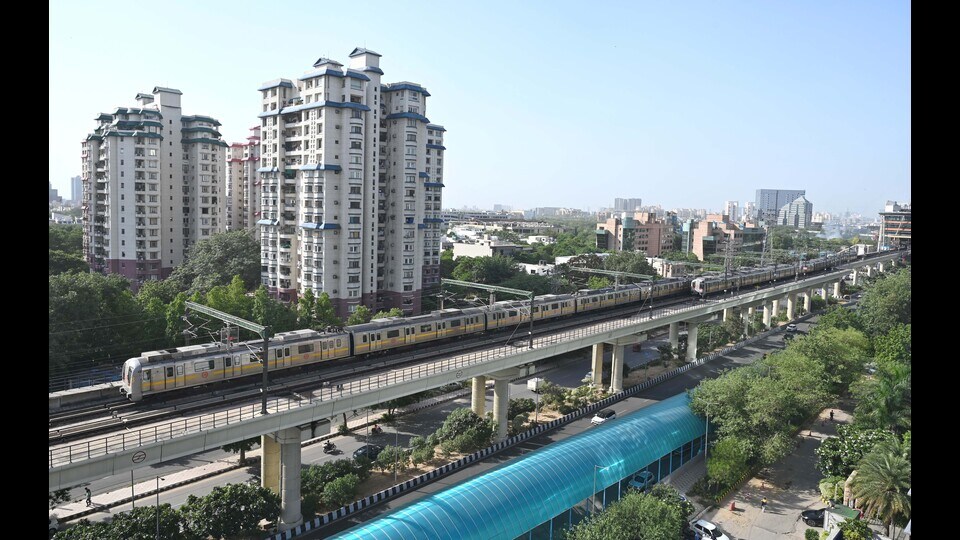
But even back then, sceptical residents, planners, and developers suspected that the announcement was more political rhetoric than reality. And they were right. Almost a decade later, on September 5, 2025, the project finally broke ground, and I could not help but reflect on the many twists and turns I had reported in the intervening years.
For years, covering the Gurugram Metro was like chasing a mirage. One year, we’d get news of a feasibility study. The next year, the detailed project report was “approved”—only to be reworked. Routes were redrawn, consultants replaced, and traffic surveys dismissed as inconclusive. At times, it felt like watching a football match with no goal; the ball kept among passed between government departments, consultants, and political leaders, while commuters continued to suffer choked roads. The city grew denser, vehicles multiplied, and buses never came, leaving shared autorickshaws as the only affordable mode of transport for hundreds of thousands.
During those years, I would often meet commuters near the Rapid Metro or the sole station, then popularly called Huda City Centre station. Many complained that it was easier to travel from Rajiv Chowk in Delhi to MG Road in Gurugram than to their workplaces in Udyog Vihar, Sohna Road, or Golf Course Extension.
When the Gurugram Metro Rail Limited (GMRL) was formed in 2024 and the Union government cleared the project, even then, the residents I spoke to shook their heads in disbelief. “We’ll believe it when we see it,” a commuter told me outside the Huda City Centre station.
And then, earlier this month, standing near the Gurugram Metropolitan Development Authority office, I watched the contractor drill the first pile. It hit me: the metro was finally happening. As barricades now go up along the alignment to Sector 9, as trees are cut and utilities shifted, the city feels both anxious and hopeful.
For me, as for many others, the metro has become more than just a transport project. It’s a lifeline to ease the pain of broken roads, waterlogged stretches and unending traffic snarls. Yet, as I write this, there is also a lingering question at the back of my mind: will the momentum last, or will the Gurugram metro slip back into the realm of promises and delays?
That uncertainty, perhaps, is the true story of this city. Always waiting, always hoping, for a future that seems just one more announcement away.
(Abhishek Behl covers infrastructure and development in the city including GMDA, HSVP, DTCP, NHAI, metro and real estate in Gurugram)


Stay updated with all the Breaking News and Latest News from Mumbai. Click here for comprehensive coverage of top Cities including Bengaluru, Delhi, Hyderabad, and more across India along with Stay informed on the latest happenings in World News.


