
 E-Paper



HC permits announcement of JNUSU results
Earlier, the high court had restrained the varsity from declaring and notifying the election results of the polls, which were held on September 6.


New Delhi The Delhi High Court on Tuesday permitted the Jawaharlal Nehru University (JNU) to declare the student union election results, while giving them an opportunity to air their grievances.
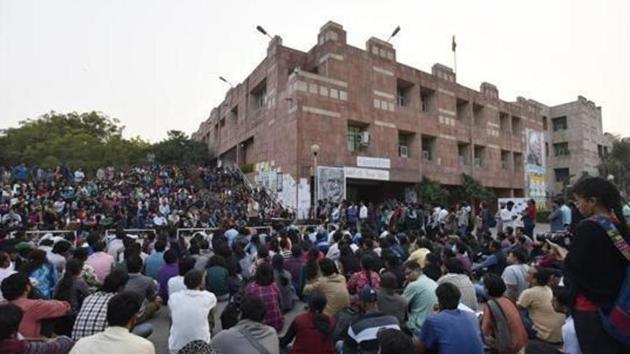
“The Jawaharlal Nehru University is permitted to notify the result in accordance with the recommendations of the Lyngdoh Committee,” justice Sanjeev Sachdeva said, disposing of the writ petition of two students who had alleged that their nominations were wrongly rejected for elections.
Earlier, the high court had restrained the varsity from declaring and notifying the election results of the polls, which were held on September 6. Nearly 68% of 8,500 registered students had cast their votes and the results were scheduled to be declared on September 8.
On Tuesday, justice Sachdeva said that it would not call off the elections just because one of the schools did not participate. The court asked the aggrieved students to approach the Grievance Redressal Cell (GRC) for any issue and said that the results would be subject to the final outcome of the decision taken by the GRC.
The court’s decision came while hearing two petitions, in which it had been contended that seeking elections in accordance with the rules laid by the Lyngdoh Committee and challenging the rejection of their nomination for the post of a councillor.
The single-judge bench clarified that declaration and notification of the results will be subject to further orders passed by the GRC, which was directed to entertain and decide the complaints it receives from students, in accordance with the Lyngdoh Committee recommendations.
Anshuman Dubey, in a plea, had alleged that the election committee has reduced the number of seats of the councillor from 55 to 46.
However, on Tuesday, the counsel appearing for the election committee, told the court that at no time had the number of councillor posts been 55. He said that last year, the number was 30 and this year, it has been increased to 44.
Advocate Monica Arora, the standing counsel of the University, contended that they have been strictly complying with the recommendations of the Lyngdoh Committee and the student constitution was amended while the election process had already started, which is not allowed.
The court, while disposing of the plea, also remarked that the constitution of students union has to be respected but it is not above the Constitution of India.
The pleas stated that the Lyngdoh Committee’s recommendations on the mode of elections, students’ representations, frequency and duration of the election process, eligibility criteria, code of conduct for candidates and election administrators have also been accepted by the Supreme Court as well. However, these recommendations were not being followed in the JNUSU elections.
It contended that councillor posts has been reduced despite the recommendations of the Lyngdoh Committee, which states that each college/school/department has to be represented in the student body. It submitted that in the past, there were 55 councillor seats, depending on the number of schools/colleges/departments.

Stay updated with all top Cities including, Bengaluru, Delhi, Mumbai and more across India. Stay informed on the latest happenings in World News along with Delhi Election 2025 and Delhi Election Result 2025 Live, New Delhi Election Result Live, Kalkaji Election Result Live at Hindustan Times.


