
 E-Paper



In next 5 days, Delhi govt to test 20,000 in containment zones
New Delhi: The Delhi government has decided to undertake a massive testing exercise by conducting 20,000 RT-PCR tests for Sars-CoV-2, the virus causes the coronavirus disease (Covid-19), over the next five days on people living in containment zones and quarantine centres, according to an official order.


New Delhi: The Delhi government has decided to undertake a massive testing exercise by conducting 20,000 RT-PCR tests for Sars-CoV-2, the virus causes the coronavirus disease (Covid-19), over the next five days on people living in containment zones and quarantine centres, according to an official order.
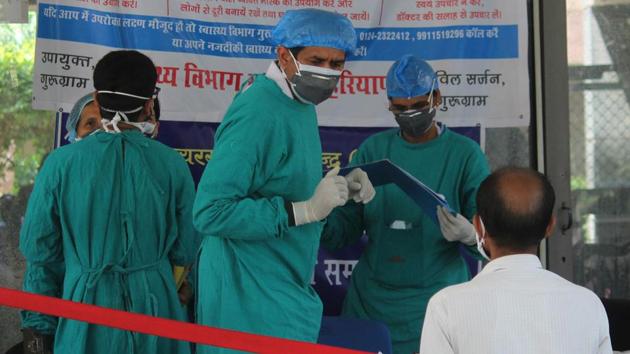
It has also designated private labs in each of the city’s 11 revenue districts to help with sample collecting and testing because the six state-run centres that conduct these tests are already overburdened.
To put the number in perspective, a total of 16,282 tests have been conducted in Delhi since mid-January, when screening for Covid-19 began. A total of about 10,000 tests are carried out across the country in a day.
Though the government wanted to scale up testing by using rapid antibody tests -- simple blood tests that give results in 25 minutes and show the presence of antibodies that suggest a person has recovered from a mild strain of Covid-19 and is thus immune to the virus that causes it -- but the kits that were to first come from China on April 5, and then April 10, are yet to be arrive.
The Delhi government, which ordered 100,000 rapid testing kits, also planned to use them to speed up testing by pooling samples and testing in batches.
“It has now been decided by the competent authority that 20,000 RT-PCR tests are to be performed on a war footing in Delhi in the coming five days for … timely containment of the disease,” said the order, a copy of which is with the HT.
The exercise has already started with 692 samples collected from containment zones on Tuesday.
Until last week, the Union government was testing symptomatic people who were taken to hospitals on suspicion of having the infection; people who might have come in direct contact with those who test positive; symptomatic health care workers; and people admitted to hospitals with severe acute respiratory infections (Sari) were also being tested.
The Indian Council of Medical Research (IMRC) on April 9 changed the guidelines to also allow testing in those with flu-like symptoms from the identified hot spots, gatherings and evacuation centres.
The RT-PCR test -- for which a swab is taken from the throat and nose -- is the most accurate Covid-19 test because it detects the virus’s genetic material (RNA) to diagnose current infection. The report, however, comes typically in two to three days.
The increased testing would have added to the load at six government centres testing the samples – reports for at least 714 samples were still pending on Tuesday, according to a government report. The Delhi government therefore designated private labs in of the city’s revenue districts to conduct the tests for a fixed price.
Dr Lal Path Labs is the designated private lab for tests in the north, north-west, and north-east districts, according to the order. Sir Ganga Ram hospital will conduct tests for the central district, Onquest Labs for the New Delhi district, Dr Dangs Lab for the south district, Apollo laboratory for the South-east district, Max hospital in for tests in the east and Shahadara districts, Prognosis laboratories for the south-west district, and City X -Ray and Scan Clinic for the west district.
In case the designated private labs also reach capacity, the samples will have to be referred to Dr Lal Path Labs, the order adds
“We are happy to share our infrastructure and expertise for the welfare of the people. This is a very fair way of involving the private labs for scaling up the tests, and Delhi government has been very proactive. They have also promised that the money will be reimbursed within the week,” said Dr Navin Dang, founder of Dr Dangs Labs.
The government has also decided to seek the private sector’s help in sample collection.
Private laboratories will be paid ₹4,500 if they collect a sample and use their own testing kit; R 3,500 if the sample is collected by the government and the kit is of the lab; and R 2,200 if the sample is collected by the government and the kit is also provided by it.
The Supreme Court last week ruled that all private labs should test for free but later modified the order to say that the tests should be offered for free only to poor patients. According to the new order by the government, the money will be released directly by the state from the Union government’s National Health Mission Covid-19 fund.
“The antibody tests are currently not available, and we are not sure when they will be here. Plus, they are not foolproof. Add to that the increasing number of patients in our hospitals who would need at least two tests to be discharged, there was a need to scale up our RT-PCR testing capability. As for testing in the hot spots, what we are seeing is that 30-50% of the cases are asymptomatic. In nearly 10% or 15% of the cases from Delhi we have been unable to clearly establish the source, pointing out the need for increased random testing,” said Dr SK Sarin, director, Institute of Liver and Biliary Sciences and the head of a team of five doctors assisting chief minister Arvind Kejriwal in Covid-19 preparedness.
ends


