
 E-Paper



Achieved ‘almost’ 100% segregated waste collection in Rohini, claims north corp.
Rohini will soon be declared the 2nd ‘Model Ward’ for garbage handling in Delhi after south’s Janakpuri, as instructed by NGT in March.


It’s just 8 am and 63-year-old Sarita Puri is already standing at the gate of her bungalow with two bags in hand -- one with organic waste like leftover food and fruit/vegetable peels, and the other with recyclable packets of chips and soft drink bottles.
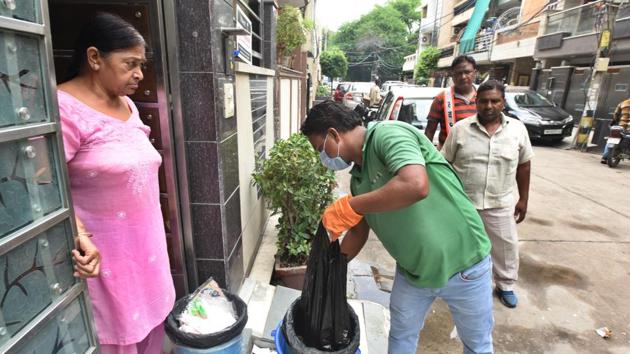
Along comes a municipal garbage van, blaring the ‘Swachhta Song,’ and a helper takes the trash bags from Puri and her neighbours -- all residents of D Block in Prashant Vihar -- and empties them into two different, green and blue, compartments of the vehicle.
Slowly, the second and third floor residents of the colony also lower buckets full of segregated garbage tied by hooks and ropes from their balconies. The helper smoothly unloads them before moving on.
Welcome to the Rohini-G (58 N) ward of the North Delhi Municipal Corporation which seems to have solved its garbage problem. It is all set to be declared as the second ‘Model Ward’ for solid waste handling in the city after south Delhi’s Janakpuri.
“We have achieved almost 100% door-to-door segregated waste collection here after extensive awareness campaigns and putting in robust systems for garbage collection and transport in the last four months,” said AK Gupta, Superintending Engineer with the north corporation, overseeing the entire operation.
“The total waste generated per day by 16,078 households earlier, about 16 tonnes by weight, has reduced to 12-13 tonnes after residents stopped mixing it. Also, we are saving Rs. 7,200 per day in transportation cost to the nearby Bhalswa Landfill,” Gupta claimed.

It all began with the north body choosing Pitampura (Ward number 64), Rajendra Nagar (102) and Rohini-G (58) areas to be developed as ‘Model Wards,’ that would be compliant with the Solid Waste Management (SWM) Bylaws of Delhi, on orders from the National Green Tribunal dated March 11. The south and east corporations are also working on three ‘Model Ward-elects’ each in their areas.
The entire Delhi has to become SWM Bylaws compliant within a year, says the order from NGT.
“Rohini was slightly easier for us to do because it has only Cooperative Group Housing Societies (CGHS) and block-wise plotted developments instead of any slums or JJ clusters,” said Varsha Joshi, commissioner, North Delhi Municipal Corporation. “Besides, the level of awareness on the garbage issue was already high here with few societies having started compost pits in their lawns already,” she said.
To spread the word on ‘waste segregation’ among residents, the civic body engaged private company Ramky (which runs its Narela-Bawana ‘engineered’ landfill site), three NGOs, its 138 safai karmcharis and even mosquito checking staff. “I remember we even utilized a helpline number we had at our Rithala office to make calls to RWAs and market associations in this regard,” said Veditha Reddy, who was Deputy Commissioner (north corporation), Rohini Zone, till July 15 and worked on this project.
The corporation closed all open dhalaos (three-walled mixed waste dumpyards) in the colonies and transformed one at Rajapur Village into an FCTS (Fixed Compactor Transfer Station). The machine compacts about 11-12 tonnes of waste a day -- organic and recyclable separately.
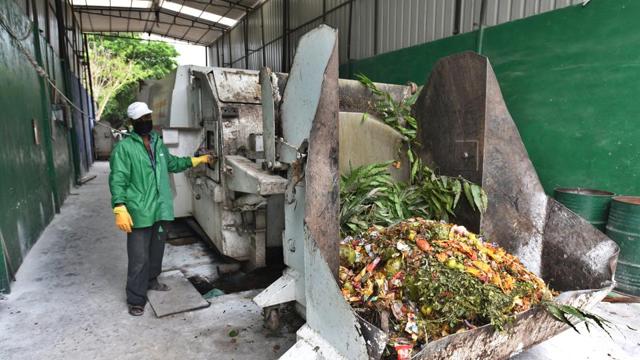
While the recyclable plastic is taken away by ragpickers, the rest (organic and hazardous waste) is taken to the Narela-Bawana ‘engineered’ landfill, Delhi’s only such facility. The green leftovers are fed to the 450-500 Tonnes Per Day (TPD) composting pit here and the hazardous waste (sanitary napkins, condoms, blades, syringes and medicines) burnt to ashes in the 2000 TPD Waste-to-Energy plant.
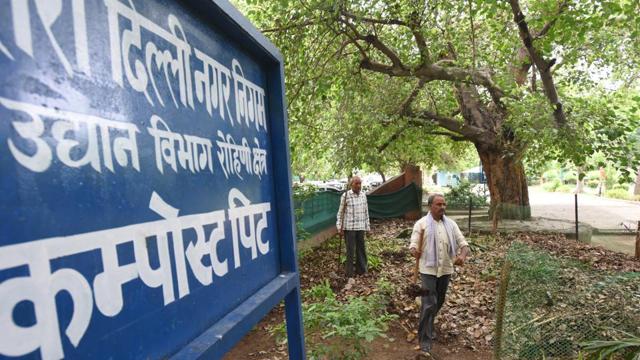
The horticulture waste -- leaves and twigs -- from almost a dozen parks in the ward comes to the 350-400 kg capacity compost pit at the big Children’s Park near Prashant Vihar while all Construction & Demolition (C&D) Waste is taken to the Burari C&D recycling plant.
“We have 34 institutions here like schools, malls, hotels and hospitals, which we classify as bulk waste generators. We have already started issuing notices to them for ‘user fee,’ as mandated by the SWM bylaws, besides fines for non-segregation,” said Arava Gopi, the present Deputy Commissioner of Rohini Zone. The civic body has served 28 such notices for user fee up to July 21 and realized Rs. 2.10 lakh amount besides one challan for non-segregation of Rs. 20,000.
“We have sensitized the six major market associations too, but not started levying the user fee or fines for non-segregation on families or households yet,” he said.
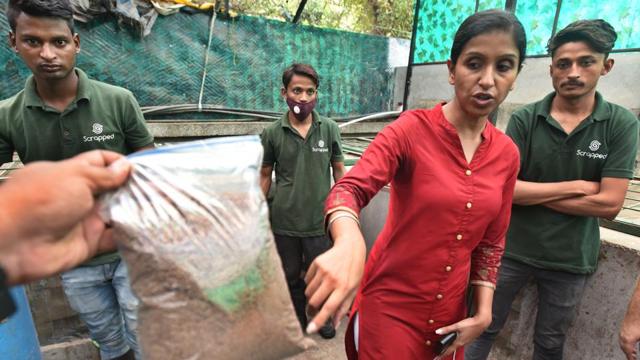
Residents of Rohini said they are acutely aware of the necessity of the ‘Geela Kooda Alag Aur Sookha Kooda Alag’ drive by the north municipality and are lending their full cooperation. “Who would know the criticality of this exercise more than residents of Rohini who stay barely 2-3 kms away from the Bhalswa Landfill which has been growing in size every year?” asked Gopi Ghosh, President of the Sai Apartments Cooperative Society.
His society has set up compost pits in its lawn area and “almost all 340 families residing here give their waste neatly segregated,” said Ghosh, who was formerly an official with the United Nations (UN).
Sarita Puri of D Block in Prashant Vihar said it took her and other locals a bit of time to differentiate between organic and recyclable, but that “it’s fine now.”
The 63-year-old homemaker said, “My generation is already past its age. I know what I am doing now (waste segregation) is for my granddaughter, so that she can live a life free of diseases and pollution.”

Stay updated with all top Cities including, Bengaluru, Delhi, Mumbai and more across India. Stay informed on the latest happenings in World News along with Delhi Election 2025 and Delhi Election Result 2025 Live, New Delhi Election Result Live, Kalkaji Election Result Live at Hindustan Times.


