
 E-Paper



Audit flags lapses in UP’s urban waste management; overhaul recommended
Most of the local bodies were missing municipal plans as 93% of the test-checked ULBs failed to prepare SWM plans, even years after the state policy was formulated in 2018


LUCKNOW A performance audit of solid waste management (SWM) in Uttar Pradesh’s urban areas has revealed alarming deficiencies in planning, implementation, staffing and fund utilisation, raising urgent concerns over the state’s ability to manage waste sustainably. Covering the period from April 2016 to March 2022, the audit, conducted by the comptroller and auditor general (CAG) has made several key recommendations for rectifying the issues that impact both public health and urban sanitation.
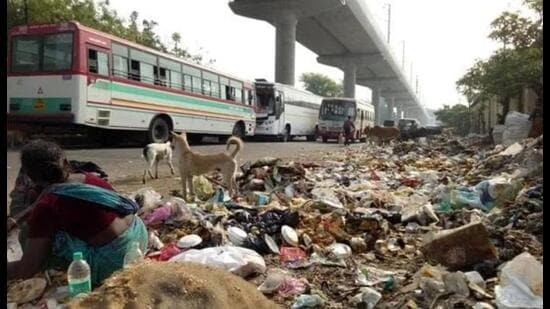
The audit paints a picture of a disjointed and under-resourced SWM framework in urban UP: Most of the local bodies were missing municipal plans as 93% of the test-checked urban local bodies (ULBs) failed to prepare SWM plans, even years after the state policy was formulated in 2018 — 14 months behind the deadline mandated by national rules.
Only 27% of ULBs created waste management bye-laws, many of which were inconsistent and incomplete, impeding effective enforcement and revenue collection through user charges.
Up to 50% of key supervisory roles such as chief sanitary inspectors remained vacant, leading to operational bottlenecks and oversight gaps in daily waste collection and sanitation.
Neglected awareness campaigns: Despite earmarked funds, more than half of the information, education & communication (IEC) budget remained unutilised in one-third of the reviewed ULBs. Some funds were even diverted, undermining citizen engagement efforts.
Out of 112 planned training sessions for waste management staff, only 53 were held due to administrative delays and inadequate funding, affecting service quality on the ground.
RECOMMENDATIONS
The audit offered a detailed roadmap to transform urban waste management in Uttar Pradesh.
Accelerate implementation of SWM policy; expedite preparation and adoption of SWM plans across all ULBs in alignment with the 2016 SWM Rules; ensure all municipalities frame and uniformly implement comprehensive bye-laws that empower them to regulate waste collection, segregation, penalties, and user charges.
Release funds to ULBs without delay and ensure they are utilised efficiently — particularly for IEC activities aimed at building public awareness and behaviour change.
Introduce incentives for households and waste collectors to encourage segregation at source and prevent mixing of waste through stringent monitoring protocols.
Make sanctioned material recovery facilities (MRFs), weighbridges and waste processing plants fully functional by ensuring the release of funds for machinery and civil works.
Fill vacant positions, especially at the supervisory level, and conduct regular capacity-building programmes to improve efficiency and accountability.
Implement robust systems for data collection on waste generation, transportation and disposal to inform evidence-based planning and monitoring.
Expedite the estimation and disposal of legacy waste and set up domestic hazardous waste centres and biomedical waste facilities in compliance with environmental rules.


