
 E-Paper



Despite GST Council’s no, legislators in UP, other states want Vidhayak Nidhi outside tax net
During the recently concluded Monsoon Session of Uttar Pradesh’s bicameral legislature, Devendra Pratap Singh, a Bharatiya Janata Party (BJP) Member of Legislative Council (MLC), submitted a notice to the state government under Rule 138 seeking to pass a unanimous resolution demanding exemption of Vidhayak Nidhi from GST.

 Prefer HTon Google


Cutting across party lines, legislators in Uttar Pradesh have demanded a waiver on the 18% Goods and Services Tax (GST) currently levied on constituency development funds or Vidhayak Nidhi, arguing that the tax reduces the money actually available for local area development. The demand has been raised though the GST Council has declined it in the past. Some states have chosen to absorb the burden themselves.
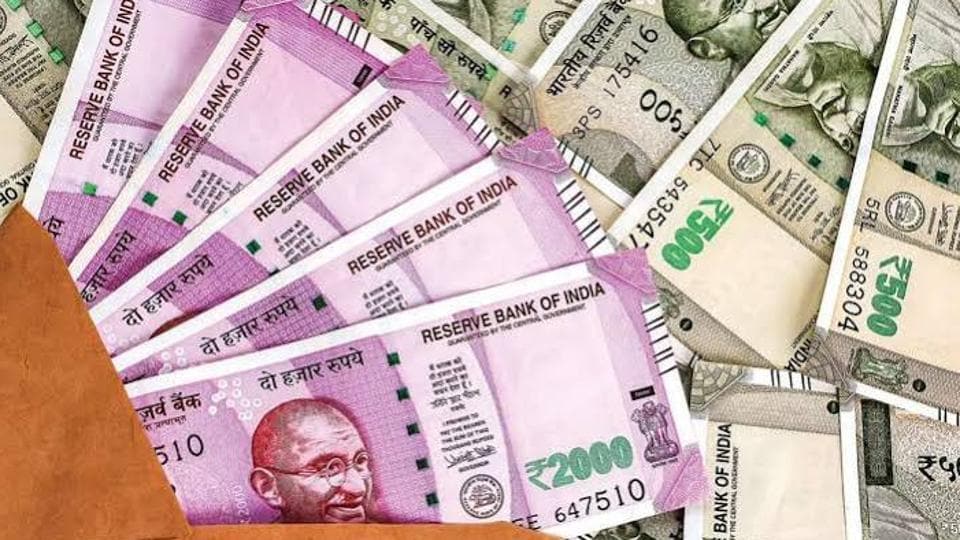
The issue also resonates among lawmakers in other states ranging from Tamil Nadu to Bihar and Uttarakhand, even as some states have chosen to absorb the burden themselves.
During the recently concluded Monsoon Session of Uttar Pradesh’s bicameral legislature, Devendra Pratap Singh, a Bharatiya Janata Party (BJP) Member of Legislative Council (MLC), submitted a notice to the state government under Rule 138 seeking to pass a unanimous resolution demanding exemption of Vidhayak Nidhi from GST.
The notice could not be taken up as the Legislative Council was adjourned sine die a day before the issue was scheduled for discussion, Singh said.
However, Keshav Prasad Maurya, deputy chief minister and Leader of the House in the Council, had prepared the government’s reply that sought to turn down the demand, saying that the GST Council has already rejected the proposal for exempting Vidhayak Nidhi from GST levy, according to rural development department officials.
Singh, however, argued that there was no justification for levying GST on the Vidhayak Nidhi amount since there is no sale or purchase transaction between the government and legislators and the money is spent on public welfare works rather than commercial activities.
Samajwadi Party (SP), Bahujan Samaj Party (BSP) and Congress legislators have raised the demand earlier on different occasions. MLAs raised this issue in the assembly’s recent Monsoon Session too.
Manish Asija, BJP MLA from Firozabad, said, “While the government publicises that it gives ₹5 crore to MLAs a year, in reality they get only ₹4.10 crore as ₹90 lakh is deducted as GST. People expect development work considering the amount the government quotes.”
Kamal Akhtar, Samajwadi Party (SP) MLA from Kanth (Moradabad), said, “The government builds the narrative that it gives ₹5 crore a year to each MLA while, in reality, ₹90 lakh of ₹5 crore is deducted as GST. This misleads the public.”
“The government should either quote the amount minus GST or raise the Vidhanyak Nidhi from ₹5 crore to ₹6 crore,” he added.
Pradeep Kumar Singh also known as Guddu Chaudhary, Rashtriya Lok Dal (RLD) MLA from Sadabad (Hathras), said all MLAs and MLCs, regardless of the party, wanted exemption for Vidhayak Nidhi from GST.
“The 18% GST deduction from the funds before balance is released adversely affects development works in our constituencies,” he said.
Pramod Tiwari, veteran Congress leader and Rajya Sabha MP who has the record of being a nine-time MLA, also does not see any logic for GST levy either on Vidhayak Nidhi or MP Local Area Development Scheme (MPLADS) funds.
“Under both the schemes, the public money is spent on public welfare works with no sale and purchase between lawmakers and the government. So, there is no justification for GST being imposed on these funds,” he said.
At the first meeting of an 11-member committee headed by UP assembly speaker Satish Mahana on August 1, members across party lines favoured keeping Vidhayak Nidhi outside the GST ambit.
Manoj Tiwari, a senior state tax official, explained GST was not imposed on the Vidhayak Nidhi allocation itself, but on the goods and services used in carrying out works sanctioned under the fund on MLAs’ recommendations.
“GST is generally included in tenders floated for works under Vidhayak Nidhi and forms part of the overall cost of the work,” he said.
The issue is not confined to Uttar Pradesh. The Parliamentary Standing Committee on Finance, in a report tabled in March 2025, said MP Local Area Development Scheme (MPLADS) was heavily burdened by GST and recommended that the Centre consider waiving GST levy to make the scheme more effective. The Centre, however, did not accept the recommendation.
In April 2025, the then Tamil Nadu chief minister MK Stalin announced that the state government would bear the 18% GST on MLA Local Area Development Fund. Tamil Nadu allocates ₹3 crore annually to each MLA under the scheme.
In Bihar, legislators argued in the House in February 2026 that the MLA LAD fund be raised from ₹ 4 crore to ₹ 5-6 crore annually to automatically compensate for GST deduction. Uttarakhand MLAs too have repeatedly expressed their frustration over the GST levy on the Vidhayak Nidhi.
The UP government’s prepared reply to MLC Devendra Pratap Singh’s question, however, points to an earlier decision of the 54th GST Council meeting held on September 9, 2024.
According to minutes of the GST Council’s meeting, a request had been made to exclude Vidhayak Nidhi from the GST ambit. The minutes noted that a similar request relating to MPLAD was placed before the 47th GST Council meeting on June 28-29, 2022 but it was not accepted.
“The GST Council may have declined the demand once, but that does not mean we should stop demanding it. The government should take up the demand again before the GST Council with all the facts and arguments,” Devendra Pratap Singh said.
“If both the Houses of the UP legislature pass resolutions supporting the demand, it would give the state government a stronger case when it approaches the GST Council again,” he submitted.


