
 E-Paper





Pankaj Jaiswal is Bureau Chief, Uttar Pradesh. He covers-analyses politics, and assists Hindustan Times reporters across the state. He has 30 years of experience in print media reporting. Based in Lucknow, he started his journalism career at a national English daily in Kanpur after graduating from Christ Church College. He joined Hindustan Times, Lucknow edition, as part of the launch team in 1997. He’s covered everything from rural distress to science, environment, wildlife, and crime. He has travelled extensively in Uttar Pradesh for rural, development, political, and election reporting. His continued interest in rural issues, rural distress, and development journalism has fetched him a handful of prestigious awards and fellowships. Pankaj is a photojournalist too. He clinched the Statesman Award for Rural Reporting—First Prize in 2009 and Third Prize in 2006—for exposing Bundelkhand’s devastating drought and distress: crop failures, farm suicides, migration, debt, and the injustice of meagre compensation cheques between Rs 10 and Rs 20 to farmers by the government from crop loss. He also has been awarded with Hindustan Times internal 'Journalist of the Month' citation over half a dozen times. His relentless reporting in Hindustan Times pulled the Bundelkhand crisis out of obscurity and forced it into the national spotlight, prompting media and government action on one of India’s most neglected regions. Over a decade, he filed hundreds of hard-hitting stories, travelling repeatedly from Lucknow deep into Bundelkhand. He also received the Special Mention KC Kulish International Award 2009. Pankaj also did long-haul political reporting on the most intense political family feud—’The Yadav Family Feud’—between 2016 and 2022.
Madurai lamp row: Yogi says Tamil Nadu has govt with SP’s DNA, Congress culture
Had there been a BJP govt in Tamil Nadu, could anyone have stopped lighting of lamp, asks Yogi Adityanath as he lays foundation stone of 104 development projects worth ₹502.31 crore to mark the 37th foundation day of Gorakhpur Industrial Development Authority


Chief minister Yogi Adityanath on Sunday accused non-BJP governments of compromising religious sentiments for vote-bank politics while speaking for the first time on the Madurai Karthigai Deepam (Hindu ceremonial lamp) controversy.
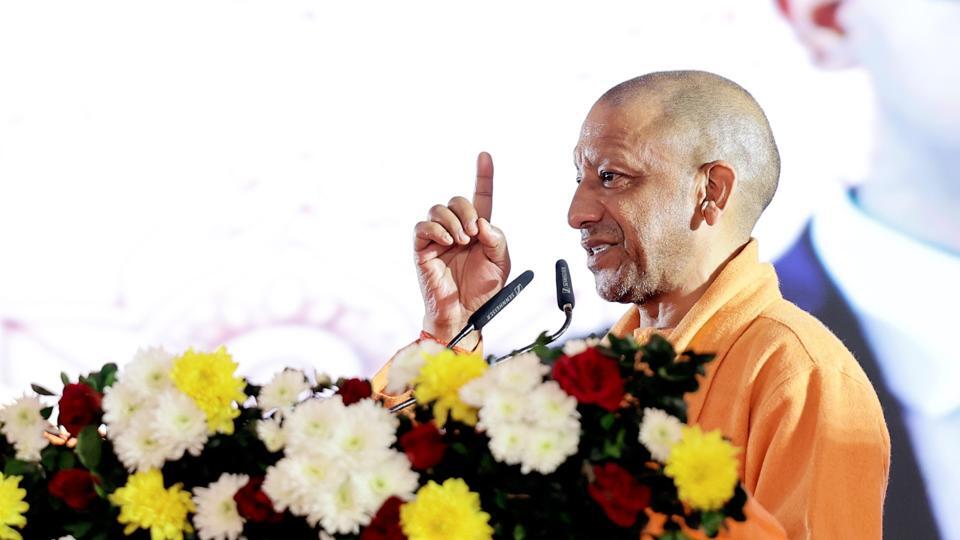
“If there was a BJP government in Tamil Nadu, could anyone have stopped the lighting of the lamp near Madurai?” he said in Gorakhpur, alleging that Tamil Nadu now has a government with the Samajwadi Party’s DNA and Congress culture.
The incident reflected politics driven by vote-bank considerations rather than respect for faith, he said.
Adityanath was addressing a gathering on the 37th foundation day of the Gorakhpur Industrial Development Authority (GIDA), where he laid the foundation stone of 104 development projects worth ₹502.31 crore aimed at strengthening infrastructure in the GIDA region and the proposed Dhuriyapar Industrial Township.
MoUs were also exchanged in his presence for five proposed investment projects worth ₹17,650 crore, which are expected to generate direct and indirect employment opportunities for around 50,000 people.
“In Tamil Nadu, near Madurai, despite the order of the Supreme Court, lamps were not allowed to be lit. They were not allowed to be lit because there is a government there with the DNA of the Samajwadi Party; a government of Congress culture. They are worried about their vote bank, not about your faith,” he said.
“Divisive people will attempt to come; this must not be allowed to happen,” he added.
Contrasting the incident with Ayodhya’s Deepotsav celebrations, he said, “Just think, on the day of Diwali and the day before it, how grand was the Deepotsav organised in Ayodhya. More than thirty-six lakh lamps were lit in Ayodhya.”
“...where there is a BJP government, a lamp is burning in every house; light is visible all around.”
The Karthigai Deepam (Hindu ceremonial lamp) on Thiruparankundram hill, near the Hazrat Sultan Sikandar Badusha Dargah, has become a major religious, legal, and political dispute in Tamil Nadu.
Thiruparankundram is an important pilgrimage hill. It houses the famous Subramaniya Swamy (Murugan) Temple. There is also a Muslim dargah on the hill. There is a stone pillar called Deepathoon near the dargah. Hindu devotees say it is traditionally meant for lighting a ceremonial lamp.
On November 20, the Supreme Court permitted lighting the lamp at the Deepathoon as a one-time measure. But on November 24, in non-compliance of the apex court order, the lamp was not lit at the pillar. It was lit at the customary location instead. However, after the Supreme Court took a strong view of the non-compliance and directed the CRPF to take charge of security, the lamp was lit at the Deepathoon on November 28.
“Just think, in many countries in Europe, riots are happening; anarchy has spread there. Every day arson, every day vandalism, every day looting. The total population of entire Europe is equal to the population of UP alone.”
“In UP, there is no looting, no curfew, no riots. UP mein na curfew hai, na danga hai; yahan sab changa hai (In UP everything is fine)’. UP has a double-engine government. But where people get divided among themselves, they are continuously being cut down (‘apas mein bantey hai, toh lagatar vahan kat bhi rahey hai),” he further said.
Recalling opposition to a proposed slaughterhouse in GIDA during the Samajwadi Party government in the past, Adityanath said he had led a protest against the project in his capacity as the then Gorakhpur MP.
The chief minister also laid the foundation stone for the expansion of the NIELIT Skill Development Centre and a labour dormitory under the Labour Welfare Mission.


