
 E-Paper





Brajendra K Parashar is a Senior Journalist with the Hindustan Times, based in Lucknow, with nearly three decades of experience covering governance, public policy, politics and development in Uttar Pradesh. Over the years, he has reported extensively on key sectors, including energy and renewable power, mobility and transport, road safety, agriculture and allied sectors and issues related to farmers, rural development, taxation under the Goods and Services Tax (GST) and public administration. A seasoned political correspondent, Parashar closely tracks the Bharatiya Janata Party (BJP) and has covered every major election in Uttar Pradesh right from three-tier panchayat elections and urban local body polls to Assembly and Lok Sabha elections. He also reports regularly on the proceedings of the Uttar Pradesh Legislature, bureaucracy, governance, policy decisions and administrative developments with focus on their impact on public life. His reporting is known for its strong analytical approach, extensive use of official data. His areas of interests include investigative journalism, long-form political and policy analysis, data-driven reporting, elections and institutional reforms. Parashar holds a postgraduate degree in Political Science with First Division from Aligarh Muslim University (AMU), followed by a Diploma in Journalism and Mass Communication from the same university. His inclination towards journalism began during his student days, when he regularly contributed letters to editors and articles to newspapers and magazines. In the mid-1990S, his essay, “Should India Switch Over to the Presidential Form Of Government?”, published in Politics India magazine edited by noted constitutional expert Subhash C Kashyap, was adjudged the best entry in a national competition. His work has received professional recognition, including the Hindustan Times Journalist of the Month Award for an impactful series on drinking water issues during the 2010 Lok Sabha election campaign. Originally from Kasganj in western Uttar Pradesh, Parashar is currently based in Lucknow where continues to report on politics, governance and public policy.
Power crisis: UP to transport 10 lakh MT coal to thermal plants by road
Public sector thermal plants lost more than 300 million units of generation in April due to coal crunch, say energy department officials

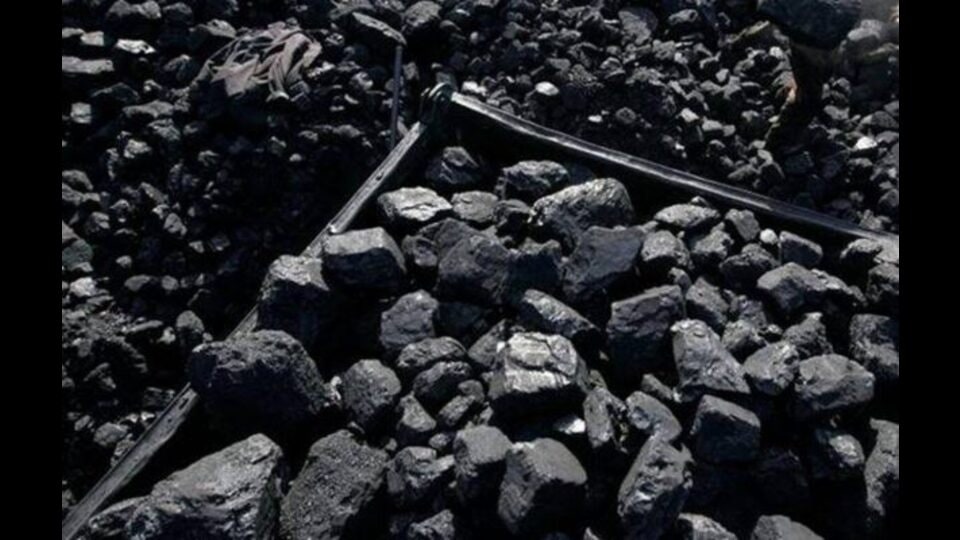
Uttar Pradesh will transport 10 lakh MT of coal to its thermal plants by road in view of difficulties being faced in transporting the fuel by rail, even as public sector thermal plants lost more than 300 million units (MUs) of generation in April due to coal crunch, energy department officials said.
The decision to transport coal to thermal plants by road, to overcome the shortage of rail wagons, was taken at a high-level meeting chaired by UP Power Corporation Ltd (UPPCL) chairman M Devraj, who is also chairman of all other energy corporations, including UP Rajya Vidyut Utpadan Nigam Ltd (UPRVUNL), here on Saturday.
“Since there is shortage of wagons, we have decided to transport 10 lakh MT of coal in next the two-three months to our plants, mainly the Anpara A, B and D thermal plants that are in close proximity to coal mines, by road so that the machines keep running on full steam,” a senior UPRVUNL official said.
All UPRVUNL’s thermal plants together, whose installed capacity is more than 6,600 MW, require around 85,000 tonnes of coal every day for optimum power production. Faced with an acute coal shortage these days, the corporation is forced to use coal from reserves because of which it is not able to maintain the coal inventory as per the norms decided by the Central Electricity Authority (CEA).
Owing to this, coal reserves in thermal plants are fast depleting to the extent that their availability vis-à-vis the normative requirement, as per the CEA, came down to 17% on April 28 from 21% on April 22.
While Anpara thermal plant had 33% of normative coal reserve, the same was down to 14%, 13% and 4% in Harduaganj, Obra and Parichha thermal plants, respectively. The four plants on Saturday were left with coal reserves enough to last for 5 days, 4 days, 3 days and 1 day, respectively.
The coal reserve in the Anpara C, Lalitpur and Rosa thermal plants also shrank to 21%, 3% and 1%, respectively as on April 28.
The coal-fired plants in the state, it is said, are not able to operate on full steam to produce electricity to an optimum level. “The UPRVUNL’s plants alone lost more than 300 MUs to the coal crunch during the current month,” another official said.
“The decision to transport 10 lakh MT of coal by road will definitely ease the coal crunch situation,” he pointed out.
The maximum restricted demand on Saturday was recorded to be 23,000 MW against the total power availability of 19,366 MW, which included 4,300 MW from the utpadan nigam, 6,200 MW from private plants, 366 MW from hydro and 8,500 MW from the central government’s plants. With the shortfall of around 3,500 MW, UPPCL had to resort to load shedding for more than 9 hours in rural areas, 7 hours in semi-urban areas and 6 hours in tehsil-level towns in order to avoid rostering in bigger cities.
Appealing to the people to cooperate in the difficult situation, energy minister Arvind Kumar Sharma on Saturday said the UPPCL was making all possible efforts to normalise the situation.
“We expect the power crisis to ease to a large extent from Sunday as UPPCL has arranged for procurement of 2,000 MW additional power from different sources to deal with the demand-supply gap,” he said in statement.
UP Rajya Vidyut Upbhokta Parishad chairman Avdhesh Kumar Verma demanded union power minister RK Singh to issue a white paper on the prevailing coal crisis in the country.


