E-Paper



Saharanpur’s mosque legal labyrinth: How an eviction order paved way for demolition
The September 2 judgment upheld eviction, it did not expressly order demolition of the structure. City magistrate Kuldeep Singh said his July order had directed “bedakhali,” or removal from the premises, and the building was consequently removed. The administration maintained it was enforcing the eviction order, while the mosque management argues eviction cannot automatically authorise demolition.

 Prefer HTon Google


In a state which is headed to polls likely in February-March next year, just over a year of legal battle led to the razing of a mosque claimed to be 150 years old inside the Saharanpur collectorate. Officials carried out the demolition on September 5. In a 26-page judgment, a copy of which Hindustan Times reviewed, District Judge Satendra Kumar affirmed the eviction order issued by the city magistrate’s court under the Uttar Pradesh Public Premises (Eviction of Unauthorised Occupants) Act, 1972, on July 16. The court said the mosque failed to produce evidence regarding ownership and lawful possession of the property.
Eviction upheld, demolition follows
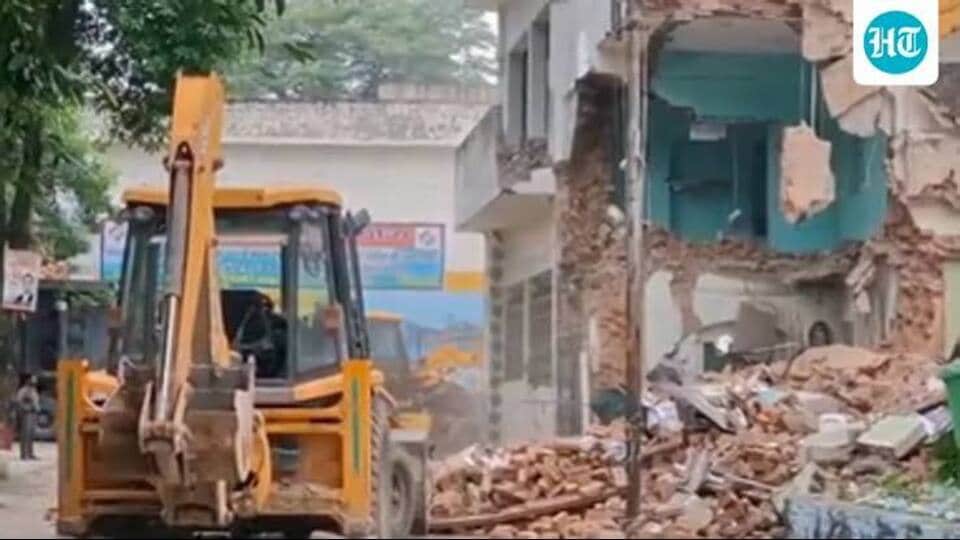
The demolition followed the district court’s verdict, which on September 2 dismissed an appeal filed by the mosque’s management committee against the city magistrate’s July order directing eviction. The operation was carried out under heavy police deployment, including five companies of armed police and central anti-riot forces. Officials said the demolition began around 7 am, though opposition leaders alleged it started earlier, around 5 am. A post office functioning from a portion of the premises was also removed, its belongings shifted elsewhere; officials said the post office had been paying rent for the space.
The September 2 judgment upheld eviction, it did not expressly order demolition of the structure. City magistrate Kuldeep Singh said his July order had directed “bedakhali,” or removal from the premises, and the building was consequently removed. The administration maintained it was enforcing the eviction order, while the mosque management argues eviction cannot automatically authorise demolition.
Ownership dispute at core of ruling
Judge Satendra Kumar held that the appellant, advocate mohd tanveer ahmad, failed to establish through reliable evidence his claims of ownership and lawful possession over the disputed 315 square metre portion of khasra number 539 in village Pathanpura. The court relied on revenue records dating to fasli years 1296, 1324 and 1359, which recorded the land as collectorate property, and rejected the mosque management’s electricity connection and municipal tax documents as proof of ownership. It also noted discrepancies in the waqf registration papers submitted, which cited two different waqf numbers, 451 and 452, for the same property, with no khasra or survey number linking the mosque to the waqf record.
The dispute traces back to a complaint filed by Bajrang Dal activist Vikas Tyagi in March 2025, alleging that government land inside the collectorate was being illegally occupied. Proceedings were subsequently initiated against Abdul Hamid, described in the case as manager and maulvi of the mosque, for allegedly occupying government property without authority.
Both sides contest the property’s history
The government’s case was that the building had originally been built as a rest house for litigants, and was later converted into a religious structure without permission, with rooms rented out and prayers offered there. The city magistrate’s order had imposed a penalty of roughly rs 6.41 crore on the occupants, along with a 30-day notice to vacate.
The mosque management rejected this version. Mutawalli Mohammad Tanveer Ahmed maintained the mosque predated 1911, arguing it was protected under the Places of Worship (Special Provisions) Act, 1991. The management cited waqf registration as number 451, municipal records dating to 1957, and a claim that the union government had leased part of the premises for a post office since 1960, paying rent to the mosque. It also argued that the Uttar Pradesh Sunni Central Waqf Board should have been made a necessary party, and that its absence barred the proceedings under section 85 of the Waqf Act. The district court rejected these arguments and dismissed the appeal.
Centuries-old well found in debris
Adding a fresh dimension, a well discovered beneath the debris of the demolished mosque is estimated to be 200 to 250 years old, according to a preliminary assessment by state archaeology department officials. The nearly 20-foot-deep, three-foot-wide well was found on Sunday during debris removal. A team of archaeologists from Lucknow inspected it on Monday to examine its bricks, construction and possible age.
Manoj Kumar Yadav, assistant archaeological officer, said the structure appeared at first sight to be an old well, with construction features, including Lakhori bricks and lime-surki, suggesting it could date back roughly two to two-and-a-half centuries. Yadav cautioned against definitive conclusions from the preliminary inspection alone, saying the structure remains partly filled with debris and further work would depend on the district administration’s decision. He noted the features appeared associated with the medieval period in the north and central Ganga valley, and that Saharanpur has a long history of settlement.
Political reaction, legal challenge ahead
The demolition has triggered a strong political reaction. Samajwadi Party president Akhilesh Yadav questioned the need to raze the mosque within 12 hours when the high court and Supreme Court “were there to intervene,” calling it “a well-planned strategy and conspiracy.” Writing on X, he alleged the “communal BJP government” and “communal” officials were involved and said he would write to the President of India seeking strict action against what he called a “malicious criminal act.”
Congress MP from Saharanpur Imran Masood claimed the mosque was 115 years old and that the demolition was carried out even after ownership documents were handed over to the administration. Deputy chief minister Brijesh Pathak said, “We will maintain law and order in Uttar Pradesh. Since the matter is before the court, it would not be appropriate to comment on it.”
The mosque management committee is preparing to challenge the matter before the Allahabad high court. Babar Wasim, counsel for the committee, said it would present its case with additional evidence, including material related to the well, and that a writ petition is expected to be filed within the next one or two days.