E-Paper



With wheat, U.P. to also collect 88L quintals of bhoosa
A special bhoosa collection campaign is underway to ensure adequate feed for around 13 lakh stray cattle

 Prefer HTon Google


Alongside the routine annual wheat procurement at the minimum support price (MSP) from farmers in Uttar Pradesh, another commodity has quietly made it to the government’s shopping cart — straw or bhoosa for stray cattle.
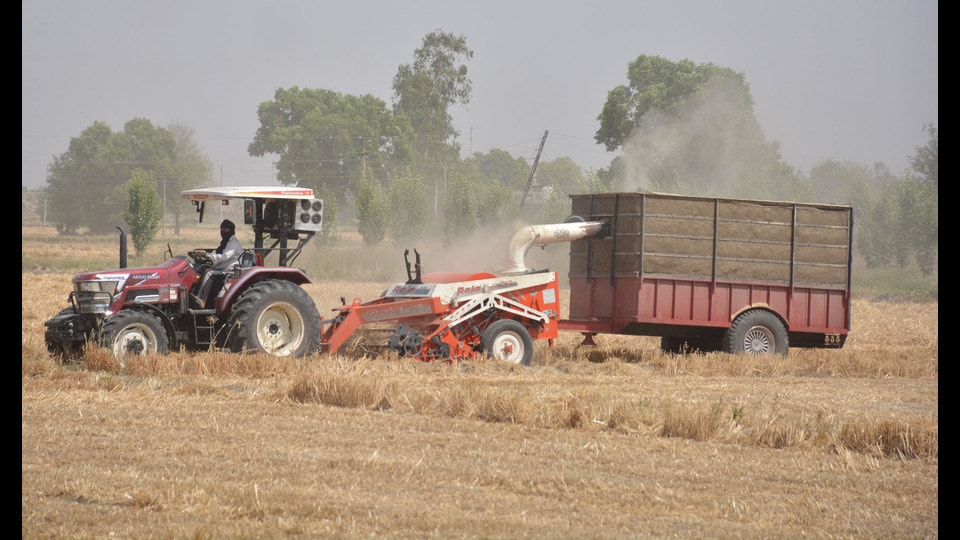
Bhoosa, a byproduct of the wheat crop, has now become a sought-after commodity as the state procures tonnes of it to keep stray cattle shelters across the state well-fed throughout the year.
The UP government has launched a special bhoosa collection campaign to ensure adequate feed for around 13 lakh stray cattle housed in over 7,500 conservation centres across the state.
The practice began a few years ago after the Yogi Adityanath government started conserving destitute cattle and feeding them became a challenge.
“The collection campaign, which started on April 15 and will continue till May 31, aims to collect bhoosa through both donations and purchases,” additional director (cow) SK Agrawal told HT.
According to official data, the state has set a total fodder collection target of approximately around 88,73,993.88 quintals, which covers around 60% of the estimated annual requirement of 1,47,89,989 quintals.
Out of the total target, 30% — around 26,62,198.16 quintals — is expected to be collected through donations, while 70% — around 62,11,795.72 quintals — will be arranged through procurement.
“The department of animal husbandry is buying bhoosa for ₹850 per quintal through tenders,” Agrawal said.
As of April 28, around 2.31 lakh quintals of fodder have been collected, representing about 25.98% of the overall target. The collection through donations has reached 12.61% of its target, while fodder purchased stands at 31.71% of the procurement target.
Minister for animal husbandry and dairy development Dharampal Singh, in a meeting on Wednesday, directed officials to ensure the bhoosa collection target was achieved so that there was no shortage of fodder for stray cattle throughout the year.
The bhoosa collected annually in advance is stored in what is called ‘bhoosa banks’ in districts and is used round the year as per the requirement. The Yogi government has earmarked a budget of ₹2,000 crore to be spent on the stray cattle’s feed alone during 2025-26.