
 E-Paper



Monday Musings: Will 2020 be a turning point for Pune’s public transport?
A good metro system must provide adequate parking at each station and an efficient bus feeder system to transport commuters from their homes. Has this been factored in by Maha-Metro?


The 5-km Pimpri-Dapodi stretch for the trial-run of the Pune metro in January is a no-brainer. This is a straight line with the least obstruction along the old Pune-Mumbai highway, and therefore the fastest to become operational.
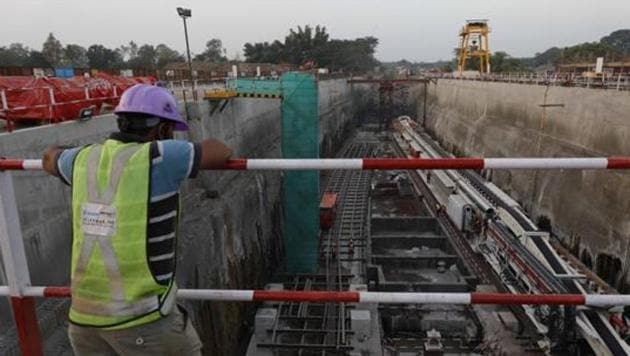
However, it is disappointing as a choice for the trial run because neither Pimpri nor Dapodi are thickly-populated business districts. These suburbs are located in the jurisdiction of the Pimpri Chinchwad Municipal Corporation (PCMC), and those who work in the industries of Pimpri-Chinchwad are used to commuting in the buses hired or operated by their companies. Therefore, the trial run, once it opens to the public, is going to be more of a joy ride than anything else.
The choice of a stretch — even for a trial run — should have been chosen carefully to demonstrate that the metro is going to emerge as an effective mode of mass transport and wean away people from their personal vehicles. That is unlikely to happen on this route.
Under phase-1, the first corridor of 11.57 km will run from Pimpri to Swargate and the second corridor of 14.66 km will run from the Vanaz depot in west Pune to Ramwadi in east Pune. It is the second corridor which will pass through Kothrud, Deccan Gymkhana, Pune railway station and Yerawada which is likely to make a big difference to the public, whenever it becomes operational in phases.
The real test of the metro will happen only when people start using the metro daily for commuting to office.
For that to happen, just the metro track won’t be enough. The “metro system” will require two critical elements — adequate parking for two-wheelers and four-wheelers outside every station and an efficient bus feeder service.
As normally happens, commuters come to the metro station in their own vehicles and park it in the parking lot. On their way back, they pick up their vehicle and return home. It is an efficient feeder service from the Pune Mahanagar Parivahan Mahamandal Ltd (PMPML), Pune’s bus service, which will be required to run at a high frequency connecting the metro station to the different localities. The metro station will have to serve as a hub and the buses will have to ply to-and-fro along radiating spokes to transport people from their homes to the metro station and back.
A good metro system must include these two critical elements at the minimum. It is only then that the people will find the metro to be an attractive option as can be seen from the way the metro is running successfully in New Delhi.
The Maharashtra Metro Rail Corporation Ltd (Maha-Metro) needs to enlighten the public on the metro system as a whole, and the media and the public also need to focus on these critical aspects of the metro, rather than be excited about the trial runs.
There is no doubt that rail transport is the most effective and environmentally, the most-sound mode of mass transport. A metro project for Pune has already been delayed by almost two decades because the politicians of the day lacked the will to plan it out. Given Pune’s heavy dependence on personalised vehicles, the metro project should have come to the city much earlier, than say, Nagpur or even Mumbai, and should have been up and running by now.
While nothing can be done about that delay, one can certainly hope that at least now, the metro will make a significant difference to mass transportation in Pune and emerge as one of the most loved modes of transport.
Thus, 2020 is going to be a crucial year for the city, because the contours of the Pune metro will take shape and the project will slowly but surely turn into reality. We need to be alert and watchful to see if it is moving in the right direction and delivers the promises made to the public.


