
 E-Paper



A visionary who transformed a swamp in Mira Road into Naya Nagar
Syed Nazar Hussain, who was laid to rest on Friday aged 90, was a man largely unknown outside Mira Road, but a larger-than-life figure in his neighbourhood

 Prefer HTon Google


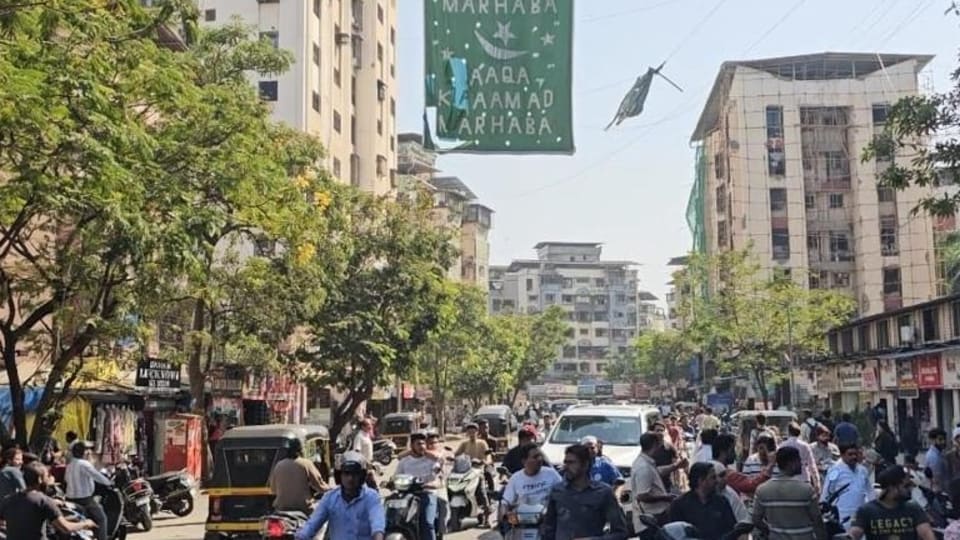
MUMBAI: Syed Nazar Hussain, who was laid to rest on Friday afternoon aged 90, was a man largely unknown outside Mira Road. In Mira Road, however, he was a larger than life figure, seated outside his bungalow, monitoring the goings on in Naya Nagar, the residential colony he’d helped establish. A well-designed colony for educated Muslims is how he had envisaged Naya Nagar, inspired by Goregaon’s Gujarati-dominated Jawahar Nagar.
Born in a village near Amravati, Husain grew up among Hindus, and often expressed the wish that his own community would pick up some of the latter’s habits: frugality from Brahmins; and discipline from the RSS, whose shakhas he attended as a youth, attracted by their physical regimen. Slovenliness either in habits (“strolling into a masjid in a lungi”) or in surroundings, he found distasteful, so he thought nothing of sweeping the masjid he had built every day.
Fiercely critical of his own community, he also fought for a better future for them. When a teacher in the school he set up couldn’t get a bank loan, Hussain met the manager to ask belligerently whether the latter believed all Muslims were scoundrels. Impatient with rabble rousing maulanas, Husain was the opposite with those in need. Hundreds of students who couldn’t afford fees owe their education to him. “Get educated”: these words of advice from his grandfather who brought him up, stayed with him. “Why don’t Muslims build colleges instead of mosques?” he would ask. He built both, as well as a hospital.
Husain’s mother died when he was an infant; after that, he was breastfed by a Jain neighbour. A self-made man, he chose to come to Mumbai in 1949, rather than heed his brother’s advice to go to Pakistan. Then just 15, he survived by doing odd jobs: selling towels, delivering tiffins and working in a factory. In a decade, he’d struck up acquaintance with legends as diverse as Comrade Dange of the CPI and the educationist and barrister Akbar Peerbhoy.
In 1962, he bought land in Mira Road, then just an uninhabited swamp which was a halt for salt trains. Step by step, he developed this into his dream colony, convincing the authorities to provide a railway platform, a connecting road, and water supply. In this he was helped by stalwarts such as Ambalal Patel, Moreshwar Patil, Rizwan Harris and Mrinal Gore, but most of all he was propelled by his own zeal. To convince the railways to invest in a platform, he bought and distributed 100 railway season tickets from Churchgate to Mira Road.
Finally, in 1979, when the colony was ready, he invited Shiv Sena founder Bal Thackeray and Muslim League’s G M Banatwala to inaugurate it. Thanks to Hussain, Naya Nagar is a sought-after address today, a self-contained, planned, accessible township.
Any list of Mumbai’s founders would be incomplete without the name of Sayed Nazar Hussain.


