
 E-Paper



‘Adults have failed to solve problems of the world. So, why not let children try?’
An experiential space for children aged 3-17, MuSo offers three floors of learning-led activity, where children are encouraged to make and break. An initiative of the JSW Group, founder and CEO Tanvi Jindal Shete says, “Learning can no longer be confined to a transfer of facts, but needs to be an immersive journey of discovery and joy

 Prefer HTon Google


MUMBAI: Before the classroom, kids learn about motion, distance and velocity through pakda-pakdi. Similarly, one of the exhibits at the newly launched Museum of Solutions (MuSo), in Kamala Mills, teaches flexibility and problem-solving through a double-storeyed climber. It’s rock-climbing, via ‘Alice in Wonderland’.
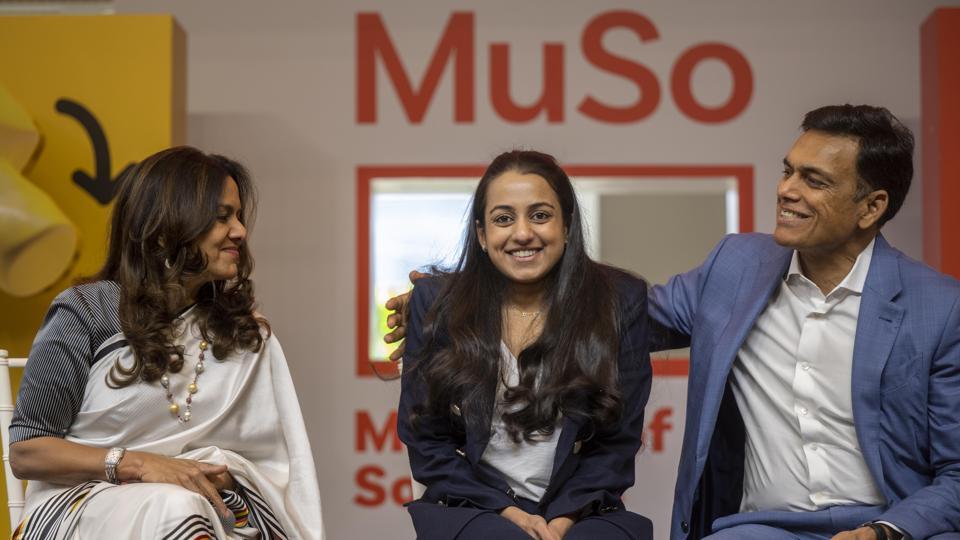
An experiential space for children aged 3-17, MuSo offers three floors of learning-led activity, where children are encouraged to make and break. An initiative of the JSW Group, founder and CEO Tanvi Jindal Shete says, “Learning can no longer be confined to a transfer of facts, but needs to be an immersive journey of discovery and joy.”
This is the idea behind the Play lab on floor 7, which uses games to make science fun. One area is filled with Lego bricks, Magna tiles and a peg board with rubber bands. Objects falling off a conveyor belt showcase gravity and a table with makeshift bridges teaches engineering. There is a quake-maker that simulates an earthquake, showing how tremors work and tectonic plates breakdance. Another area, where participants enter in raincoats, is like a mini water park. It has three tables that explain how liquid pollutants move from factories and homes into the ocean, the science behind a whirlpool and the workings of hydrodynamics.
As a volunteer with Teach for India (TFI) for several years, Shete has first-hand experience on the limitations of classroom-learning. “Teach for India was a turning point in my life. When I entered a Mankhurd slum to teach second graders, I would think, ‘How can I facilitate a space that is boldly child-led?’”
In the remains of an old textile mill, Shete envisioned the project in 2017, while TFI was working on a MacArthur grant. “The problem statement they were working on was: ‘Adults have failed to solve the problems of the world. So, why not let children try?’ This struck a chord with me because children are born creative and curious. It’s just that the education system doesn’t always support this.”
With a budget of ₹210 crore, Shete looked to the 17 Sustainable Development Goals set by the UN as the template for one of the floors. “Children have heard of climate change, they know we’re going to run out of water, but do they truly understand what that means?” she asks. So, floor 8 is the Discover lab, focused on the churn of water. Among the exhibits is a curiosity cabinet with multiple drawers, each of which opens to a treasure found in the sea with an explanatory audio guide. A life-sized fishing boat offers glimpses of the daily grind of a fifth-generation Koli. A walkthrough mangrove and interactive games on the Mithi River explain the problems in water conservation.
“In 1990, the runway at the Santacruz airport was extended and the Mithi River was forced to take a 90-degree turn,” says Shete. “That’s why Mumbai has solid flooding. I’m not judging whether that’s right or wrong, but a child needs to understand that there are consequences to whatever we do. Several kids who study in BKC don’t know that it’s a river; they think it’s just a naala. So, while making them aware of the problem, we want to encourage them to do something about it.”
An exhibit on water inequality hits home. The village around the Modak Sagar dam, which supplies water to Mumbai, doesn’t have running water supply. It details two concepts: the wait for water and the weight of water. Headphones are attached to matkas, so that kids understand what a villager goes through every day. They can try their hand at a hand pump to understand the effort it takes to fill half a bucket of water. And, a full bucket is connected via a spring to a fact-giving scroll: they have to lift it to read the fact. “These are simple actions to inspire the kids. For instance, we found the stories of changemakers across India, such as Malhar Kalambe, who’s doing beach clean-ups in Mumbai.”
Floor 9, the Make lab, is a supervised DIY space. Three rooms on woodworking, laser engraving and cutting, and art are for students to make prototypes. With devices such as 3D printers, miter saws and kilns, kids can create mock-ups of whatever’s cooking in their minds. In the dicky of a load carrier is a ‘make and unmake’ space. They can dismantle and reverse-engineer a rotary telephone, speaker, mosquito racket, hair dryer, RAM or even a keyboard. Finally, there’s an open atelier composed of tables, each assigned a different activity. They can build a boat with paper cups, straws, and corrugated cardboard; create a robot that goes over gravel; or build an amusement park ride from the discards of a landfill.
With ticket prices starting from ₹799 on weekdays, and Mondays free, MuSo which opens to the public on Sunday, aims to be accessible to students from anganwadis, municipal and government schools, national open schools and schools for special children. Shete says, “Every child deserves the opportunity to play, explore, discover and make.” Her father, Sajjan Jindal, Chairman, JSW Group, reiterates this at the press conference: “Schoolchildren from slums will be offered the same facilities as a child from Cathedral or American School. To change India, it is important that the future generations are trained and taught in a different way. What is available to a child in the US or Japan should be available to a child in India. And, that’s what this museum is about.”


