
 E-Paper



Air quality worsens again as doctors flag spike in respiratory cases
Data from CPCB showed multiple pollution hotspots across the city, while many air quality monitoring stations were non-functional for several hours, leading to serious underreporting of AQI levels

 Prefer HTon Google


Mumbai: The Air Quality Index (AQI) in the city rose to 104 – according to the Central Pollution Control Board (CPCB) – on Thursday, indicating the air was unhealthy for sensitive groups, after hovering at 80–90 in the moderate category for several days. A thick layer of smog engulfed large parts of the city till the afternoon, and doctors reported a surge in complaints about respiratory illness.
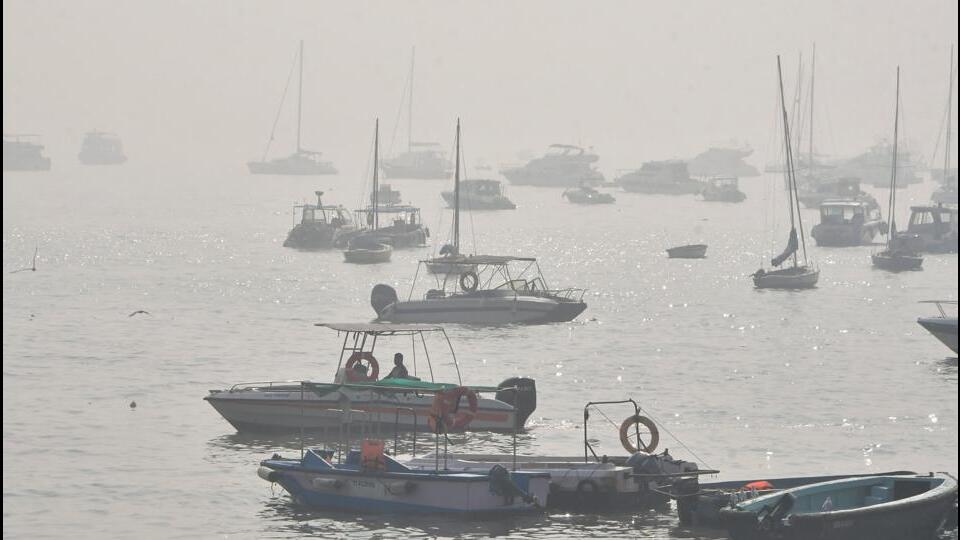
Data from CPCB showed multiple pollution hotspots across the city, while many air quality monitoring stations were non-functional for several hours, leading to serious underreporting of AQI levels.
The AQI in Navy Nagar in south Mumbai was 145, Deonar was 136, Ghatkopar was 131, Shivajinagar was 123, Kurla was 122, and Mulund West was 118. Among commercial hubs, the Bandra Kurla Complex recorded an AQI of 145, while the AQI in Borivali East was 130.
Although the AQI in pockets such as Mindspace in Malad West (82), Kherwadi in Bandra East (83) and Byculla (85) remained moderate, experts cautioned that air quality in the city was prone to sharp localised fluctuations.
A senior official from the Brihanmumbai Municipal Corporation (BMC) told Hindustan Times that all flying squads had been instructed to increase monitoring and issue stop-work notices to construction projects that flouted norms.
“We are also issuing notices to AQI monitoring station operators for non-functional monitors,” he said.
As reported by HT on Wednesday, the BMC has already issued stop-work notices to 106 construction sites across Mumbai for failing to install mandatory air-quality-monitoring systems.
Gufran Beig, chair professor at the National Institute of Advanced Studies (NIAS) and founder and project director of System of Air Quality Forecasting and Research (SAFAR), said the latest spike in pollution was driven by atmospheric conditions rather than wind patterns.
“North India has just come out of its peak pollution phase and there is a lot of moisture in the air. When moisture increases, the air becomes heavier and its holding capacity for pollutants increases,” he explained.
Mumbai’s weather variability made such fluctuations common, he said. “Like temperature, AQI keeps varying. On days when humidity is very high, smog formation is more frequent.”
Doctors said the deterioration in air quality in the city was evident in the surge in patients with respiratory ailments.
Pulmonologist Dr Lancelot Pinto said the trend had been unfolding over the last few months, especially since November, when people who returned to Mumbai after travelling elsewhere started complaining about respiratory issues.
“The situation has been pretty bad. Several irritants in the air have led to asthma cases surging, and we have had to put patients on steroids,” he said.
Dr Gautam Bhansali, consultant physician at Bombay hospital, said cases of sore throat and cough have gone up again after a brief lull last week.
“Some patients had to be admitted due to severe throat problems, and investigations revealed that irritation in the lungs was the cause,” he said.
On Thursday, the minimum temperature at Santacruz was 20.3 degrees Celsius, 3.7 degrees above normal; at Colaba, it was 21.5 degrees Celsius, 2.3 degrees above normal. Daytime temperatures, however, remained subdued, with the maximum at both stations at 28°C, 2.5 degrees below normal, restricting the dispersion of pollutants.
‘Blue’ industries expanded
The Maharashtra Pollution Control Board (MPCB) has expanded the list of industries under the ‘blue’ category, which pertain to essential environmental services, with an eye on boosting recycling and strengthening the state’s circular economy.
The move was earlier approved by the Central Pollution Control Board (CPCB).
A senior MPCB official said the revised list would improve ease of doing business while ensuring that essential environmental infrastructure and recycling facilities could function with minimal regulatory bottlenecks across Maharashtra.

Stay updated with all the Breaking News and Latest News from Mumbai. Click here for comprehensive coverage of top Cities including Bengaluru, Delhi, Hyderabad, and more across India along with Stay informed on the latest happenings in World News.


