
 E-Paper



Civic-run hospitals’ costly PPP shift
BMC accused of abandoning affordable healthcare as PPP shift pushes essential treatment beyond the reach of those who need it most

 Prefer HTon Google


MUMBAI: Unmoved by allegations of betrayal and public outrage, the civic administration is pressing ahead with its controversial plan to privatise key health services in Mumbai’s municipal hospitals, a move many see as an abdication of its public duty.
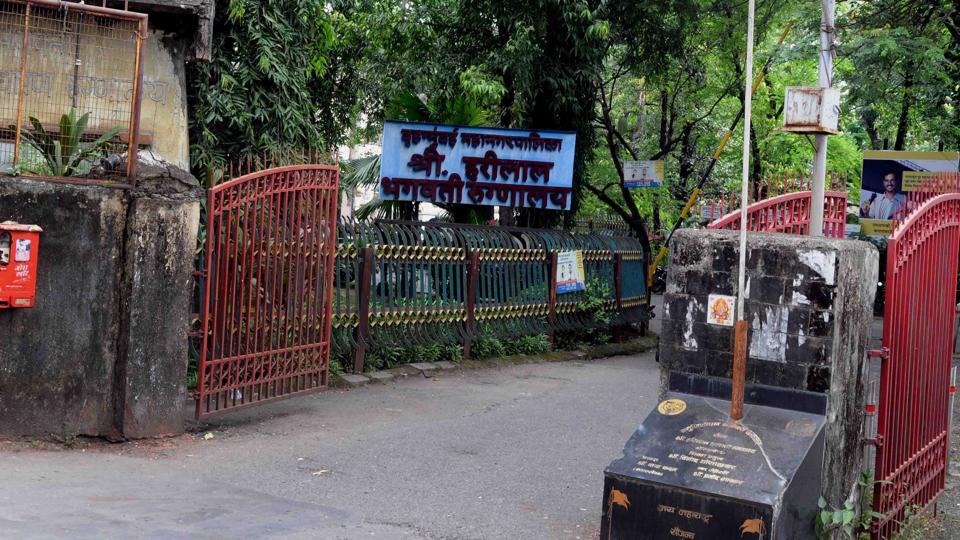
Calling it a “Civic Health Collaboration”, a more benign rebranding of the Public-Private Partnership (PPP) model, the Brihanmumbai Municipal Corporation’s (BMC) has floated tenders for the privatisation of services in nine of its 16 peripheral hospitals.
Contracts will be awarded to private operators for up to 30 years to run key healthcare services such as dialysis, ECG, sonography, the full range of cardiology and cath lab facilities, MRI and CT scans, and even blood banks for transfusions.
For lakhs of families, civic hospitals are the only lifeline for medical treatment. But with privatisation looming, they are being priced out by a civic administration turning its back on the very people it was meant to serve.
And it’s not only key services that will be handed to private players. According to tenders floated in March, the 581-bed Shatabdi Hospital and Medical College in Govandi will allot 70% of its beds for paying patients and only 30% for civic referrals at “concessional rates”. There were three bidders in the fray and the BMC has all but approved the final bid.
Similarly, in Mankhurd, the 410-bed Lallubhai Compound Hospital will reserve 260 beds for patients holding orange or yellow ration cards, while only 150 beds will be set aside for civic patients.
Full privatisation of Bhagwati Hospital in Borivali was scrapped only after MP Piyush Goyal’s intervention in April.
As the BMC rolls out its controversial plan, 38-year-old Panvel resident, Rahul Kamat, is tending to his 55-year-old mother, admitted to Bhabha Hospital in Bandra, as her platelet count fell dangerously low ten days ago. “We needed two pouches of platelets. The hospital didn’t have any because the component lab is still being set up, so I had to pay as much as ₹11,000 per pouch at a private blood bank,” said Kamat.
“Inside the hospital, an ECG costs just ₹20 and an echo test ₹100. If these rates are hiked under the private system, how will we afford it? People don’t come to civic hospitals for luxury treatment, we come here for basic facilities at minimal cost. If even that becomes unaffordable, what’s left for us?” he said.
Protests had erupted earlier this year in Govandi, where hundreds of residents marched against the privatisation plan, demanding that the BMC strengthen facilities instead of outsourcing them.
“This locality is inhabited by poor, marginalised migrants earning barely ₹200–300 a day. How will they afford ₹500 dialysis sessions or more complicated procedures? Most don’t even have ration cards or know of schemes. If privatisation comes here, it will hit this ward hardest,” said advocate Faiyaz Shaikh, convenor of the Govandi Citizens’ Healthcare Forum.
Privatisation at some civic hospitals has been underway for a while now and the staff at a BMC-run hospital admitted that private players rarely follow government rules. “For example, despite the rules mandating that blood for thalassemia patients must be provided free, PPP-run blood banks at Shatabdi in Govandi, HBT Trauma Centre in Jogeshwari and Cooper Hospital in Juhu have not consistently observed this,” said a civic doctor.
Moreover, she said, after CT and MRI services were outsourced in a few hospitals, the number of scans suddenly shot up. “Such malpractices should be curbed before expanding this model.”
Who qualifies for BMC rates?
Beyond the outsourcing itself, anger is mounting over the BMC’s new definition of who qualifies as a “BMC patient”. This category largely comprises citizens with yellow or orange ration cards issued by the Maharashtra government, BMC’s own employees and corporators and their families, and those referred by BMC or state hospitals are considered “BMC patients.
For them, charges will remain nominal and in line with state-determined rates. For everyone else, services will be billed at “reasonable rates” determined by the private service provider.
At present, a CT scan costs ₹1,200 for BMC patients, while MRIs range from ₹2,500–3,300. Dialysis is ₹500 for BMC patients, but “non-BMC patients” will pay as per private operators. Cardiology is steepest: coronary angiography is ₹7,500 for BMC patients, but angioplasty with stenting is ₹1.27–1.3 lakh. Even routine sonography, priced at ₹180, may climb further according to rates decided by private operators.
Why privatise?
In December last year, the BMC had floated a tender seeking consultants to prepare policies for implementing PPP projects. The consultants were tasked with preparing frameworks for different PPP models.
A few months later, in his address while announcing the BMC’s budget for 2025-26, municipal commissioner Bhushan Gagrani unveiled plans to expand the PPP model. According to him, the move will make healthcare more accessible, reduce operational costs, and ensure that hospitals and health centres can operate sustainably.
However, a senior health official in a BMC-run hospital claimed the entire exercise was aimed at solving the severe manpower crunch, especially doctors and technicians, at civic peripheral hospitals.
Health economist Ravi Duggal calls it a feeble excuse for handing public hospitals to private players. “You are essentially selling public assets to private entities under the guise of collaboration. Poor patients will be left at the mercy of the market, even though they pay taxes. The government underspends on health every year, sanctioned posts remain vacant, and then they claim they have no capacity. Instead of providing universal access, they are erecting barriers for the most vulnerable,” he said.
The BMC has trotted out another excuse in support of its PPP model. It claims non-BMC patients will get access to private health care through the Integrated Patient Health Service Access (IPHSA) scheme, and state schemes like MJPJAY and PMJAY.
But patients who rely on civic hospitals aren’t mincing words, calling it a sham. The BMC, they say, is abandoning one of its most basic responsibilities because healthcare just doesn’t matter enough.
Stay updated with all the Breaking News and Latest News from Mumbai. Click here for comprehensive coverage of top Cities including Bengaluru, Delhi, Hyderabad, and more across India along with Stay informed on the latest happenings in World News.


