
 E-Paper



Coastal road: Fisherfolk to continue stir despite call for independent review by BMC
BMC chief said the impact of coastal road on fishing has been vetted by several institutes and that the fisherfolk can choose the organisation they feel is best for the review

 Prefer HTon Google


In response to the protests by Worli fisherfolk against the construction of an interchange between the coastal road and the Bandra-Worli Sea Link (BWSL), the Brihanmumbai Municipal Corporation (BMC) has suggested that a qualified, independent organisation be appointed to review the fishing community’s demands.
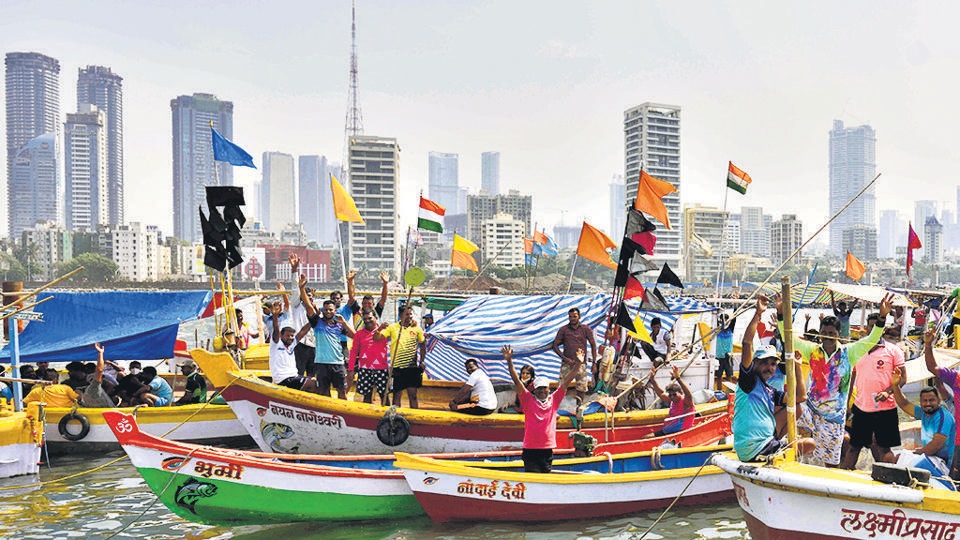
However, Nitesh Patil, president of the Worli Koliwada Nakhava Matsyavyavsay Sahakari Society (WKNMSS), said, “We are going to continue our agitation till our demands are met. Other fishing villages of Mumbai are now ready to join us in our struggle.”
Over 100 fishing boats from Worli Koliwada have been staging a sit-in in the alignment of the interchange since October 30. The fisherfolk said that the proposed span of 60 metres (m) between the pillars of the interchange will cut off their access to customary fishing grounds, and have demanded a span of at least 200m to ensure safe passage for their boats.
Speaking to HT after meeting with the fishing community leaders on Monday afternoon, municipal commissioner Iqbal Chahal said that he is not opposed to redesigning the interchange, but added that fisherfolk’s demands need to be “properly reviewed”.
“The impact of the coastal road on fishing has been vetted by the Maharashtra coastal zone management authority (MCZMA), the National Institute of Oceanography (NIO) and the fisheries department. The fisherfolk have an available span of 29m under the BWSL, but are able to use only 17m because of some rocks in the area. If 17m is sufficient, 60m under the interchange should also suffice. But if the fisherfolk still feel that they require more area, then we suggest that an independent, qualified institute be appointed to review the situation. The fisherfolk can choose the organisation they feel is best for the task. After an independent review, if it is found that we need to leave a larger span for their boats to pass through, it will be done. It may involve an additional couple of hundred crores [of rupees], but we are open to it. The demand for redesigning needs to be substantiated through a proper assessment,” Chahal said.
Shweta Wagh, an architect and researcher who has been closely monitoring the impact of the project on Worli’s fishers, pointed out that contrary to Chahal’s claim, studies carried out before the project began did not consider the existence of fishing in the inter-tidal and shallow waters of Worli. Wagh also said that BMC’s insistence on an independent, expert review undermines the fisherfolk’s own knowledge and expertise.
“BMC discovered only later, when independent studies were presented by petitioners in the court, that the area supports fishing activities. The social and environmental impact assessment reports of the project have no mention of fishing in the Worli area, nor any assessment of impacts. It was only after the construction began that various agencies like NIO and the Central Marine Fisheries Research Institute were engaged, but by then a great deal of damage had already been done. The [Bombay] high court in its judgment stated that MCZMA has not considered all the facts before granting clearance,” said Wagh.
The fisherfolk, meanwhile, said that the current situation would not have arisen had BMC taken them into confidence at the project planning stage itself. They emphasised that the corporation has already violated the terms of CRZ (coastal regulatory zone) clearance by hampering fishing activities.


