
 E-Paper



Doctors recall horrors of 7/11 Mumbai train bomb blasts
Within an hour, the KEM hospital, closest to two of the stations where the blasts had occurred, saw its halls filled with the injured.

 Prefer HTon Google


Mumbai: That fateful Tuesday evening in 2006, Dr Aparna Deshpande, the then associate professor and head of the emergency unit at the King Edwards Memorial (KEM) Hospital, was heading home when she was called back to the hospital along with all the other doctors. Seven coordinated blasts in trains along the western railways had left a trail of dead and wounded, and the city reeling from the tragedy.
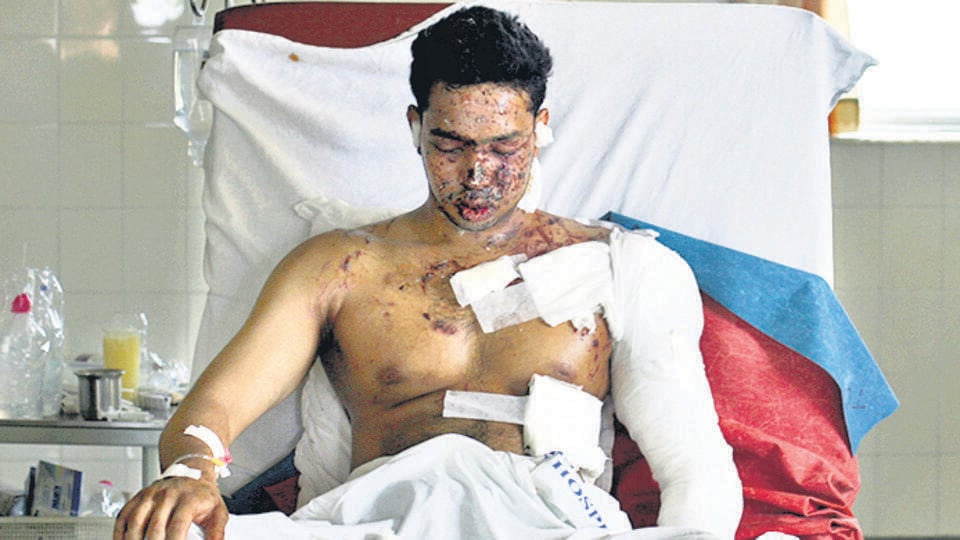
Within an hour, the KEM hospital, closest to two of the stations where the blasts had occurred, saw its halls filled with the injured. Doctors recall the horror of dismembered bodies, the severe lung damage, the massive blood loss due to shrapnel piercing bodies, and even the severe spinal injuries leading to 18 surgeries. The tragedy claimed 188 lives, left 828 injured, and many more grieving.
Deshpande, along with all the resident doctors, as well as professors qualified to be on call were deployed to tend to the wounded. Surgeons and orthopedics began by diagnosing the wounded and separating the blast victims into groups based on the severity of their injuries. Patients diagnosed outside the casualty wing of the hospital, were then let into the ward if their condition was severe. Those in more stable conditions were shifted to another ward. Of the 76 victims that came to the KEM hospital, 31 were admitted into the casualty ward and treated for severe and critical injuries, and 45 were kept for observation and discharged when they were in a more stable condition.
KEM’s disaster response
Meanwhile, doctors said that they had managed to handle the situation thanks to a disaster management plan that was set in place earlier that year, with mock drills equipping them to manage such severe situations. After Mumbai’s 2005 floods, the then KEM dean Nilima Kshirsagar had decided to incorporate better tools, equipment, and have designated roles for doctors in the case of an emergency. The preparation came in handy in the aftermath of the blasts.
However, despite the disaster management plan, the casualty ward grew congested with the injured, the thousands of well-wishers pouring in to volunteer at the hospital and to donate blood to victims, and the grieving relatives of victims who waited for news about their loved ones. “The worst for us was to inform the relatives who came in looking for their kin, and sometimes even direct them to the mortuary. It was extremely saddening,” said Deshpande.
Deshpande recalls how the hospital conducted over 300 tests in the radiology department, and how the ear, nose, throat (ENT) department too was helpful with diagnosing patients. “The infrastructure and manpower truly helped,” added Deshpande, who is currently professor of surgery at KEM.
The invisible wounds
However, along with the blood and the gore, the blasts also left the city with an invisible wound, with many doctors traumatised by the incident. Many were scared for their lives, afraid that another such blast could occur again.
Dr Sanjay Mehta, who was then the coordinator of emergency medicine services and is currently the director of Accident and Emergencies at Kokilaben Dhirubhai Ambani hospital recalls that the blast victims were different from the kind injured people the doctors saw in the emergency wing on a regular basis. “It was extremely inhumane. Their arteries were ruptured and we were left questioning why such events even happen. But we left everything behind and focused on saving lives,” said Mehta.
What really helped according to the doctors was to have a complete supply of medicines to treat at least 50 patients in case of an emergency. “I still follow it to this day. It has been my learning to always stock medicines to treat at least 20 patients,” said Mehta. Since the blasts, KEM has strengthened its disaster management plan with more defined roles for over 500 doctors in the case of an emergency. “That blast almost felt like a test,” added Mehta.
A war ready JJ
As the KEM hospital’s corridors filled with tragedy, down south in the city, the JJ hospital too braced for the worst. Dr Pravin Shingare, then dean of the JJ Hospital recalls how the JJ Marg police station had warned them that victims could start arriving at any moment. “We didn’t know how many or how critical, but we prepared for the worst,” said Dr Shingare.
JJ Hospital’s casualty ward, typically a busy space, was transformed within minutes. Doctors living on campus, specialists and generalists alike, were urgently called in. The 300-resident doctors’ hostel quickly emptied out as residents rushed to report for emergency duty. Pharmacists within the campus were summoned to open the hospital’s medicine stores, pulling out every vial of IV fluids, saline, and emergency drugs they could find.
Pharmacists fanned out to nearby chemist shops, requesting more supplies, bottles of saline, glucose, and critical injections. “They didn’t ask for a single rupee upfront,” Dr Shingare recalls, “They simply gave us what we needed, trusting we’d pay later. That was the spirit of the moment.” Lab technicians were also called to expedite blood tests and diagnostics, ensuring no time was wasted on investigations once patients arrived.
Yet, when the dust settled, JJ had received fewer than 15 victims. “Most victims went to KEM and Sion hospitals, much closer to the blast sites in the suburbs,” Dr Shingare explains. “We stood ready, but only a few came, mainly those from south Mumbai.”
Even then, JJ’s role extended beyond its gates. When KEM Hospital called for help, overwhelmed with casualties, Dr Shingare immediately sent ten doctors from JJ to support their counterparts. “Standing there with all our emergency equipment, borrowed medicines, and an army of doctors waiting, it was a bittersweet relief,” he reflects. “We were ready to fight, but sometimes readiness alone is the battle. That night, JJ stood prepared for a city in pain.”

Stay updated with all the Breaking News and Latest News from Mumbai. Click here for comprehensive coverage of top Cities including Bengaluru, Delhi, Hyderabad, and more across India along with Stay informed on the latest happenings in World News.


