
 E-Paper



HC restores 6-year-old’s RTE admission, rejects ‘rigid’ distance rule
A single-judge bench of justice N J Jamadar observed that a “neighbourhood school” described under the Act cannot be construed in a “rigid and pedantic manner”

 Prefer HTon Google


Mumbai: The Bombay High Court has set aside a state order denying a six-year-old underprivileged child admission to a private school under the Right to Education (RTE) Act quota on account of breaching the eligibility rules regarding the distance between home and school.
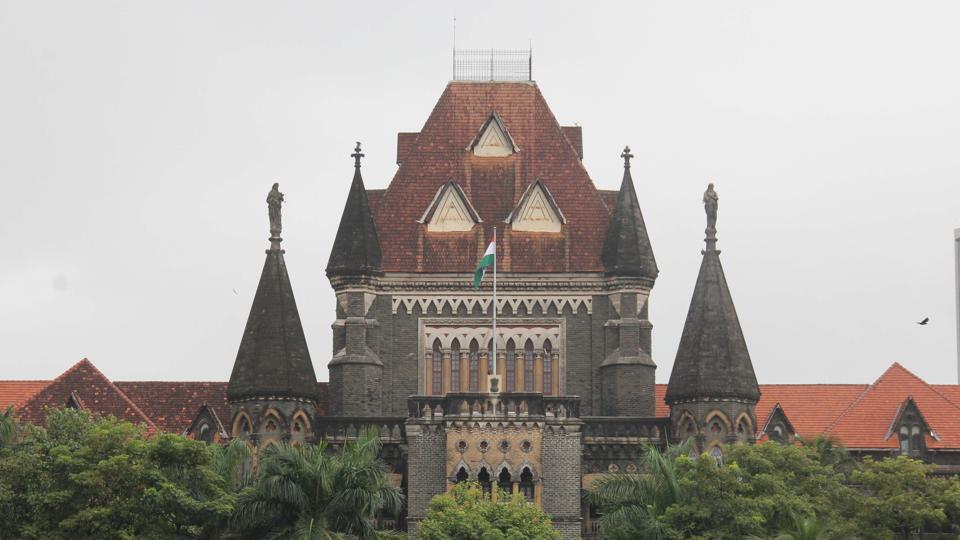
In a ruling expected to have a bearing on school admissions under the RTE, a single-judge bench of justice N J Jamadar observed that a “neighbourhood school” described under the Act cannot be construed in a “rigid and pedantic manner”.
The court directed Balmohan Vidyamandir (BV) in Dadar to admit the child to Class 1 within a week, saying that a very rigid view on area limits under the RTE would “impinge upon the constitutional right of free and compulsory education”.
In a metropolis like Mumbai, the court said, the state “could not have applied the barometer of distance…with exactitude,” especially when the chances of the child securing admission in any other private unaided school had diminished. The distance criterion stipulated in the RTE rules needs to be applied with “requisite flexibility” depending on the area’s geographical realities, it added.
The court was hearing a petition filed by Karuna Kamble, a 38-year-old resident of the BDD Chawl in Worli. Kamble had challenged a decision by the Deputy Director of Education (DDE), Mumbai Region, in August to cancel the admission granted to her six-year-old daughter at Balmohan Vidyamandir under the 25% RTE quota for children from economically weaker sections (EWS) because their home address was beyond the prescribed distance from the school.
Kamble said that her daughter had secured admission in Balmohan Vidyamandir through the RTE quota in April after submitting all the necessary documents. However, the school later “blatantly and brazenly” refused to admit her daughter without a reason, she claimed, adding that other EWS children, too, had been denied admission similarly.
When the matter was escalated to the DDE, the school claimed that Kamble’s home was beyond 1 km from the school, thereby breaching the distance rule under the RTE quota. The DDE agreed with the school’s decision, prompting Kamble to approach the high court for relief.
In her petition, Kamble said that while two other children whose homes were between 1 km and 3 km from the school were admitted by Balmohan Vidyamandir, the DDE cancelled her daughter’s admission on the basis of an education inspector’s report stating that her home was 4 km from the school. She also submitted that the cancelled admission would mean her daughter would lose an academic year.
The state argued that its decision was in line with the rules under the RTE Act. It also alleged that Kamble had misrepresented the distance between her home and the school and misled the authorities, and had deliberately chosen schools far from her home. Balmohan Vidyamandir’s counsel said that the high court had previously, in a series of decisions, upheld the area restriction for admission under the RTE.
The court noted that the distance between Kamble’s home and the school was 4 km. However, it pointed out that according to the Maharashtra Right of Children to Free and Compulsory Education Rules, 2011, enacted to enforce the RTE Act in the state, a “neighbourhood school” should be located within 3 km “as far as possible”.
Justice Jamadar said that rules framed by different states under the RTE laid down distance criteria based on population density, literacy levels, and the need for a school. “There is, thus, an element of flexibility in the concept of neighbourhood,” the judge said, adding that it cannot be defined “with clinical precision or mathematical exactitude”.
“In an era of time-space compression, the distance ceases to be an absolute inhibiting factor. Time is said to be the greatest distance between two places. In a metropolis like Mumbai, the concept of distance becomes even more relative. A number of variables come into play. The means of transport and easy accessibility become critical,” the judge added.
Stay updated with all the Breaking News and Latest News from Mumbai. Click here for comprehensive coverage of top Cities including Bengaluru, Delhi, Hyderabad, and more across India along with Stay informed on the latest happenings in World News.


