
 E-Paper



How the acrimony between the couple led to the murders
An acrimonious legal battle between an artist couple led to their estrangement and ultimately the murders that took place, according to the prosecution. The couple had a contentious relationship, with the husband eventually seeking divorce and alleging cruelty by his wife. The family court granted the divorce and ordered the husband to pay alimony. The wife then challenged the court's decision in the Bombay high court. The court found that the marriage was effectively over and that the couple's allegations against each other were unsubstantiated. The wife had also filed a criminal complaint against her husband for indecency, which was pending in court.


MUMBAI Bitterness surfaced between the artist couple not too long after they were wed in 1998. It only escalated then on, leading Chintan’s then estranged wife Hema to seek legal recourse. Their acrimonious legal battle thereafter was the root cause of the twin murders, said the prosecution.
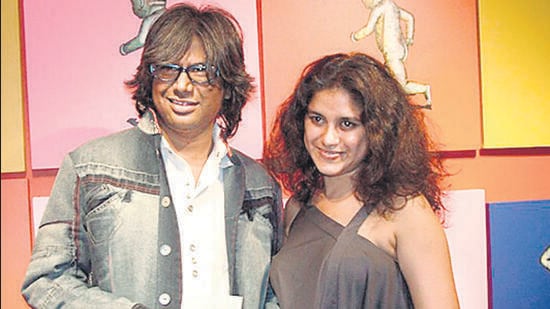
A part of the litigation started in 2010 when Chintan approached the family court in Bandra for divorce, contending that his wife was treating him with cruelty. Accepting his plea, the family court, on October 29, 2014, granted Chintan decree of divorce, and also ordered him to pay Hema one-time alimony of ₹
16.51 lakh. Hema, a celebrated artist herself, then moved the Bombay high court (HC), challenging the family court order.
The court had observed that after they met at MS University, Baroda, Hema’s home city, and after a period of courtship, the couple’s got married on October 31, 1998, in Jaipur, according to Hindu customs. However, soon after their marriage, things started to sour between them. They started drifting apart in 2009 – by now fights in front of their house staff in their Juhu residence and Chintan’s studio had become common.
Next year, Chintan approached the family court, alleging insensitivity and cruelty by his wife. He also claimed that Hema suffered severe personality disorders, bordering on schizophrenia. Hema countered this, alleging Chintan was a chain smoker, an alcoholic and an insensitive man who exploited her for his advantage.
The court noted that there was no substance in Chintan’s allegations, while Hema’s counter-allegations were wild, reckless and unsubstantiated. “Making of such defamatory and wild allegations against the spouse amounts to mental cruelty,” the family court said.
The family court also said that as a result of the ongoing legal battle between the two, the marriage was effectively over with no chance of the relationship springing back to life. “The essence of marriage has gone,” said the family court, adding, “the marriage has become a shackle for them.”
During pendency of the matrimonial dispute, in 2012 Hema had filed a criminal complaint accusing Chintan of indecency, referring to “obscene” paintings drawn by him on the walls of his bedroom. She had sought to prosecute her husband for offences under section 4 (prohibition of publication or books, pamphlets etc. containing indecent representation of women) read with section 6 (which provides punishment of up to two years imprisonment) of the Indecent Representation of Women (Prohibition) Act, 1986 and section 292 (2) (a) (prohibition of sale, distribution of obscene material) of the IPC. Acting on her complaint, a metropolitan magistrate court had, in January 2013, initiated the process to prosecute him.
Chintan then approached HC seeking to quash the criminal proceeding, but his plea was rejected in May 2013. Chintan then carried the matter to the Supreme Court, and according to his lawyer, advocate Niteen Pradhan, the Apex Court, had on July 22, 2013, stayed the criminal proceedings pending before the metropolitan magistrate court in Bandra.
Advocate Bhambani had represented Hema in all the litigations against her husband.

Stay updated with all the Breaking News and Latest News from Mumbai. Click here for comprehensive coverage of top Cities including Bengaluru, Delhi, Hyderabad, and more across India along with Stay informed on the latest happenings in World News.


