E-Paper



As Coastal Road grows, is real estate in south Mumbai on the cusp of revival?
Urban planners and real estate experts say the new link between the Mumbai Coastal Road and the Bandra-Worli Sea Link will help Nariman Point grow

 Prefer HTon Google


Mumbai: While connecting the Bandra-Worli Sea Link (BWSL) with the signal-free Mumbai Coastal Road along the Arabian Sea has reduced travel time between south Mumbai and the suburbs, a larger question on everyone’s mind is: will this development lead to a resuscitation of real estate in Mumbai’s original commercial district – Nariman Point?
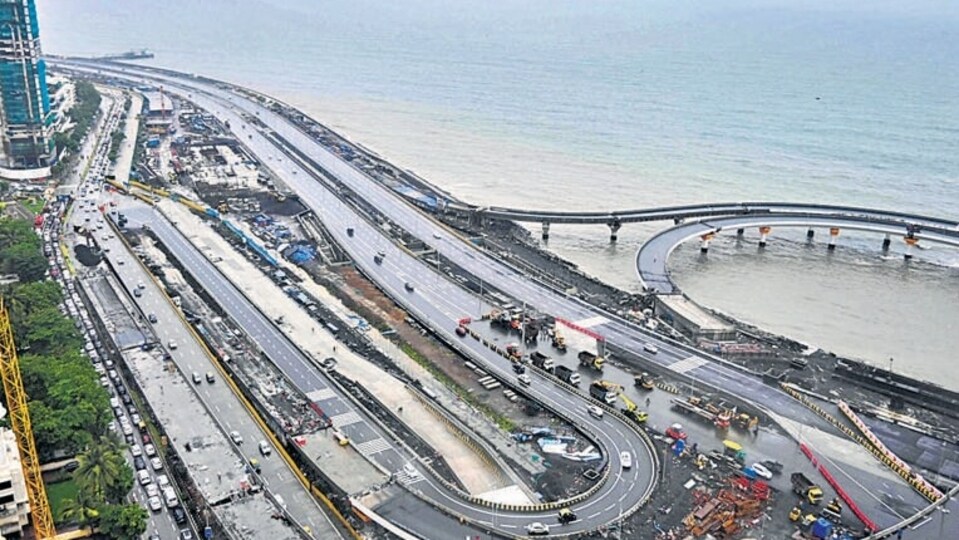
On September 12, chief minister Eknath Shinde and deputy chief minister Devendra Fadnavis inaugurated the link connecting the bow-string arch bridge of the coastal road and the cable-stayed sea link.
Urban planners and real estate experts are optimistic that the new development will fuel the redevelopment of Nariman Point into a hub for luxury housing, entertainment and hospitality hub.
Property consultancy Knight Frank’s latest report, ‘South Mumbai - A Renaissance’, expressed that, apart from this, there will also be an upsurge in office rentals. It is projected to see a sharp rise from the current ₹569 per sq ft to ₹1,091 per sq ft by 2030, reflecting a strong demand for premium office space in the area. Incidentally, Knight Frank has bagged the mandate to assist the Mumbai Metro Rail Corporation to lease a 4.2-acre plot in Nariman Point; the bid was floated last week.
“The marriage between coastal road and BWSL will bring south Mumbai closer to the western suburbs. When the link gets extended towards Versova and Kandivali, there will be a parity in real estate prices. Nariman Point has smaller offices compared to the suburbs; but in order for corporates to move back, this has to change,” said Pankaj Kapoor, managing director, Liases Foras Real Estate Rating & Research.
He added, “With higher FSI available, it could boost premium luxury housing in Nariman Point. The hub can then transform into the next Walkeshwar and Peddar Road. As this is a linear city, offices and commercial spaces will continue to be in the central parts, making it an easy commute for employees.”
Over the years, Nariman Point lost its sheen with the development of central business districts in Bandra Kurla Complex (BKC), Lower Parel, Prabhadevi, Worli, Powai, Andheri, Malad and Goregaon.
Vimal Nadar, senior director and head of research, Colliers India, said, “Full benefits from multiple infrastructure projects are yet to be witnessed. Given the development of road infra, companies are preferring a hybrid and distributed work model. Largely, BFSI (banking, financial services and insurance), law and consulting firms currently prefer to have a space in south Mumbai.”
For a complete overhaul, office buildings in some very old parts of south Mumbai require a significant upgrade. Take, for example, Express Towers, which is being upgraded by Bengaluru-based Embassy Office Parks. According to data shared by Colliers India, the quoted average rental for Nariman Point area is in the range of ₹200-250 per square feet per month as compared to ₹150-600 per square feet per month in and around BKC, including Kalina. That is because office infrastructure in Nariman Point falls short compared to what is available in BKC.
According to real estate and urban planning expert Amol Shimpi, “An accessibility to south Mumbai will have a long-lasting impact on overall urban planning of south Mumbai.” Shishir Baijal, chairman and managing director, Knight Frank India said, “South Mumbai is witnessing a renaissance, spurred by the transformation of strategic infrastructure across the city. As infrastructure-driven economic growth continues, we expect more companies to be drawn to the area, contributing to its revitalisation and long-term commercial sustainability.”
An unoptimistic view
Not everyone is as enthusiastic about the revival of real estate in SoBo. While some corporate houses have already moved to central Mumbai and beyond, those in the government machinery also underscored that their destination is north-bound as well.
Consider this: a new GST complex is planned at Wadala, while central and state GST offices are in BKC; the new regional passport office has been relocated from Worli to BKC as well. Even the new high court building in Bandra East will be ready in a couple of years.
A bureaucrat said that while linking the coastal road with the sea link will decongest south Mumbai, as people’s movement to suburbs will be faster, “offices will not move back to south Mumbai from BKC, as the latter has a different client base and enjoys clear land title, better local infrastructure than south Mumbai”. The official projected, “The suburbs will see a further jump when the sea link will reach Versova, amplifying growth in areas of Juhu, Vile Parle, etc.”
Over the years, geographical constraints have pushed “development” northwards, which led to the establishment of Navi Mumbai. Looking forward, the government has laid out plans to build a third Mumbai -- NAINA -- and also expand towards Dahanu-Palghar region.
Given this scenario, Niranjan Hiranandani, National Real Estate Development Council chairman and founder-chairman of Hiranandani Group, said, “Why look at south Mumbai market in isolation? The entire MMR is undergoing transformation and has immense potential. There’s a spurt of growth all across, including the other side of Atal Setu. The land area in the north of Mumbai is huge as compared to south Mumbai. The scope for construction in south Mumbai is just 5% as compared to the rest of MMR. Infrastructure upgrade happening across MMR will further generate demand for areas beyond south Mumbai.”