
 E-Paper



MSCBC considering 102 applications for inclusion in OBC category
Some of those who want to be classified as OBCs or Nomadic Tribes (NT) include Mullahs, Loni Marathas, Kshatriya Saini Marathas, Muslim Khelkari (Untawale), and Rana Rajputs. Curiously, some from the Brahmin community and Gujarati Brahmin community have also sought OBC status for quota benefits. Some OBC castes also want to be reshuffled into the Vimukta Jati (VJ) or NT categories for ring-fenced reservations.


What is common between diverse social groups like Mappilas from Kerala who are settled in Maharashtra, Lingayat Rangaris, Brahmins, Chunawalas, Kadava Patels and Halwais? They are all seeking inclusion in the other backward classes (OBC) category.
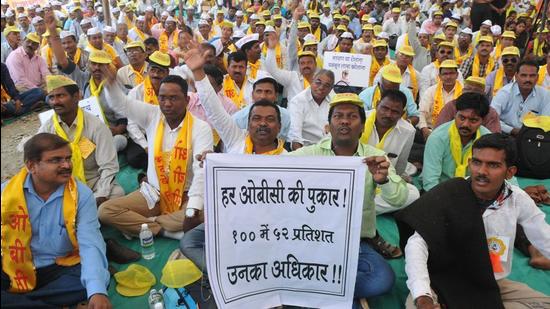
The Maharashtra State Commission for Backward Classes (MSCBC) is considering 102 applications from various castes and sub-castes, classes and communities for inclusion in the OBC category or for a change from one category of reservations to another. “These applications include those made by communities that have migrated from other states decades ago and from castes and sub-castes like that of the Maratha community,” said a member of the commission.
Some of those who want to be classified as OBCs or Nomadic Tribes (NT) include Mullahs, Loni Marathas, Kshatriya Saini Marathas, Muslim Khelkari (Untawale), and Rana Rajputs. Curiously, some from the Brahmin community and Gujarati Brahmin community have also sought OBC status for quota benefits. Some OBC castes also want to be reshuffled into the Vimukta Jati (VJ) or NT categories for ring-fenced reservations.
After receiving the applications, MSCBC scrutinises them and forms a sub-committee to verify the validity of the claim. This sub-committee conducts area surveys, field visits and holds discussions with members of the community. The demand is scrutinised based on indicators of social, educational and economic backwardness; and those scoring over 50% in these aspects can be classified as a backward class.
“Maharashtra has some small castes and groups that are largely ignored. They realised the benefits of reservations quite late. A gradual growth in literacy and social awareness made them understand the need for inclusion in OBC category. It is their Constitutional right to stake a claim for this. MSCBC shall take a decision based on inferences drawn through field visits and surveys,” said Hari Narke, activist and former member of the commission.
Narke said these claims included those for fresh inclusion in OBC category or a change from OBC category to sections like VJ which covers denotified tribes, and NT. Some groups that are part of the OBC, VJ and NT categories also want to be included in the Scheduled Castes (SC) and Scheduled Tribes (ST) category.
C Shamshuddin, founder president of Pune Malyali Association who has sought inclusion of Mappila Muslims in OBC category in Maharashtra, said the community was part of OBC list in Kerala. “This will ensure quota benefits for those who have migrated from Kerala to Maharashtra… Even today, social and educational backwardness persist among this community,” he said, adding that in Maharashtra, Mappila Muslims were engaged in businesses like running small restaurants and shops, and plying vehicles.
Shabbir Ansari, president of All India Muslim OBC Organisation, supported the inclusion of groups like Chunawalas and Halwais in the category. “Chunawalas do not have substantial numbers but are spread across Maharashtra. Earlier, they functioned as lime burners who manufactured lime used for white-washing houses. The advent of modern methods of painting has affected their trade,” explained Ansari. He added that similarly, Halwais, who were traditional sweetmeat manufacturers dispersed across the state, deserved inclusion in OBC category on the basis of social and educational backwardness.
Surprisingly, MSCBC has also been petitioned seeking that Brahmins and Gujarati Brahmins be classified as OBCs. However, community leaders like Anil Gachke of Akhil Bharatiya Brahman Mahasangh and Moreshwar Ghaisas ‘Guruji’ of Bahubhashak Brahman Nyas have questioned this demand. Gachke said they were seeking that instead of quotas, the economically weaker section of the community get aid from the government.
An OBC activist noted that reservation is not a poverty alleviation programme, but was meant to correct historic wrongs and help deprived groups overcome their social and educational backwardness.
PG Jogdand, former head of the department of sociology, University of Mumbai, said this was the reversal of the Sankritisation theory formulated by sociologist MN Srinivas which said that castes lower in the hierarchy seek to emulate the upper castes for social mobility. Now, many castes, including dominant castes, seem to feel that development can be attained only by reservations, and claimed to have regressed in the social order for these benefits.
Jogdand said while most castes and sub-castes were seeking reservations, there were demands for reservations within reservations, like Matang community which wants a separate quota in the scheduled castes (SC). This was because of a sentiment that some entrenched groups had cornered most benefits within a quota.
When contacted, DD Deshmukh, member secretary of MSCBC, confirmed that the commission was considering these 102 cases, but refused to comment further.
BOX:
How a group is included in OBC Category
There is a 25-mark formula to classify a community as backward. This includes social (12 marks), educational (8 marks) and economic (5 marks). Those groups getting over 50% marks can be classified as OBCs.
These cover social indicators such as social practices and attitudes, age of marriage, religious traditions, whether widow remarriage is allowed; economic status such as average income, housing pattern and type of houses, land holding; educational indicators like literacy rate, women’s literacy, drop-out rate, presence in higher education and professional courses and in jobs.
MSCBC’s Socio Economic and Caste Census (SECC) covering all households across the state will generate empirical data on the backwardness of individual communities and enable scientific decision-making.
The 127th Constitution Amendment Bill approved by Parliament, has restored the rights of states to make their own OBC lists.
OBCs form around 53% of Maharashtra’s population — 43.70% Hindus and 8.40% non-Hindus. They are divided in the category with around 350 Hindu and non-Hindu classes (19% reservation) and Vimukta Jati and Nomadic Tribes (VJ&NT) which covers about 50 groups (11% quota).
Some quota claims:
Fresh inclusion in OBC or VJNT category:
Suryavanshi Kshatriya, Kasodhan, Mappila Muslims, Mullahs, Loni Marathas, Halwais, Lingayat Rangari, Chunewale/ Chungar/ Chunawalas, Kadava Patidars, Kshatriya Saini Marathas, Brahmins, Gujarati Brahmins, Muslim Khelkari (Untawale), Valanju/ Valanju Vani and Rana Rajputs
Change in category:
Hanbar (OBC to NT)
Halba Koshti (SBC to OBC)
Bhaat (OBC to VJ)
Stay updated with all the Breaking News and Latest News from Mumbai. Click here for comprehensive coverage of top Cities including Bengaluru, Delhi, Hyderabad, and more across India along with Stay informed on the latest happenings in World News.


