
 E-Paper



Mumbai civic body sends 50 samples for genome sequencing daily to NIV
As the positivity rate in Mumbai has increased to 11% from 4% in January, health officials are speculating that the city may be facing a virus mutation


As the positivity rate in Mumbai has increased to 11% from 4% in January, health officials are speculating that the city may be facing a virus mutation. The Brihanmumbai Municipal Corporation (BMC), since last week, has been sending 50 samples to the National Institute of Virology (NIV) in Pune for genome sequencing, to know about the possibility of mutation of Sars-Cov-2, the virus that causes Covid-19. However, they haven’t found any mutation similar to the ones, found in Amravati.
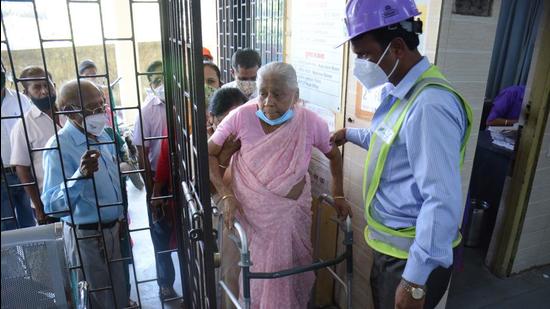
Genome sequencing is a technique that involves analysing the genetic code of an organism.
Last month, the positivity rate in Amravati shot up to 50%, which raised concerns among the state health officials.
The results for genome sequencing of four samples showed a mutation (E484Q), while another four from Yavatmal showed a second mutation (N440K) of Sars-CoV-2.
“As seen in Amravati and Yavatmal, the infection rate of the mutated virus is high. However, the mortality rate is low due to its less severity. A similar trend is also visible in Mumbai. So, there is quite a possibility of the mutation of the virus in the city,” said Suresh Kakani, additional commissioner, BMC.
In January, the city recorded 500 new cases, while in March, the cases increased to an average of 1,200 cases.
According to BMC data, the infection is spreading faster in places like Andheri, Mulund, Malad, Kandivali, Bhandup, Chembur among others.
As the procedure of genome sequencing is expensive, the central government has issued guidelines for selecting samples for the process.
“We are selecting samples as per the parameters. We are sending samples of patients with a long history of hospitalisation, sudden death after hospitalisation, UK returnees. Also, we are selecting random samples from hot spots,” said Dr Mangala Gomare, executive health officer, BMC.
In recent times, BMC is observing a high infection rate among people from the same families. “So, we are also sending samples to NIV from families where the infection rate is high,” she added.
Last month, BMC had sent 90 samples to NIV for genome sequencing, but no similar mutations like E484Q and N440K were found. “We had found one UK variant from a traveller, but he has successfully recovered and sent home,” said Kakani.
Dr Subhash Salunke, technical adviser to the Maharashtra government on the Covid-19 outbreak also said the rise in Covid-19 is possibly linked to mutation. “Though the government has overruled the claim of mutation, I believe that the virus strain has changed,” he said.
Active Covid-19 patients who are currently on treatment have increased by 36% this month. On March 1, Mumbai had 9,690 active cases which surged to 13,247 on March 13. Almost 80% of the newly infected people are mildly symptomatic or asymptomatic, with a majority choosing home quarantine.
Dr Salunke said infected patients are violating isolation safety rules which are further contributing to increasing cases in the city.
“The government needs to impose stringent rules and heavy fines for such violators,” he added.
Stay updated with all the Breaking News and Latest News from Mumbai. Click here for comprehensive coverage of top Cities including Bengaluru, Delhi, Hyderabad, and more across India along with Stay informed on the latest happenings in World News.


