
 E-Paper



Mumbai gets illicit firearms from thriving workshops in Maha-MP border
Although the presence of the underworld in Mumbai declined two decades ago, the city continues to be the largest consumer of illegal firearms; and Sonar’s case revealed how easy it is to acquire country-made pistols and revolvers


MUMBAI: On Monday, Jogeshwari resident Dayaram Phulchand Sonar, 38, was arrested by Dahisar police after he was found roaming the streets in the suburb’s eastern parts with a country-made pistol loaded with three rounds. The petty criminal had purchased the ‘desi katta’ by paying ₹25,000 to a middleman.
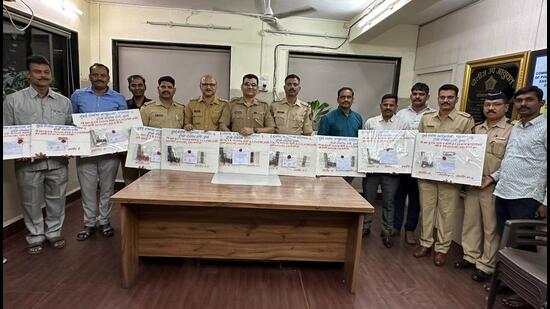
The incident is not an isolated one. Although the presence of the underworld in Mumbai declined two decades ago, the city continues to be the largest consumer of illegal firearms; and Sonar’s case revealed how easy it is to acquire country-made pistols and revolvers.
Who are the Shikalgars?
Most country-made pistols come from the border region of Madhya Pradesh (MP) and occasionally Uttar Pradesh and Bihar. The Shikalgar community living along the border of MP and Maharashtra specialises in making pistols and revolvers. They are prime suppliers of the ‘desi kattas’ – a term coined by city police for the use-and-throw-type weapons.
Historically, Shikalgars have been a community of metalsmiths who specialised in making swords and other military equipment when the Maratha empire flourished. Many members of the community, living along the border, now specialise in making pistols and revolvers. Separate parts are bought from across the country – barrels, for instance, are bought from Ludhiana, said a police officer and pistols are assembled in their makeshift workshops.
Gun powder is also brought from Punjab, among other states, to manufacture bullets, said a police officer who investigated a case about guns manufactured in the border regions of MP. The poor-quality country-made firearms are available between ₹5,000 and ₹15,000, depending on the quality of the barrel. The more sophisticated and reliable pistols with a magazine of 10 rounds cost anywhere between ₹20,000 and ₹50,000.
The tight network
This is how the network for acquisition works.
“Those who wish to buy weapons usually send a trusted person to get the guns directly from the manufacturers. The illegal weapons are brought to the city mostly by train. The guns come wrapped in a bunch of carbon papers and hidden in clothes to prevent detection by bag scanners installed at railway stations,” said a police officer who has been involved in multiple weapon seizures over the last few months.
Buyers visit the border areas where the industry thrives and a commission agent leads them to a manufacturer. The manufacturer of the crude arms gives a demo to prove its quality before the deal is fixed. According to police, retired workers from ordnance factories are also known to extend their help to the fringe groups to fine-tune the products.
Today, illegal gun suppliers also use social media and WhatsApp to spread their customer base while reels are circulated in closed groups. This is a far cry from the time when manufacturers or their accomplices would bring illegal pistols to the city, hitching a ride in lorries and public buses on short routes, and change vehicles a number of times to avoid leaving a continuous trail behind.
Sometimes, middlemen bring the stocks and make a quick buck. As in January this year, Trombay police arrested Kalyan resident Chetan Sanjay Mali, 26, and Sinu Padgele, 48, a resident of Borivali, a buyer. Police acted on a tip-off and first arrested Mali on January 13. His personal search revealed four pistols and eight live cartridges. The search of his premises in Kalyan yielded three more pistols - two from his residence and one from his bike.
During interrogation, Mali confessed to selling one pistol and two live cartridges to Padgele. Based on that information, the latter was arrested, said deputy commissioner of police Hemraj Rajput. Padgele bought the pistols from Mali to avenge his brother’s death in Hyderabad, for which he bought a pistol paying Mali ₹25,000.
Investigation revealed, Mali had bought eight pistols and 15 live cartridges from locals in Khankar tehsil of Burhanpur district of MP -- a few kilometers from Raver in Jalgaon district of Maharashtra, a few months ago to sell the stock in Mumbai.
In a similar case during the months of lockdown, Unit 7 of the crime branch arrested 21-year-old Lakhan Singh Chavan in Mulund and recovered 10 pistols (7.65mm), 12 magazines and six live cartridges from him. The police had been chasing Chavan for almost eight months ever since his name cropped up as an arms supplier in the investigation of another arms seizure. During his interrogation, Chavan revealed that he was regularly selling pistols by charging between ₹30,000 and ₹40,000 per piece, depending on the quality of the pistols.
The resident of Ummarti village, in Barwani district of MP, grew up around firearms manufacturing units. His parents and relatives were also involved in manufacturing country-made pistols for years -- making over 100 guns a month -- and would often visit the city and suburbs to sell the goods.
Demand exceeds supply
A police officer, who recently arrested an accused and seized two illegal pistols from him, said that the demand for illegal weapons in the city exceeds supply. Some buy arms to terrorize others and impress others in their social circles. “They are mostly small-time goons who have grown up with the belief that respect is acquired from generating fear. They move around claiming to be ‘bhais’ (dons),” said the officer. “At times they thrive on securing contracts for supplying building material to construction projects in their areas and often get involved in gangland killings, posing a threat to law and order.”
The officer was referring to the recent incident of firing in the thickly populated residential area in Chunabhatti where local goon Sunil Patil, who had gained hold over the area after his mentor Sunil Yenurkar went behind bars in 2016, killed his former boss in the fight over stronghold on the locality. Police probe revealed that the broad daylight firing of December 24 was at the behest of local builder, Vimal Jain, who was in favour of Patil taking control over the area. Patil, Jain and 12 others were arrested for the brutal murder and firing.

Stay updated with all the Breaking News and Latest News from Mumbai. Click here for comprehensive coverage of top Cities including Bengaluru, Delhi, Hyderabad, and more across India along with Stay informed on the latest happenings in World News.


