
 E-Paper



MVA consensus on 260 of 288 seats, others will be resolved by top leadership
On Thursday, senior MVA leaders held a day-long, two-phase meeting to resolve their internal conflicts

 Prefer HTon Google


MUMBAI: The Maharashtra Vikas Aghadi (MVA) alliance has come close to arriving at a seat-sharing formula for its three parties—the Congress, NCP (SP) and Shiv Sena (UBT). The parties succeeded in reaching a consensus in 260 of the 288 seats, and decided that their top leaders would discuss and resolve the disagreements on the remaining 28. They are planning to announce the seat-sharing arrangement by October 20, MVA insiders revealed.
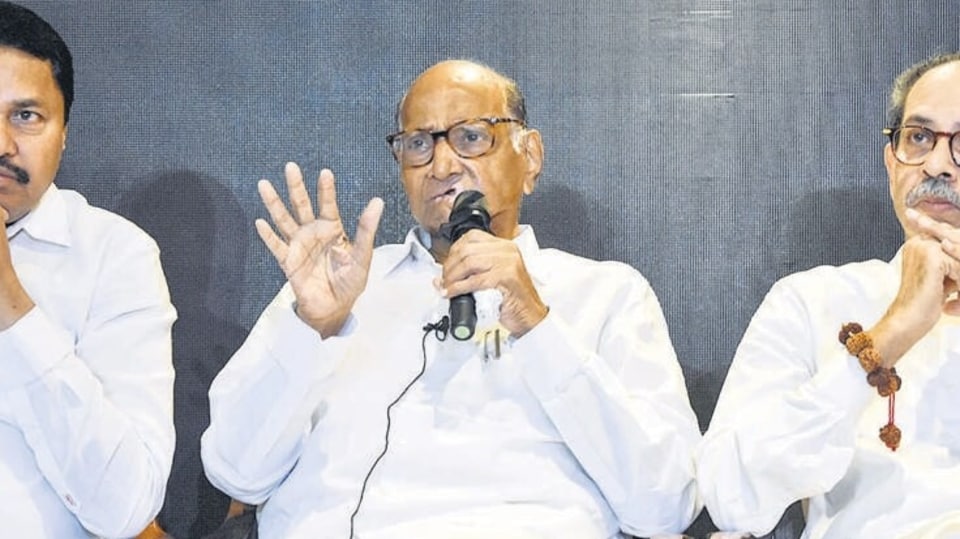
On Thursday, senior MVA leaders held a day-long, two-phase meeting to resolve their internal conflicts. In the first phase, there was a discussion on all the seats except for those in Mumbai.Ausa, Shirdi, Erandol, Shrigonda, Miraj and Nagpur South are among the seats where dispute could not be resolved on Thursday.
In the second round, the disputed seats related to Mumbai—over 10 of them—were taken up for discussion. Insiders revealed that some of these were Byculla, Kurla, Versova, Vile Parle, Mulund, Vandre East, Anushakti East and Malabar Hill. The Congress and Shiv Sena (UBT) have both staked a claim to Byculla, Kurla and Vandre East while the Anushakti Nagar constituency is coveted by all three parties as well as the Samajwadi Party. For the Versova seat, three parties --- Congress, Shiv Sena (UBT) and NCP (SP) --- have staked their claim.
“We completed the final round of discussions today,” confirmed Maharashtra Congress chief Nana Patole. “However, there are 20 to 25 disputed seats on which further debate is required. The leadership of our three parties will discuss them and a formula will be determined within a day.” Looking to explain away the disagreements, Patole said it was “natural” that the parties would seek seats where they believed they were stronger than others. The list of disputed seats includes Mumbai seats as well.
The Congress is looking to contest around 110 to 120 seats, the Shiv Sena (UBT) 90 to 100 seats and the NCP (SP) nearly 80 seats.
The Maharashtra polls, set for November 20, mark the first assembly race since the Shiv Sena and NCP split in June 2022 and July 2023 respectively. The vote-counting will be done on November 23.
Meanwhile, NCP (SP) chief Sharad Pawar also announced on Thursday that the three allies had reached a consensus. Speaking in Karad, Satara district, Pawar said he was not directly involved in the seat-sharing discussions, and Jayant Patil (NCP-SP state unit chief) was representing the party in these talks. When asked about specific seats in the Satara district, Pawar said that Patil would finalise the decisions on seat-sharing. On Wednesday, the NCP (SP) chief had hinted at a prominent role for Patil.
Regarding the MVA’s chief ministerial candidate, Pawar noted that the issue was settled among the three allies, as they had clarified in a joint press conference with Uddhav Thackeray.
Pawar commented on the INDIA bloc’s approach following the Congress’ Haryana defeat, observing, “While the BJP retained power there, we are also analysing the results from Jammu and Kashmir. The Haryana outcome is unlikely to influence Maharashtra’s election. Jammu and Kashmir’s results have broader national implications.”
Moving to a different topic, Pawar spoke about the newly unveiled statue of the Lady of Justice at the Supreme Court, which has open eyes and holds the Constitution instead of a sword. “The Chief Justice has introduced a new perspective that has not occurred before in this country,” he remarked.
Responding to questions about the NCP (SP)’s symbol dispute, Pawar stated that the Election Commission had informed the party that the symbol issue needed clarification. “But we have enlarged it and it should be fine,” he said. The NCP (SP) had requested the EC to freeze the trumpet symbol, allotted to independent candidates in the past, due to its similarity to the NCP (SP)’s official “man blowing turha” emblem. While the EC refused to freeze the symbol, it agreed to display the NCP (SP) symbol more prominently on the ballot papers.


