
 E-Paper



One year of Covid: ‘We were never short of food’
Some of his former employees began to return to work by November, but Mohammad Shamshad Sher cannot afford to hire more than 10 people. There isn't enough work for them


Mohammad Shamshad Sher, 41, runs a small-scale embroidery business in Dharavi, catering to designers, tailors, wedding parties, and apparel brands. He had to shut shop on March 24 when the national lockdown was announced to curb the spread of the coronavirus pandemic.
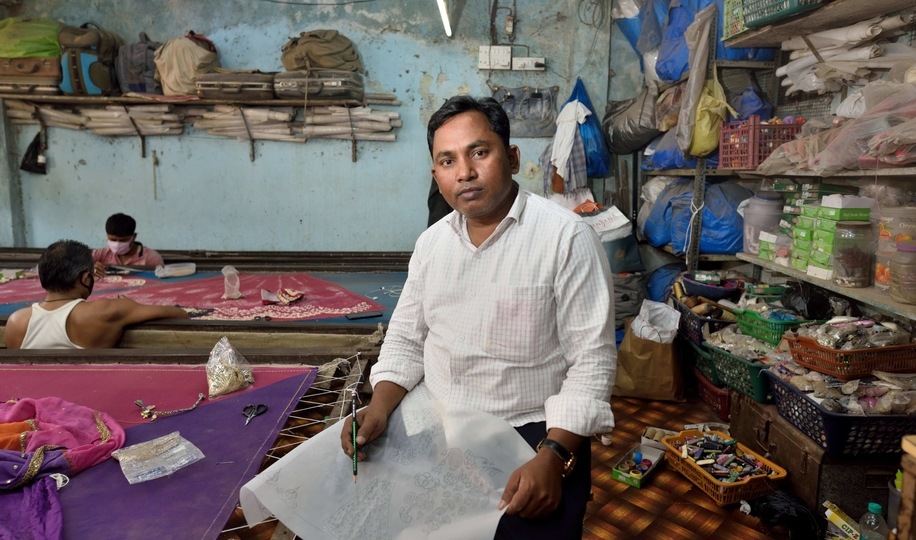
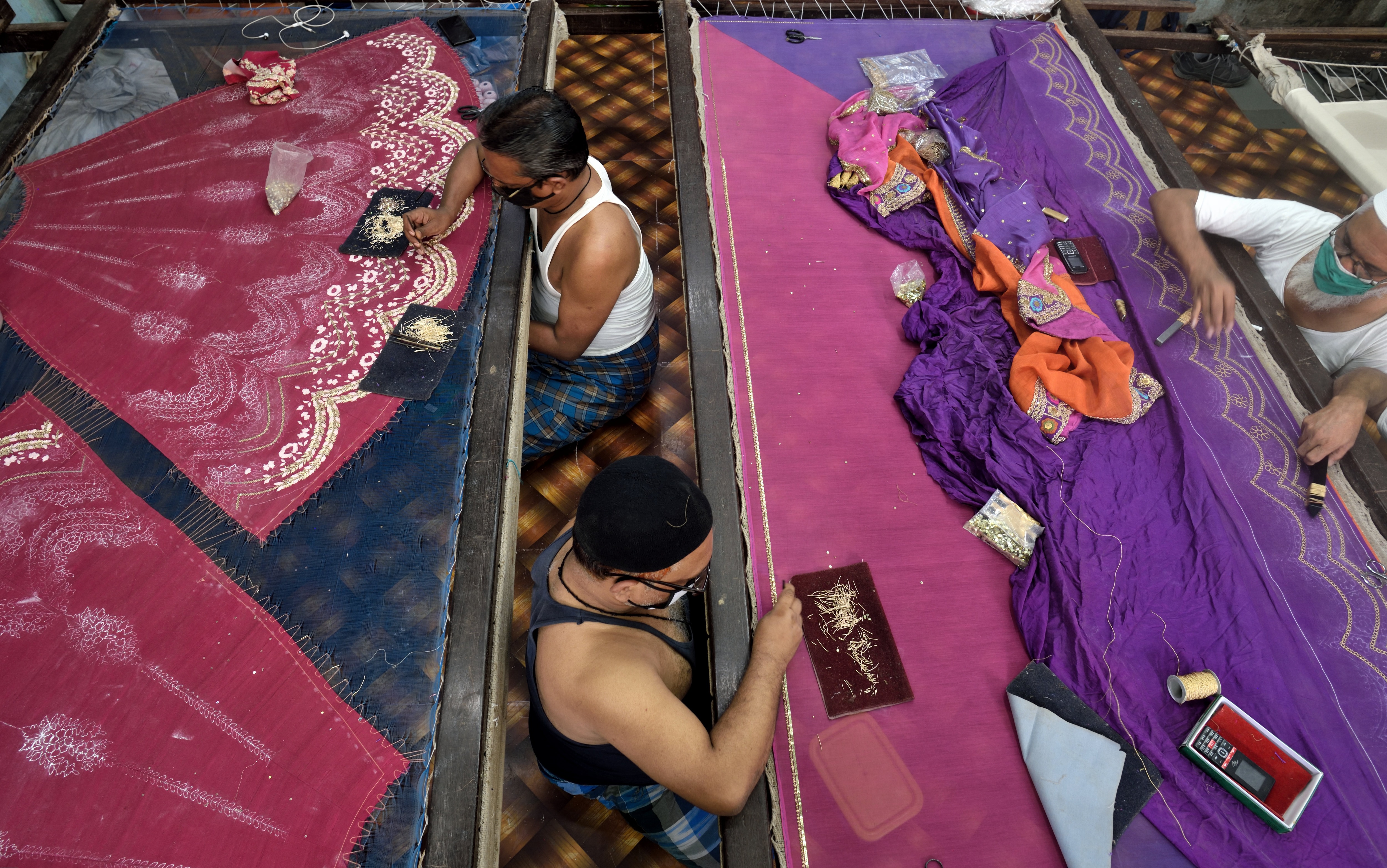
At the time, Mohammad rented three gallas, or makeshift shops in Dharavi, from where he operated his business. On his request, his landlords waived his rent, which cumulatively came to ₹45,000 a month, during the lockdown. Most of the 60 employees were migrants and returned to their villages in Bihar, Jharkhand, Uttar Pradesh, and North Maharashtra, soon after the lockdown was announced.
Mohammad’s business was affected almost immediately. With barely a few thousand rupees in the bank, he had several payments from customers still pending and unfinished consignments left to deliver. All work came to a standstill and even routine customers, customers spread across Maharashtra in Jalna, Aurangabad, Akola, Jalgaon, Mumbai and Pune, refused to advance him money.
What followed were months of uncertainty and financial instability for Mohammad and his employees.
“In our line, we have money only if there is work. We need a pipeline of consignments to earn. There is no concept of saving as such. It’s not hand to mouth, but it is close. Lockdown months were hard. I had no hope of recovering my losses and debt began to mount month after month. But the situation was worse for my employees,” said Mohammad.
Also Read: Lessons in lockdown in Mumbai
Some who remained continued to live in the gallas -- each galla has an attached toilet and a small stove to cook meals on; the work tables are folded up and set against the wall at night to make space for sleeping -- but they could not continue to work due to the Brihanmumbai Municipal Corporation's instructions, despite having pending items on their list.
Food was available in plenty, because of the charity work many organizations took up in Dharavi during lockdown. “We never had to worry about what we will eat. Someone or the other came and gave us food packets. But then, we lived through eight-nine months with no concept of savoury food. Everyone ate whatever they got,” he said.
By November, some of his former employees began to return to work, but Mohammad cannot afford to hire more than 10 people. Work has come down to four days a week, from six. “I cannot call my labour back from their home towns. If I do, I have to guarantee them work. But what if another lockdown is announced? I am giving employment to whoever has come of his own will.”

Stay updated with all the Breaking News and Latest News from Mumbai. Click here for comprehensive coverage of top Cities including Bengaluru, Delhi, Hyderabad, and more across India along with Stay informed on the latest happenings in World News.


