
 E-Paper



Pandemic effect: Hybrid learning for students
It has been well over a year since students set foot in their classrooms owing to the pandemic. During this time, teaching media, tools, pedagogy and assessment—everything that defines classrooms have metamorphosed to bridge the physical gap between the student and the classroom. Many of these changes may well be permanent in nature.


Two teachers, including the head of the life sciences department at Churchgate’s KC College took a stroll through the Sagar Upvan Botanical Garden in Colaba last October as Covid engulfed the city. The garden was closed to public, but the professors were here on work. As they started to record their walkthrough using a smartphone, 300-odd students watched the livestream from their respective homes. “We had visited this garden as part of our first year syllabus and seen the various medicinal plants and trees there. So the virtual visit refreshed our memories,” said Aryaman Tulpule (21), a third year student who viewed the recording. The difference was that this time around, when they had a question, they could raise it immediately during the livestream – either their professor, or a staff of the garden present during the recording, answered it.
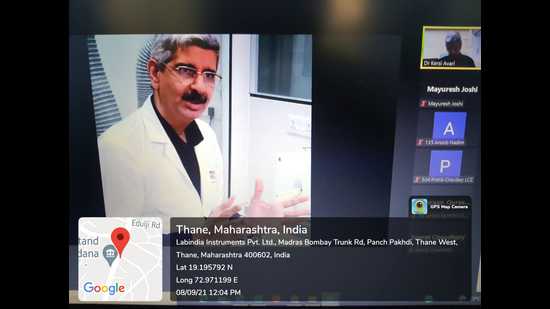
Students from various departments of KC College, for instance, participated in virtual industrial visits, including the Embryology Academy for Research and Training (EART) in Dahisar through such virtual walkthroughs. “This year, we approached different companies and organisations to allow virtual tours. Surprisingly, everyone welcomed the move,” said Hemlata Bagla, principal of KC College.
It has been well over a year since students set foot in their classroom. During this time, teaching media, tools, pedagogy and assessment—everything that defines a classroom has metamorphosed to bridge the physical gap between the student and the classroom. Many of these changes may well be permanent in nature.
Bridging a gap
Not all sciences lend themselves to virtual learning methods and physical experiments are necessary. “Final year students of Biology are supposed to know how to use a photospectometer to measure the amount of photons absorbed by plants. But because of the pandemic, they had to watch their instructors explain the apparatus during online lectures,” said Rajendra Shinde, principal, St Xavier’s College, Mumbai.
But virtual labs allow students to simulate experiments, and serve as a useful study aid. Almost all major Indian Institutes of Technology (IITs) have set up virtual labs under the Virtual Labs Initiative of government of India. Though the initiative has been around since 2012, it was brought it into the spotlight by the pandemic.
Here’s how it works. The virtual lab offered by IIT Bombay, for instance, is a website that allows students to simulate an actual lab experiment on their device. For example, if a student is trying to verify the Beer-Lambert’s Law in molecular chemistry, they start by turning on a spectrophotometer. Students then pour the aqueous solution to measure into a beaker and place it on the experiment table (i.e they use their mouse to drag the beaker and place it on the experiment table). Using a micropipette, they draw small amounts of the solution and pour them as samples in conical flasks and cuvettes. They place these flasks and cuvettes in the spectrophotometer. Scan results pop up almost instantly on the computer screen.
Kannan Moudgalya, professor and associate faculty at the Interdisciplinary Programme in Educational Technology, IIT Bombay, said, “We are continuously working on bettering the experience for students. Now, using the virtual lab a student can simulate a chemical experiment and take recordings. These tools are becoming increasingly popular in schools.”
Part of the reason is that these tools make it easy to learn concepts: instructions have become multi-pronged and immediate, and students -- all digital natives -- are primed for it. Education technology (ed-tech) platforms have figured that out. According to one study released by a venture capitalist firm that invests in ed-tech startups, the market in India saw a nearly 200% increase in funding in 2020.
Welcoming phones in classrooms
“During lectures, while a concept was behind taught by the teacher, students would receive links to YouTube videos to see live demonstration of the subject matter. Similarly, we were also allowed to virtually perform experiments where one got real-time feel of how the experiment is conducted including handling of pipettes, chemicals, cultures etc; precautions were discussed and explained as well,” said Chitra Lahoti, a recently graduated student from the microbiology department of KC College, Churchgate.
Teachers also shared quizzes with students to gauge how much of the concept was understood by students, Lahoti said.
“We usually discourage students from using mobile phones in classrooms but in the online classes, I realised it helped to encourage students to use their mobiles to research for the trending new topic on Twitter, or check out the latest photo story uploaded by a famous photographer. I’ve decided to continue this teaching method even once physical classrooms commence,” said Lokesh Tardalkar, assistant professor, Mass Media & Film Making course, UPG College.
During the pandemic, the institute started hybrid classes where a small number of students would attend college and the same lecture was [simultaneously made available online for those attending lecture from their respective homes, Tardalkar said.
“For subjects like photography and cinematography… teachers have made use of videos and online content to explain concepts more creatively. Many teachers have started creating their own content which we plan to continue using in classrooms even once physical lectures commence,” said Anju Kapoor, principal of UPG College, Vile Parle.
“Last year the pandemic was new and everyone was unaware of how long it’ll last, it was necessary to reduce the portion to give teachers and students ample time to complete the required portion and at the same time, also adjust to online learning,” said Vasant Kalpande, former chairman of state education board who was part of the committee to reduce the state board syllabus by 25% across all classes in the Maharashtra State Board for Secondary and Higher Secondary Education (MSBSHSE).
He said that the need of the hour is for the schools and teachers to focus on using technology better in classrooms and changing pedagogy. “With technology at their disposal, teachers can work wonders and ensure regular classrooms are filled with innovative methods to teach the same subject. However, most schools in the state are still using technology just to conduct lectures, and not to make their lectures interesting for students,” said Kalpande.
An opportunity and challenge
For ed-tech platforms, the hybrid model is a nod to the future. Cuemath, an ed-tech startup that provides online Math and coding classes for K-12 students, conducted physical classes before the pandemic. “As soon as the pandemic broke out, we trained all our instructors and brought them online. For us, our growth trajectory is going to be skewed towards more online,” said Mannan Khurma, founder, Cuemath.
But this would mean developing a new kind of classroom ethics, he said: “Unless online classes are evolved into a very personalised monitoring, tracking and helping out students, the online format will not achieve its full potential.”
Other challenges in the hybrid mode of education persist. The primary concern for schools is smartphone penetration.
“Based on my own experience with students and my conversations with other educationists, I can say that hybrid education may not necessarily work, especially in tier 2 and tier 3 cities. First and foremost, unless teachers are trained en masse on how to use the latest technology, we won’t see a major revolution. Most teachers simply replicate what they would do in a physical classroom on a video call. Many are not aware of the latest tools. Then there is the question of infrastructure,” said Aniket Sule, associate professor, Homi Bhabha Centre for Science Education, Mumbai.
“In rural Maharashtra, many families have a single device on which all their children are studying. Many students have fallen out of the education system because of this digital divide,” Sule added. Teachers also said that learning outcomes were difficult to measure online.
“Learning outcomes and effectiveness are difficult to track. Effectiveness is a bigger problem with respect to K-12, given the amount of engagement and handholding involved. Test prep, upskilling, and reskilling startups would showcase a lower delta in terms of learning effectiveness between online and traditional channels,” said Pearl Agarwal, founder and managing director, Exemius Ventures, a venture capitalist firm which invests in ed-tech companies and in May, released an analysis of the COVID-19 induced growth of India’s ed-tech sector.
Stay updated with all the Breaking News and Latest News from Mumbai. Click here for comprehensive coverage of top Cities including Bengaluru, Delhi, Hyderabad, and more across India along with Stay informed on the latest happenings in World News.


