
 E-Paper



Slum dwellers homeless as ‘human rights’ of building residents prioritised, say activists
BMC demolishes 650 hutments in Jai Bhim Nagar, Powai, despite monsoon prohibition, leaving 100 families homeless, living on footpaths.

 Prefer HTon Google


Mumbai: Twenty days after the Brihanmumbai Municipal Corporation (BMC) demolished approximately 650 hutments in Jai Bhim Nagar, Powai, which resulted in stone-pelting from the residents, around 100 families from the settlement still camp on the footpaths. Bracing wind, rain and sun, the residents have been living under makeshift shelters, slowly losing hope for relief from the authorities.
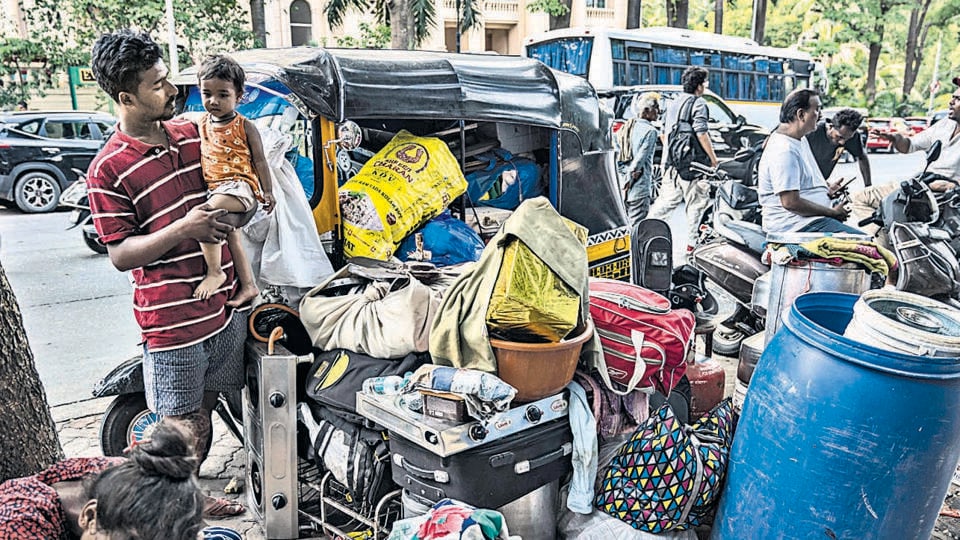
“Most of the residents have left, either shifting with relatives or taking rooms on rent, as it is difficult to live in the open,” said Yuvraj Bhadekar, 35, one of the few families left. The demolitions were conducted despite a state government GR prohibiting demolitions between the monsoon months of June and September. “I, too, drop my one-and-a-half-year-old son with my sister at night, as the mosquitos have made him ill.”
BMC demolished the slum area on June 6 based on an order by the State Human Rights Commission (SHRC). When asked about the state GR prohibiting demolition, Bhaskar Kasgikar, assistant commissioner of the L ward, said demolitions done on a court order are exempt from the GR. “It is a private land reserved for government offices. The land was given in 2007 to Hiranandani builders for a temporary labour camp and then encroached, and due to complaints in the SHRC, we demolished the hutments,” said Kasgikar.
On further investigation by the rights groups Jan Haq Sangharsh Samiti (JHSS), the SHRC complaint was filed on December 28 by Namit Naresh Keni, the son of former BJP corporator Rajani Keni. Previous directions by the BMC to clear the land had not succeeded.
In his complaint, Keni alleged, “non-removal of unauthorised construction violates the human rights of the public at large of those staying in the said locality.” At first, the BMC said it would not remove the unauthorised constructions as it was on private land but later agreed to carry out the demolition.
“The SHRC not only admitted such a blatantly anti-poor, classist case but further decided that the slum settlements violate the human rights of those staying in buildings in that area. 700 families were made homeless in monsoon just because people living in buildings won’t have to see the slum houses!” said Sanjana Krishnan from the JHSS. “The MCGM’s change in its policy regarding removal of encroachments on private land is very surprising. Who paid for the use of state resources when it’s done for a private builder?”
The families are partly surviving on food bought by them by others, some of them cooking. MP Varsha Gaikwad provides a daily tanker for washing needs while drinking water is bought or borrowed from building residents. The BMC has set up a mobile toilet with four seats each for men and women, proving highly inadequate.
“I’m not sure where we will go from here,” said Bhadekar. “Rents in the area have been hiked up, with rooms that were available for ₹6,000 now going for ₹10,000 per month. I am looking for a place, but how will I manage the rent and deposit on the earnings of a plumber?”
With most residents from the Dalit community, many political and community leaders have come out in support of the residents.
Chandivali Citizens Welfare Association (CCWA), a citizen group in the area, highlighted the irony in the BMC’s actions. “The public body has shifted the slum dwellers from private land onto footpaths, i.e. public land, where they are inconveniencing residents. The residents should be given temporary accommodation on humanitarian grounds, as it is the monsoon.”


