
 E-Paper



State assembly unanimously passes Special Public Security Act against ‘urban naxals’
It was passed in its revised version, approved by a 25-member joint select committee comprising members of treasury and opposition benches

 Prefer HTon Google


MUMBAI: Maharashtra has just become the fifth state in India to pass the Special Public Security Act (SPSA), despite opposition from civil society groups, who argue it is a tool to silence dissent against the state and undermine the fundamental rights of citizens.
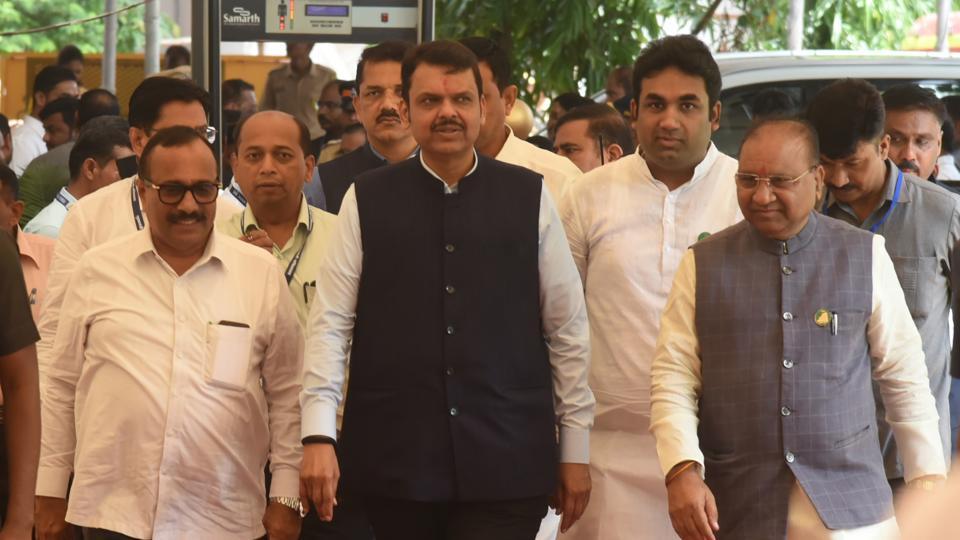
The legislation, whose stated objective is to curb ‘urban naxalism’, was passed unanimously in the legislative assembly on Thursday. It was passed in its revised version, approved by a 25-member joint select committee comprising members of treasury and opposition benches, after some of its provisions were amended to placate critics.
According to the act, ‘naxalism’ is not limited to remote areas; its presence is increasing in urban areas through naxal frontal organisations. These organisations have been providing logistical support and safe refuge to armed cadres, leading to unrest among the masses, it adds. The state has identified 64 frontal organisations that are alleged Maoist sympathisers.
“The object of the bill is to control the unlawful activities of such frontal organisations. The existing laws are ineffective and inadequate to tackle this menace,” reads the act.
Civil society groups point out that the provisions of the act are open to interpretation and the sweeping powers they confer on the state can be misused to criminalise dissent, with provisions for stringent punishment. They also point out that laws such as the Maharashtra Control of Organised Crime Act (MCOCA) and Unlawful Activities Prevention Act (UAPA) cover the activities referred to in the new legislation, adding that there is no need for a new law to address them.
Chief minister Devendra Fadnavis, who also heads the state home department, said the act does not aim to stifle dissenting voices. While presenting the bill in the assembly, Fadnavis claimed Maoist activities are now limited to only two tehsils in Gadchiroli district.
“Active naxalism has been neutralised in the state. The number of tehsils with active naxals has reduced to just two in Gadchiroli, from the earlier four districts. This too will be finished in a year. At the same time, passive militancy is emerging rapidly with the intention of evoking anarchy and challenging the constitution and constitutional entities,” he claimed.
Fadnavis said the act had been proposed on the directives of the central government’s advice to the states to pass a special law to curb naxalite activities. He told the house, “Let me assure the state that the fundamental rights of people to speak up against the system will not be impacted by the law. Neither is it against left parties or meant to act against opposition parties.”
On why existing laws are allegedly not effective to curb ‘urban naxals’, Fadnavis said, “UAPA demands the use of weapons and ‘active violence’ to book any person or organisation under it. The activities of left-wing extremists nowadays do not necessarily call for violence, exposing the shortcomings of UAPA.”
Barring the lone Communist Party of India (Marxist) legislator, Vinod Nikole (Dahanu constituency), all other parties supported the bill, although some MLAs expressed reservations over potential misuse of the act by the state. “There is the possibility of misuse by subsequent dispensations as happened in the case of the Prevention of Money Laundering Act,” said Jayant Patil of the NCP (SP). Congress’s Nitin Raut said the government has booked intellectuals and activists in the Bhima Koregaon case by calling them ‘urban naxals’. Nikole opposed the bill, saying it is against the constitutional rights of the people.
After an uproar over the bill after it was tabled in the legislature a year ago, the state government sent the bill to a joint select committee for review. The panel received more than 12,300 suggestions and objections from hundreds of social organisations and civil society groups.
After five meetings, the JSC amended key provisions of the bill. It altered the title and preamble to clarify that the legislation would not be used against individuals; it would be used against Left Wing Extremist (LWE) organisations. The revised draft also restricted “unlawful activities” to “LWE” activities.
The operative portion of the draft was changed from “a bill to provide for more effective prevention of certain unlawful activities of individuals and organisations...” to “a bill to provide for the effective prevention of certain unlawful activities of Left Wing Extremist organisations or similar organisations.”
The advisory board, which will vet the government’s decision to notify any organisation under the act, will be headed by a retired or serving judge of the Bombay High Court. The earlier provision was for the appointment of three persons qualified to be appointed as a judge of the high court. The investigating officer deputed in these cases would now be of the rank of deputy superintendent of police, from the earlier police sub-inspector.


Stay updated with all the Breaking News and Latest News from Mumbai. Click here for comprehensive coverage of top Cities including Bengaluru, Delhi, Hyderabad, and more across India along with Stay informed on the latest happenings in World News.


