
 E-Paper



The space crunch at Bombay High Court and what's to be done about it
The court witnessed an explosion in the number of cases in recent years. Initially designed to house 10-12 judges, the building now caters to as many as 94

 Prefer HTon Google


Nestled amidst the bustling Fort area stands the Bombay High Court, an architectural marvel steeped in history and tradition. Since its inauguration on August 14, 1862, the high court has been a beacon of justice, presiding over countless legal disputes and upholding the rule of law. However, behind its majestic facade lies a pressing issue: a severe space crunch that threatens to impede the court’s ability to dispense justice effectively.
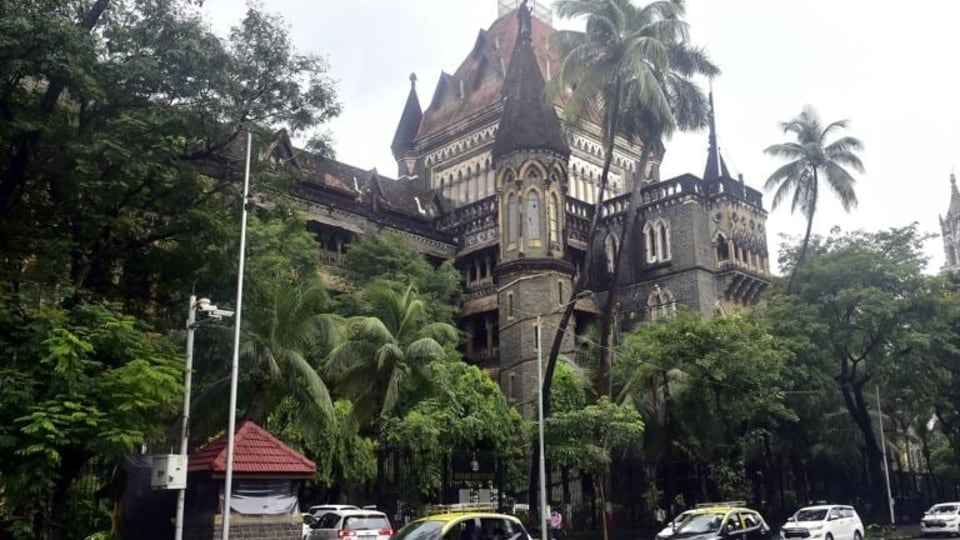
The court witnessed an explosion in the number of cases in recent years. Initially designed to house 10-12 judges, the building now caters to as many as 94 judges. As a result, the number of support staff and administrative staff has also increased exponentially. This has made it extremely difficult to accommodate the ever-growing number of litigants and legal professionals. Besides, the existing court complex has hardly any parking space, not even enough to accommodate the cars of judges and court officers.
After running out of options to acquire more constructed space around the main building, the high court administration started scouting for land around the city to build a new complex. After considering options like the Mumbai Port Authority land in Wadala and vast tracts of government lands in Goregaon, the state government suggested a convenient alternative of developing a new complex in the proposed redevelopment of the Bandra Government Colony.
The construction of the new complex, though, is at least a year away.
Main building: Originally designed to house around 10-12 judges and 5-6 courtrooms, the court complex now accommodates over 40 judges. The main building itself houses 24 courtrooms, most of which are makeshift and converted from spaces earmarked initially for administrative purposes, judges’ chambers, and storerooms.
Every high court judge has a staff of at least seven to eight, including stenographers, personal assistants, and attendants. The chief justice has a staff strength of 10.
According to the police, around 4,000 people, including lawyers, litigants and staff, visit the high court building every working day.
Annexe building:
There are eight additional courtrooms in the annexe building, which was constructed in the late 1980s for administrative purposes. A decade ago, two more floors were added to the three-storey structure, which now houses eight more small courtrooms.
Besides courtrooms, the annexe building also houses several key administrative offices. While the filing department for the appellate side of the court is on the ground floor, record offices are on the third floor. Other key offices, like the registrar general’s office and other judicial registrars’ offices are also located in the annexe building.
Central Telegraph Office:
Eventually, the high court’s requirements outgrew even the annexe building. The pressure for more space was so great that the court had to rent 8,000 sq ft space in the Central Telegraph Office building to accommodate some of its administrative staff.
MTNL building:
An additional 18,000 sq.ft has been made available at the Mahanagar Telephone Nigam Limited building for the court.
Bank of India building:
The court was also allotted 12,000 sq.ft at the Bank of India building to the east of the main building.
Gokuldas Tejpal Hospital:
The high court was also forced to take up three floors at the nearby Gokuldas Tejpal Hospital to store its case records. In 2023, the court started the process of digitising its records.
New expansion plans:
In 2012, a Mumbai-based lawyer named Ahmad Abdi filed a Public Interest Litigation highlighting the inadequacy of the existing infrastructure of the high court building and sought the allotment of land for a new complex. In 2019, a bench presided by Justice AS Oka directed the state government to offer a large and convenient plot for a new high court building.
The state government eventually provided over 30 acres of vacant land in the Bandra Government Colony to develop a new high court complex. The complex will also include homes for judges, bar rooms, space for litigants and, most importantly, adequate parking space.
Last month, the Supreme Court directed the state government to speed up handing over the 30-acre plot. The court asked the government to hand over the first tranche of land, measuring 9.64 acres, to the high court by September 1. This was after the Bombay Bar Association, the Advocates Association of Western India, and the Bombay Incorporated Law Society filed a petition stating the state government was not taking any concrete steps to hand over the plot.


