
 E-Paper



‘War room’, ward-level KPIs to drive BMC’s cleanliness push
For the first time, assistant commissioners across all 24 wards will be assigned clearly defined performance benchmarks

 Prefer HTon Google


Mumbai: The Brihanmumbai Municipal Corporation (BMC) has unveiled a new action plan to improve “visible cleanliness” across the city, including a proposal to establish a centralised “war room” as a command centre for real-time monitoring and assessment.
Proposed by civic chief Ashwini Bhide, the so-called war room will be supported by a centralised digital portal designed to track performance, streamline complaint redressal and enable better decision-making, according to a report released by the BMC’s solid waste management (SWM) department.
For the first time, assistant commissioners across all 24 wards will be assigned clearly defined performance benchmarks, formulated by Kiran Dighavkar, deputy municipal commissioner (SWM).

“The plan is backed by a data-driven assessment carried out between January and March 2026, during which complaints received by the civic body were analysed to identify recurring issues and service gaps,” Dighavkar told HT. Dighavkar presented the findings at a review meeting held with the BMC’s 24 assistant commissioners and deputy municipal commissioners on Saturday.
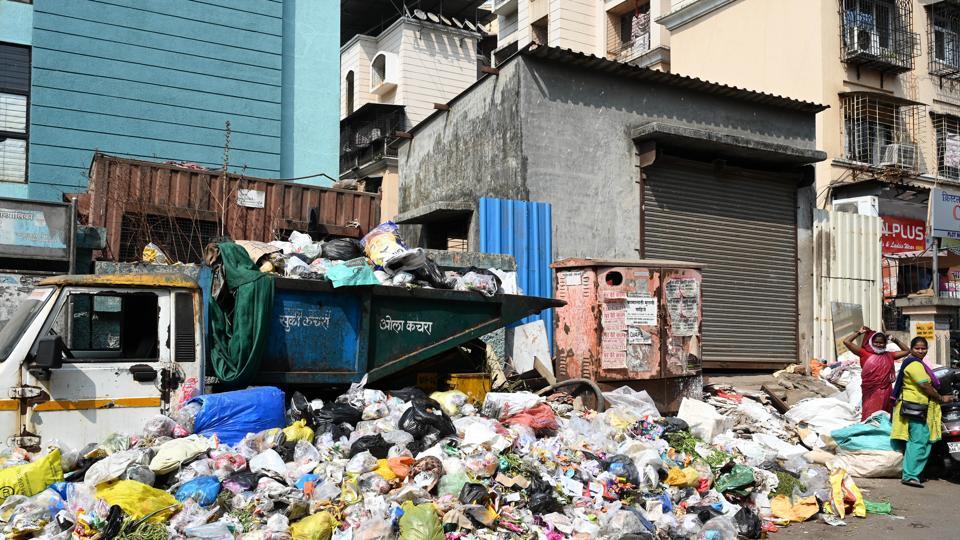
The review highlighted 10 major categories contributing to waste accumulation in Mumbai. These include uncollected garbage and littering in residential gullies, debris and construction waste, drainage and sewer blockages, inadequate road sweeping and street cleanliness, and issues related to public toilets, including open defecation and urination.
Environmental concerns such as air and dust pollution, burning of waste, pigeon feeding and animal nuisance were also flagged, along with delays in dead animal removal and waste generated due to hawkers and encroachments.
Ward-level KPIs
Based on this analysis, the BMC has developed a set of Key Performance Indicators (KPIs) to measure and monitor sanitation outcomes more effectively at the ward level. Each of the city’s wards will be assigned specific KPIs with clearly identified priority areas for improvement based on local challenges, Dighavkar said.
These indicators will cover parameters such as waste collection efficiency, maintenance of garbage vulnerable points (GVPs), dry waste handling, workforce attendance, functioning of Advanced Locality Management (ALM) groups, and disposal of domestic sanitary waste.
Based on this exercise, the BMC has also acknowledged several limitations in the existing sanitation framework in the Solid Waste Management and Cleanliness By-laws 2025, which were implemented from early 2026.
“Currently, multiple responsibilities such as waste collection, lane cleaning, drain maintenance and toilet upkeep were often assigned to a single worker, leading to compromised quality of service,” stated Dighavkar’s report. “The absence of clearly defined standards for each task makes performance measurement difficult, while manpower planning has not kept pace with the evolving physical landscape of slum areas. These gaps have resulted in inconsistencies in service delivery,” it added.
To address these issues, the revised policy focuses on improving the quality of sanitation services, particularly in slum areas. It aims to ensure more efficient utilisation of manpower through better task allocation and to establish a clear division of responsibilities across sanitation functions. The plan also proposes to extend structured sanitation services to Slum Rehabilitation Authority (SRA) housing and other rehabilitation projects.
Importantly, the BMC is placing renewed emphasis on citizen engagement through ALMs and other participatory mechanisms to strengthen accountability and ensure sustained cleanliness outcomes, the report stated.


Stay updated with all the Breaking News and Latest News from Mumbai. Click here for comprehensive coverage of top Cities including Bengaluru, Delhi, Hyderabad, and more across India along with Stay informed on the latest happenings in World News.


