
 E-Paper



What MVA did right and what went wrong for the ruling alliance in Maharashtra
Very few would have predicted that the opposition Maharashtra Vikas Aghadi would win 30 out of the 48 Lok Sabha seats in the state


MUMBAI: When the elections were announced on March 17, very few would have predicted that the opposition Maharashtra Vikas Aghadi (MVA) would win 30 out of the 48 Lok Sabha seats in the state, and the ruling alliance’s tally would fall below 20. It was a battle between unequal coalitions, and no one suspected that the weaker side would come out tops.
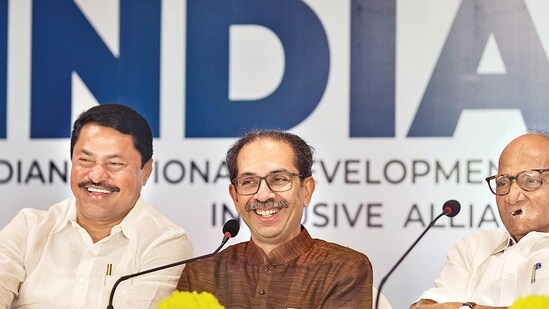
The Mahayuti had over 180 of the state’s 288 MLAs as well as the state and central governments in hand. The MVA, in contrast, was a ragtag coalition of the Congress—which had won just one seat in the 2019 elections—and the broken factions of the NCP and Shiv Sena. Yet, this David managed to turn the tables on the Mahayuti’s Goliath. So, what did the MVA do right and where did the ruling alliance falter?
Coalition at its best
From seat-sharing to campaign strategy, the three MVA parties got these things right:
Seat-sharing:
The MVA allies finalised the sharing of 48 Lok Sabha seats faster than the ruling alliance. There was a good understanding between them—for instance, Pawar himself suggested the name of Chhatrapati Shahu Maharaj, a descendant of Maratha king Shivaji Maharaj as a Congress candidate for Kolhapur.
Synergy between leadership
Given that the election was a question of survival for Sharad Pawar, Uddhav Thackeray and the Congress, there was synergy between the top leaders. Pawar, Thackeray and the Congress in-charge of Maharashtra, Ramesh Chennithala, often spoke with one another to sort out issues. Chennithala and Nana Patole ensured that there was no bitterness in the party cadre after Thackeray refused to concede the Mumbai South Central and Sangli seats to the Congress. On the other hand, Thackeray took the responsibility of helping the Congress’ Varsha Gaikwad win from Mumbai North Central.
Getting the caste combination right
In several constituencies, the three parties chose candidates who would help them reap the benefit of local caste factors. For instance, in Beed, which had a clear Maratha-versus-Vanjari (OBC caste) divide, Pawar chose Bajrang Sonawane, a Maratha opposite the BJP’s Vanjari-caste Pankaja Munde.
Smart candidate selection
In Ahmednagar, Pawar chose Nilesh Lanke, who was an MLA from the Ajit Pawar-led NCP but returned to the NCP (SP). Candidates like Dhairyasheel Mohite-Patil, Suresh Mhatre (both NCP-SP), Shahu Maharaj (Congress), Sanjay Patil (Shiv Sena-UBT) and Pratibha Dhanorkar (Congress) already had a strong local base or identity, which helped them win.
Campaign strategy
The MVA campaign was planned carefully, targeting specific sections of voters, but with the focus remaining on issues against the Modi government. The campaign that the BJP wanted 400 seats to change the Constitution had an impact on voters from socially backward classes and minorities. In places like Marathawada, the MVA ensured that it milked the anger among Marathas over the reservation issue. The splits in the NCP and Shiv Sena were used for emotional appeal, while in Mumbai, the Thackeray faction used the Marathi-versus-Gujarati narrative against the BJP.
Countering the ‘spoilers’
In the 2019 elections, the votes garnered by the Prakash Ambedkar-led Vanchit Bahujan Aghadi and AIMIM led to the then Congress-NCP alliance losing nine seats. This time, the MVA partners made an effort to get Ambedkar on board. Although he did not oblige, they conveyed the message to Dalit voters that they had tried their best to include him. The anti-BJP sentiment among Muslim voters was so strong that AIMIM could not do much damage to the MVA. The Mahayuti’s bid to use MNS chief Raj Thackeray to counter the Shiv Sena (UBT) did not work in the face of Thackeray’s strong Marathi pitch in Mumbai.
What didn’t work for NDA
The Mahayuti started on a strong footing with the Election Commission handing the Shiv Sena and NCP the original parties with their election symbols. But subsequently, several factors—from the delay in finalising seat-sharing to relying on factors that were not working—did them in.
Delay in seat-sharing
The three parties took a long time to work out a seat-sharing arrangement. Shinde insisted on contesting more seats that the number of MPs he had (13) while Ajit Pawar wanted specific seats. The unending rounds of discussions led to confusion among their cadres even as the MVA began its campaign. In places like Nashik, Hingoli and Thane, the alliance witnessed infighting as the allies staked claim on seats.
Candidate selection
Based on BJP’s surveys, Shinde decided to deny tickets to his sitting MPs—Bhawana Gawli (Yavatmal-Washim), Hemant Patil (Hindoli), and Hemant Godse (Nashik)—at the instance of the BJP. Still he lost those seats.
Failure to build a counter-narrative
The Mahayuti failed to counter the opposition narrative that the Modi government would change the Constitution after getting re-elected. It also failed to counter Thackeray’s narrative that the Centre was promoting Modi’s home state Gujarat at the cost of Mumbai and Maharashtra. Besides, the induction of opposition leaders, including Ajit Pawar, as ministers in its government did not go down well with many BJP voters and even workers.
Maratha agitation
The Mahayuti government’s bungling in handling the Maratha quota agitation proved costly, as it lost seven out of eight seats in Marathwada. Shinde’s mollycoddling of activist Manoj Jarange-Patil initially and subsequently taking stringent action against him backfired on the government. In some regions, the failure to address the agrarian crisis also affected the prospects of Mahayuti candidates.


Stay updated with all the Breaking News and Latest News from Mumbai. Click here for comprehensive coverage of top Cities including Bengaluru, Delhi, Hyderabad, and more across India along with Stay informed on the latest happenings in World News.


