
 E-Paper



At 53.61%, Ghaziabad sees lowest voter turnout in west UP
After nearly half of its registered voters failed to turn up to vote, Ghaziabad district on Thursday recorded the lowest polling percentage -- 53.61% -- among all 11 districts that went to polls in the first phase of the seven-phase Uttar Pradesh assembly elections

 Prefer HTon Google


After nearly half of its registered voters failed to turn up to vote, Ghaziabad district on Thursday recorded the lowest polling percentage -- 53.61% -- among all 11 districts that went to polls in the first phase of the seven-phase Uttar Pradesh assembly elections. The counting of votes will be on March 10.
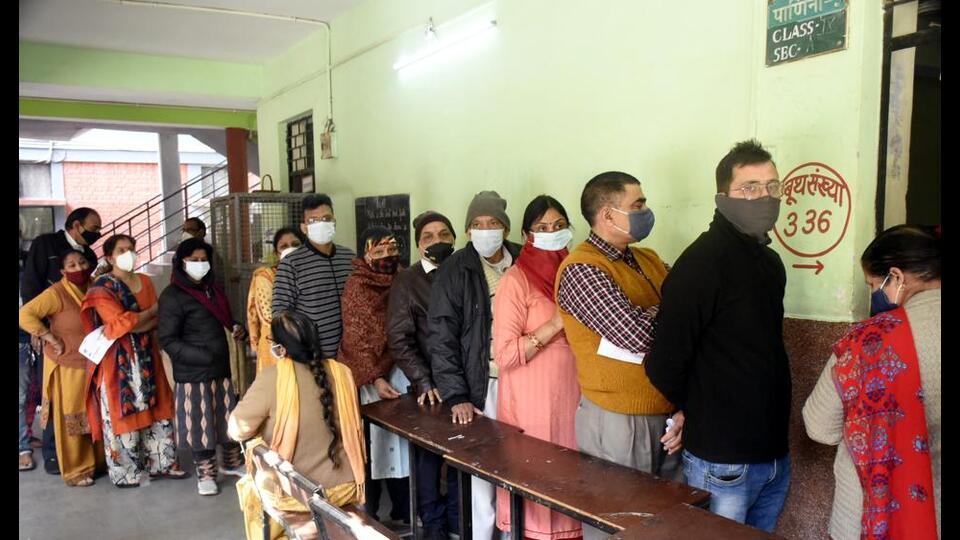
According to the provisional figures released by the Election Commission of India (ECI) until 9pm, Ghaziabad recorded a voter turnout of 53.61%. The highest turnout--69.42%--was recorded in Shamli. Neighbouring Gautam Budh Nagar recorded a better turnout at 57.07% until 9.45pm.
ECI’s provisional figures also indicated that the Sahibabad constituency in Ghaziabad recorded the lowest voter turnout of 45%, among all 58 constituencies in the 11 districts on Thursday. Kairana in Shamli recorded the highest turnout-- 75.12%.
Of Ghaziabad’s remaining constituencies, Loni recorded a polling percentage of 61.87, Muradnagar 57.30, Ghaziabad 50.40 and Modinagar 63.53.
The data shows that similar to the 2017 assembly elections, the three rural constituencies of Loni, Muradnagar and Modinagar recorded a higher voter turnout than the urban constituencies of Sahibabad and Ghaziabad.
In 2017, Ghaziabad district recorded a voter turnout of 57.57%. The two urban constituencies of Sahibabad and Ghaziabad averaged a polling percentage of 55 that year. The rural segments of Loni, Muradnagar and Modinagar clocked an average voter turnout of 60%.
Election officials of the Ghaziabad district did not release the final voter turnout figures till 10pm on Thursday. District election officer RK Singh and additional district election officer Vivek Srivastava did not respond to calls for comment.
“We carried out various systematic voters’ education and electoral participation (SVEEP) activities in Ghaziabad district. The turnout is better than the previous election as the number of electors also increased this time. We also put up two pink booths (managed by women staff) in each constituency, as well as 75 divyang booths (managed by the specially abled), besides 20 model booths to facilitate voters. The other districts in western UP have more rural areas where people always come out to vote in large numbers,” said Ritu Suhas, additional district magistrate.
According to the latest electoral roll, there are 1,020,386 voters in the Sahibabad constituency, which comprises localities such as Indirapuram, Vaishali, Vasundhara and Kaushambi that are considered upmarket.
In all, there are 2,916,495 voters in the district and 52 candidates in the fray for the five assembly constituencies of Loni, Muradngar, Sahibabad, Ghaziabad and Modinagar.
Political experts said the trend in western Uttar Pradesh has always been that of a high turnout in rural areas.
“This time too, the protests against the now-defunct farm laws galvanised farmers. Further, people in rural segments are more politically inclined while the urban voters generally focus on economic issues. Many people in urban areas still treat election day as a holiday and do not come out to vote,” said Sanjay Mishra, associate professor (political science), MMH Degree College, Ghaziabad.
Experts also said several political parties focussed their campaigns on rural and farmers’ issues in western Uttar Pradesh.
“This time, the farmers voted in large numbers. The urban turnout remained low as usual. It indicates that only a certain percentage of voters will choose their candidates, and it is not a good sign in terms of public participation. Sahibabad is the biggest constituency in all 11 districts that went to polls on Thursday and its turnout should have been higher,” said KK Sharma, associate professor (history), MM College, Modinagar.


