
 E-Paper



Spiritual and yoga guru Himalayan Siddhaa Akshar's guide to staying sane in 2026: ‘Indian wisdom teaches balance’

 Prefer HTon Google


Glued to your phone, burnt out and surviving on black coffee? If 2026 already feels too much, Himalayan Siddhaa Akshar has some simple Indian hacks for you.
It's 3:45 pm on a Tuesday. You have 11 tabs open, your neck feels like rusted hinges, and Slack just pinged with a deadline you didn't see coming. So you do what you always do — grab a third black coffee, doom-scroll Instagram for six minutes, and pretend your lower back isn't fusing into the ergonomic mesh of your office chair. Also read | 91-year-old woman proves fitness has no expiration date: 'I go for a swim, yoga, Pilates and walk 12000 steps daily'
If that hits too close to home, you're not alone. In 2026, urban life is basically chronic burnout, fragmented attention, and the feeling that inner peace is for people who don't have rent to pay. The usual advice? ‘Take a sabbatical’. ‘Go to a silent retreat’. ‘Meditate and do yoga daily’. Which is not always possible if you work 12 hours a day.
We asked someone who actually lives on both sides of that divide to cut through the noise: Himalayan Siddhaa Akshar. The yoga guru, spiritual leader, author, and founder of Akshar Yoga Kendraa — and holder of several Guinness World Records — bridges two worlds that shouldn't match. He's from an austere Himalayan tradition, but he talks like a health coach who gets screen fatigue, corporate pressure, and city chaos.
In an interview with Hindustan Times, he shared his actually-doable blueprint for not losing your mind in 2026:
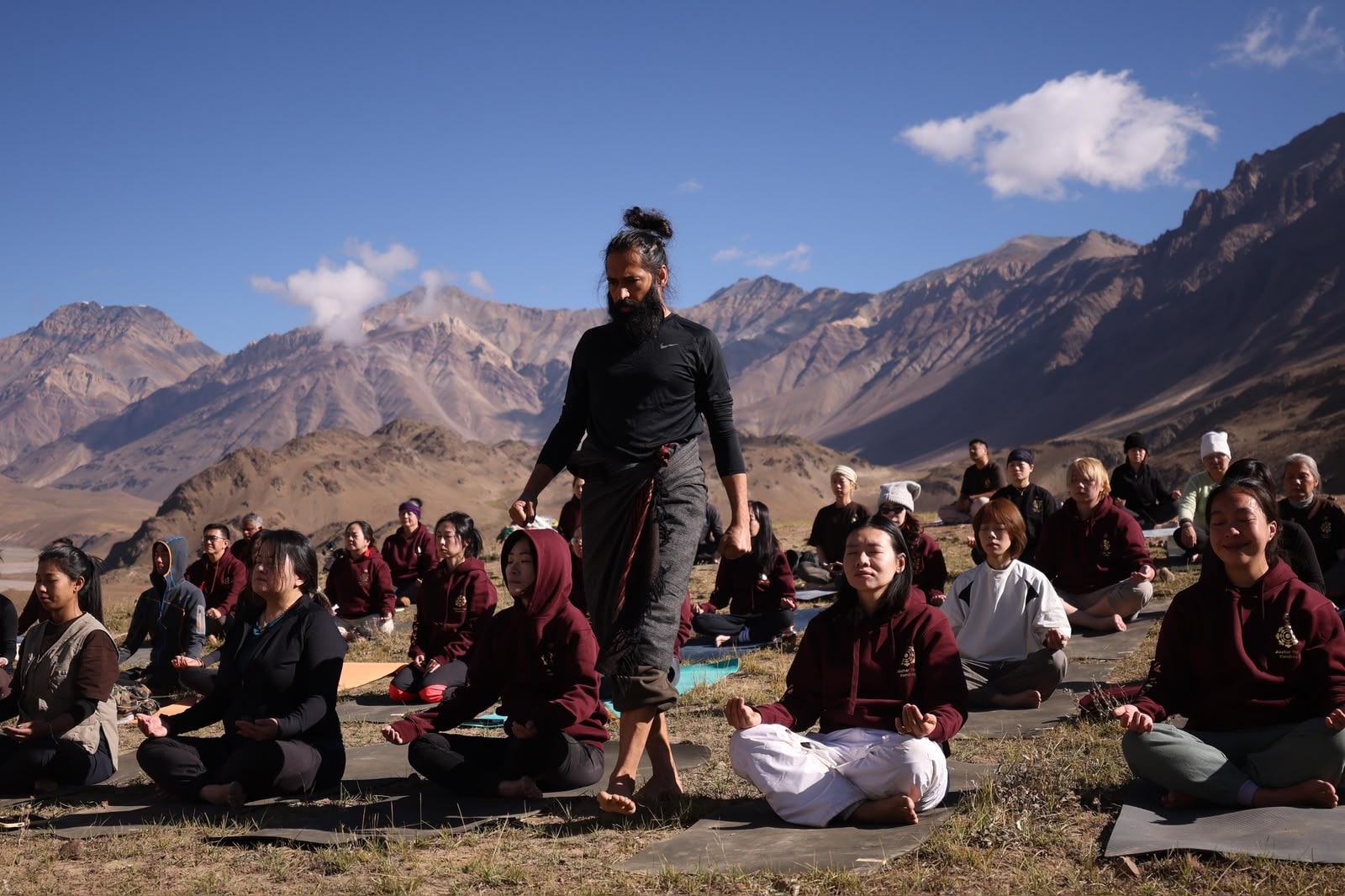
1. You don't need to move to the mountains. You need to bring the mountains to you
The classic spiritual fantasy is escape. Quit job, go to the Himalayas, find self. Great for Instagram, almost impossible if you're an IT manager in Bengaluru or a lawyer in Delhi. Akshar says we've misunderstood what 'going back to roots' means: "Going back to our roots means reconnecting with the knowledge, disciplines, and traditions that have shaped our way of life for generations. It can become a conscious part of modern urban life."
His take? Make nature an annual ritual, like birthdays and festivals. But don't leave the stillness there. "We make time every year for birthdays, anniversaries, and festivals. In the same way, we can create an annual occasion to reconnect with ourselves and our traditions. For the rest of the year, the Himalayas can travel back with us through our discipline — through how we breathe, eat, practise, think, and live. The Himalayas are a powerful place to experience stillness, and that stillness can gradually become part of us wherever we live," he explains. Translation: stillness isn't a vacation destination. It's a portable infrastructure you build with daily habits.
2. Yoga is not your gym's new HIIT class
The last few decades turned yoga into a calorie-burning practice. Pilates-adjacent. Fitness-app-friendly. Akshar gets why movement matters, but says calling yoga 'exercise' misses the whole mechanism. "Asanas have an important relationship with fitness because both recognise the importance of movement and circulation. Blood carries oxygen and nutrients to tissues and organs, while the cardiovascular system continuously supports the functioning of the entire body. Yoga takes this understanding further. In an asana, we are creating a relationship between movement, breath, stability, flexibility, and awareness as parts of one integrated system," he says.
When you do yoga just to burn calories, you're training body parts in isolation, he explains. When you do it as an integrated system, you're training your nervous system, attention span, and muscles. That's the difference between a workout and a reset.
3. You don't have to choose between ambition and peace
Biggest myth of modern wellness: to be spiritual, you have to stop wanting success. Akshar rejects that completely. He points to Indian narratives like Dhruva Maharaj and Prahlada Maharaj — people who handled immense worldly responsibility while staying deeply anchored in devotion.
"Spirituality is about learning how to connect with life correctly. Food, water, home, work, relationships, emotions, responsibilities, and ambitions are all part of our existence. Spirituality can bring greater awareness to our relationship with each of them," he says. For desk-bound high-achievers, this is crucial. You don't need to kill ambition. You need to put it in its place.
"Indian wisdom teaches balance. A person can pursue success, prosperity, and excellence while remaining internally conscious, disciplined, and peaceful. The deeper question is whether our possessions and ambitions remain under our conscious direction. When consciousness guides ambition, external excellence and internal peace can grow together," he says. If ambition drives you, burnout is inevitable. If consciousness drives ambition, performance becomes sustainable, he highlights.
4. The 3 desk micro-practices that actually work
No, you don't need an hour. You need some minutes. Akshar's formula for people glued to chairs all day is brutally simple:
⦿ The 3-minute breath break: Right at your desk, do anulom vilom or bhramari. "Techniques like anulom vilom or bhramari help calm your mind and create a quick, restful break in a chaotic workday," he says.
⦿ The 2-minute movement snack: Stand up. Stretch your arms overhead. Roll your shoulders. Walk to the balcony. It relieves stiffness and restores circulation, he highlights. You don't need a yoga mat; you need to stop sitting like a statue.
⦿ The digital discipline rule: Phones and laptops are tools, not extensions of your brain. Constant use is what fries you. Use them with intention, then consciously step away.
When screen fatigue gets extreme, he has a specific hack: the 'siddha walk'. Instead of switching screens when you're stressed, move. "Instead of immediately replacing one screen with another, allow the body to move, coordinate the movement consciously, and bring attention back into the physical system. The principle is important: when mental activity becomes excessive, we can bring awareness back into the body through conscious movement," he says. It's walking + mindful breathing. No app needed.

5. The counterintuitive fix for attention deficit
We try to force focus with productivity hacks, willpower. Ancient yoga says do the opposite: do one thing, fully. "Ancient concentration practices teach one fundamental principle: be completely present with what you are doing. If you are eating, eat. Experience the food while giving your attention fully to the meal. If you are writing, write," Akshar says.
And yes, it works with technology too. "When you are working digitally, give yourself completely to that work and bring your attention back whenever it moves towards unrelated thoughts, applications, or notifications. The ancient training of concentration works beautifully with modern technology. It trains the person using the technology. Anything done with divided attention loses depth. Anything done with complete presence becomes a training of the mind," he explains.
Your inbox can be your meditation cushion. Washing dishes can be a practice. Even being stuck in traffic. "The goal of meditation is life," he says, adding, "It is like going to school. The purpose is to learn, develop intelligence, and use that education throughout life. Similarly, meditation should influence how we work, how we speak, how we respond emotionally... When the fruits of meditation begin appearing in everyday activity, meditation has moved beyond the mat and entered life."
6. Parents should stop lecturing and start modelling
If you're raising kids in a screen-dominated house, Akshar's advice is blunt: "The first practice is for the parents, not the children. Children learn enormously through observation. If parents wake with discipline, practise regularly, eat mindfully, spend time outdoors, and maintain a conscious relationship with technology, children naturally absorb those patterns. Children follow what repeatedly surrounds them." You can't tell your kid to get off the iPad while you scroll at dinner.
7. When panic hits, start with the body
For acute anxiety — that chest-tightening, can't-breathe moment — don't start with your mind. Start with breath. "When panic or intense stress arises, sit somewhere safe, become aware of the body, and allow the inhalation and exhalation to gradually become comfortable and steady... When the mind is disturbed, begin with the breath," he says. He's clear, though: breathwork is for immediate stabilisation. If anxiety is severe or chronic, get professional medical and mental healthcare, he highlights, and adds that spiritual practice is not a substitute for clinical help.
8. Smartwatches and spirituality can actually be friends
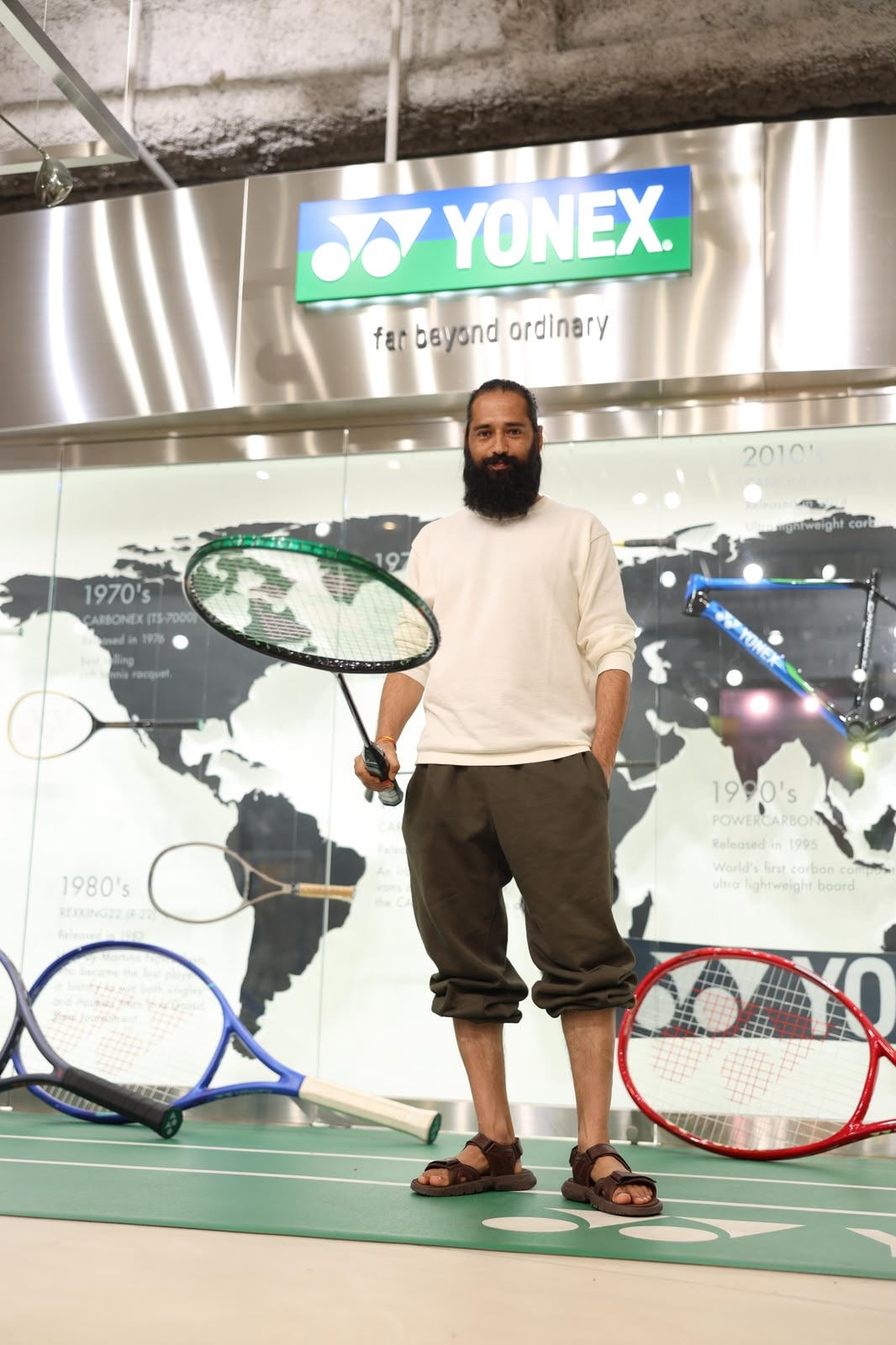
Akshar doesn't hate tech. He thinks we’ve been using it wrong. Smartwatches, health trackers, virtual yoga classes? Not the enemy of ancient wisdom — but its amplifier. "Technology provides tools and data; yoga provides a system of practice and self-understanding. Used intelligently, each can strengthen our understanding of the other," he says.
Your watch can show that your heart rate variability drops after three minutes of bhramari. Your app can bring authentic teachings to your living room in Mumbai. Data + discipline = power.
So where do you start if you're already overwhelmed?
Not with a life overhaul. With one breath. "Stop trying to change your entire life in one day. Begin by becoming conscious of one breath," Akshar advises. "Before changing your career, relationships, diet, schedule, or entire lifestyle, develop clarity about your own existence. Where am I? What am I doing? What am I giving my energy to? What truly needs to change? Sit quietly. Inhale. Exhale. Observe yourself and become aware of everything appearing in your mind. Then choose one small action and complete it with discipline," he adds.
You don't need a plane ticket to the Himalayas. You don't need an hour you don't have. You just need the next breath you take — and the discipline to actually notice it.
Note to readers: This article is for informational purposes only and not a substitute for professional medical advice. Always seek the advice of your doctor with any questions about a medical condition.


Catch your daily dose of Fashion, Taylor Swift, Health, Festivals, Travel, Relationship, Recipe and all the other Latest Lifestyle News on Hindustan Times Website and APPs.


