
 E-Paper



First half of 2023 fares better for polluted Gzb, AQI levels lowest since 2020
Ghaziabad, Uttar Pradesh, experienced the lowest average air quality index (AQI) in the first half of 2023 since 2020, attributed to pollution abatement measures and favorable meteorological conditions. The average AQI during this period was 179, compared to 191 in 2020 and higher levels in previous years. However, the average particulate matter (PM)10 and PM2.5 levels are still high, indicating ongoing pollution challenges. The city saw 100 "moderate" and 21 "satisfactory" days of air quality, the highest in recent years. Ghaziabad also improved its ranking on the World Air Quality Report, moving from the second-most polluted city in 2021 to the 11th spot in 2022.


Ghaziabad city residents breathed a bit easy in the first six months of 2023 with the average air quality index (AQI) registered during the period remaining the lowest since 2020 (in the first six month period), said the Uttar Pradesh Pollution Control Board (UPPCB) on Monday. It attributed the reduced pollution to abatement measures and meteorological conditions.
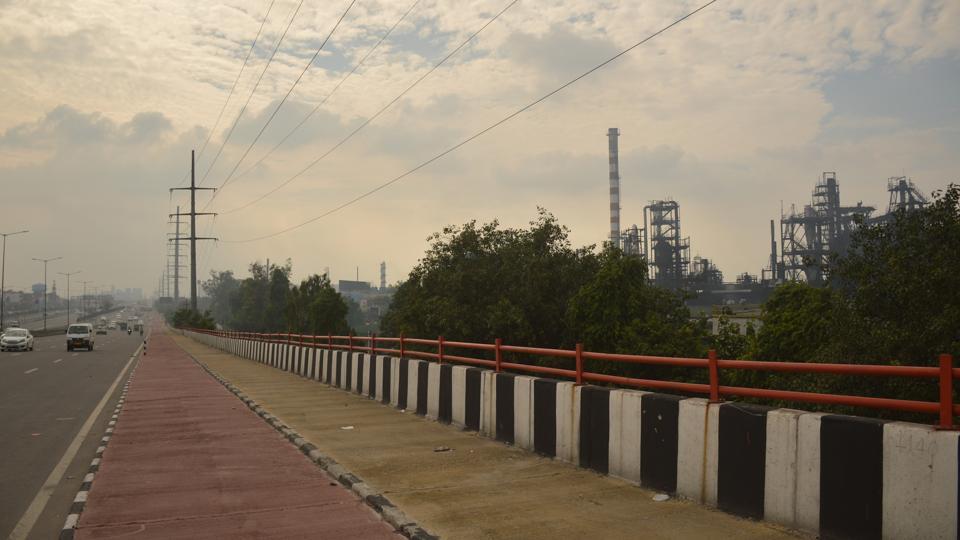
According to UPPCB, the average AQI level during the first half of 2023 was 179. Before that, the lowest average was in 2020, when it stood at 191. The pollution control body said the average AQI was 239 in 2022, 253 in 2021, 256 in 2019 and 267 in 2018.
The data also indicate that the average AQI was the lowest this year in February (199) and June (125).
“The different pollution abatement measures such as crackdown on illegal units, and industrial units switching to cleaner fuel, besides other enforcement measures and favourable meteorological conditions have led to a reduction in pollution levels this year. The directions of the Commission for Air Quality Management were also complied with during the graded response action plan period,” said Utsav Sharma, outgoing regional manager of UPPCB.
Owing to reduced pollution levels, the city in the first six months experienced 100 “moderate” and 21 “satisfactory” days of air quality. This is the highest number of “moderate” days since 2018 and second highest number of “satisfactory” days since 2020 when the first half saw 25 such days.
According to the AQI scale, readings between 0 and 50 are considered “good”, 51 and 100 are “satisfactory”, 101 and 200 are “moderate”, 201 and 300 are “poor”, 301 and 400 are “very poor”, and 401 and 500 are “severe”.
The figures, however, indicate that the average particulate matter (PM)10 level during the first six months this year stood at 186.83 μg/m3 while the average PM2.5 levels was 69.83 μg/m3.
The standard limit of PM10 is 100 μg/m3 and 60 μg/m3 for PM2.5.
“The levels of PM10 and PM2.5 are still on the higher side and more so in areas where there are broken roads and high traffic congestion. Such areas do not have aiq quality monitoring systems installed. So, we may not be seeing the correct pollution picture. Further, broken roads in industrial areas, operation of illegal factories in residential areas and lack of increase in forest areas since the past couple of years are also contributing to the city’s pollution levels,” said Sushil Raghav, a city-based environmentalist.
“Active rainfall activity this year along with favourable meteorological also helped reduce pollution levels,” Raghav said.
According to Forest Survey of India’s ”state of the forest” report released in January 2022, Ghaziabad district has a total geographical area of 1,179 square kilometres, of which only 25.22 square kilometres (2.14%) is under forest cover.
The report said there has been no change in the status of forest cover in the district since the previous assessment in year 2019. That year, the FSI reported a decline as compared to 2017 when the coverage was 2.21%.
The reduction is pollution is also being reflected on the international level. Ghaziabad city, which was ranked the second-most polluted city in the world in 2021, after Bhiwadi in Rajasthan, on the World Air Quality Report prepared by Switzerland-based organisation IQAir, improved its position to the 11th spot in 2022.

Stay updated with all the Breaking News and Latest News from Mumbai. Click here for comprehensive coverage of top Cities including Bengaluru, Delhi, Hyderabad, and more across India along with Stay informed on the latest happenings in World News.


