
 E-Paper



Noida, Greater Noida air turns ‘very poor’ again as AQI surges past 370
According to the Central Pollution Control Board’s 4 pm national bulletin, Noida’s AQI was 395, on the brink of ‘severe’, while Greater Noida was 378

 Prefer HTon Google


Gautam Budh Nagar residents woke up to a day of burning eyes and respiratory difficulties with low winds and winter conditions keeping the air quality index (AQI) in the ‘very poor’ category. Experts say no relief is expected in the coming days.
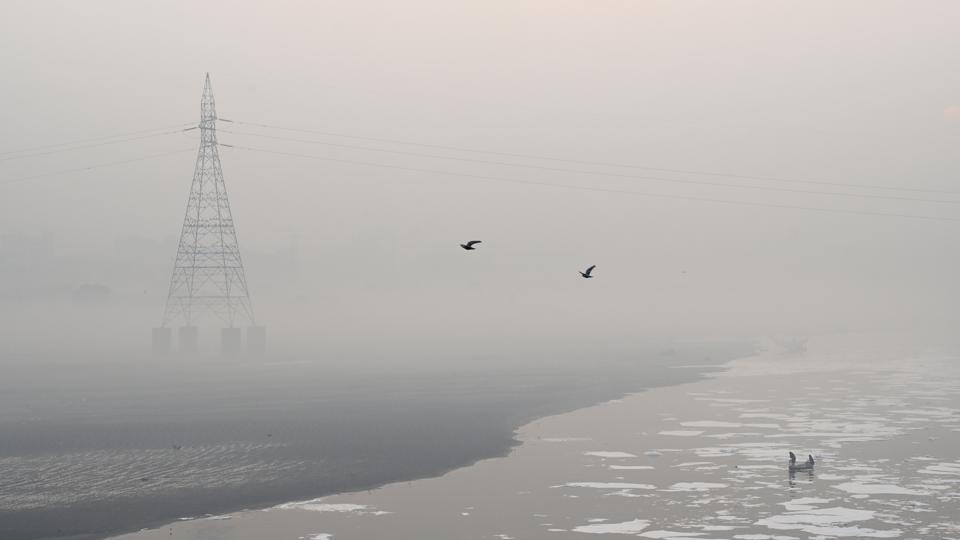
According to the Central Pollution Control Board’s 4 pm national bulletin, Noida’s AQI was 395, on the brink of ‘severe’, while Greater Noida was 378.
This comes a day after Greater Noida saw a brief improvement in the air quality, registering at 296 in the ‘poor’ category. On Monday, Noida, however, stayed was in the ‘poor’ category at 321.
CPCB classifies air as good when AQI is 50 or lower, satisfactory between 51-100, moderate between 101-200, poor between 201-300, very poor between 301-400, and severe above 400.
This spike is consistent with the trends in November, when according to data from the state pollution monitoring dashboard, the district registered in the red, with several stations in Noida and Greater Noida recording AQI above 350 for more than 20 days. PM2.5 stayed the dominant pollutant.
Teams from district administration and Noida authority, officials said, remain on the ground, with intensified checks at construction hotspots and waste sites. Mechanised road cleaning and water sprinkling are continuing, but stagnant winter winds and a dip in morning temperatures are aggravating pollution levels, officials said.
On Tuesday, as part of pollution control activities, civil department Work Circle‑4 of Noida authority, carried out the sprinkling of treated water in Sectors 62, 63, 64, 65, 69 and the adjoining industrial and institutional areas, in order to control dust pollution.
In Greater Noida too, continous measures are being taken to curb air pollution. Regular water sprinkling through tankers, deployment of anti-smog guns at construction sites, mechanical sweeping of major roads, and dust removal from roadside trees are being carried out on a routine basis, officials said.
Dipping temperatures and a drop in wind speed generally lead to inversion, where a layer of warm air sits on top of cooler air, trapping it. The warm layer tends to lock in the pollutants close to the surface, creating a visible haze as they are not able to disperse.
According to the India Meteorological Department (IMD) data, Gautam Budh Nagar recorded a minimum of 8.3°C and a maximum of 25.7°C on Tuesday, with humidity hovering between 50–80%. The IMD has forecast fog or mist in early mornings.
Weather experts said the absence of rain across north India this season, combined with a weak series of western disturbances, is likely to keep pollution high.
Mahesh Palawat, vice-president (meteorology & climate change), Skymet Weather, said dry conditions are expected to persist across Delhi-NCR, with minimum temperatures dipping to 6–7°C over the next few days. “There is no strong western disturbance approaching the plains. Without rain or stronger winds, pollution tends to accumulate near the surface. The minimum temperature may fall, but Delhi-NCR is unlikely to see widespread cold wave conditions this week,” Palawat said.
November itself ended as one of the driest months pan-India, with a 43% rainfall deficit, according to Skymet. Delhi also recorded an average minimum temperature of 11.4°C — below the normal of 13°C. Officials in Gautam Budh Nagar said agencies will continue to implement Graded Response Action Plan(GRAP) measures through the week.
Neighbouring Ghaziabad saw a sharp deterioration in air quality on Tuesday, with the city’s AQI rising to 361 from 322 a day earlier, according to CPCB. Most monitoring stations remained in the ‘very poor’ category through the day. According to IMD, a minimum temperature of 11.1°C and a maximum of 24.4°C was recorded on Tuesday, with high morning humidity and light winds aiding pollutant accumulation.
Officials said enforcement teams had been instructed to intensify checks around trans-Hindon construction belts and traffic corridors.


Stay updated with all the Breaking News and Latest News from Mumbai. Click here for comprehensive coverage of top Cities including Bengaluru, Delhi, Hyderabad, and more across India along with Stay informed on the latest happenings in World News.


