
Sign in

C’garh govt permits special casual leave to attend Vipassana meditation camp

The order said employees attending a 10-day residential Vipassana meditation programme would be eligible for special casual leave

Published on: Apr 7, 2026, 22:58:56 IST
By , RAIPUR
Share
Share via
  • facebook
  • twitter
  • linkedin
  • whatsapp
Copy link
  • copy link

The Chhattisgarh government has permitted state employees to avail special casual leave to participate in Vipassana meditation camps, an order by the General Administration Department said on Tuesday.
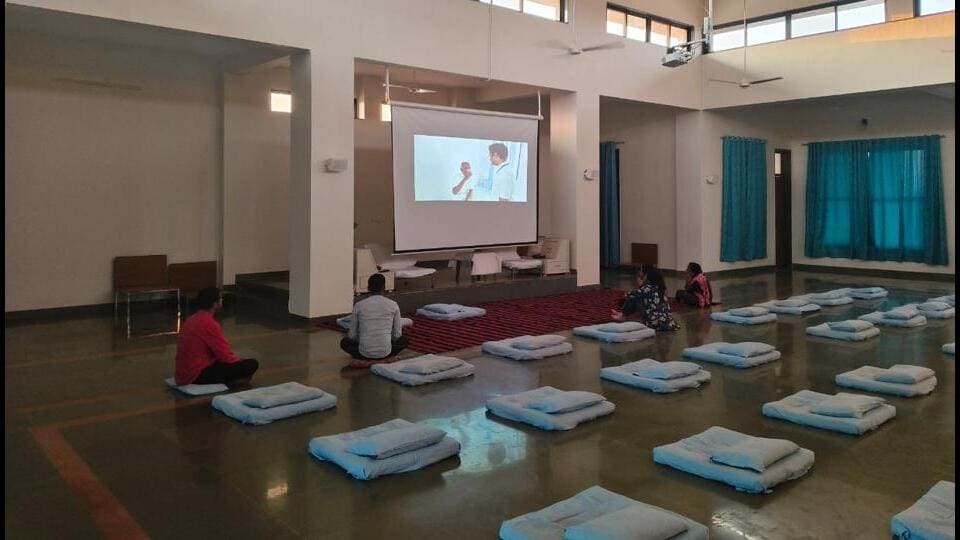
Employees must have an admission letter issued by the Vipassana centre to avail the special leave (Photo courtesy: Dhamma Kuti)

The order said employees attending a 10-day residential Vipassana meditation programme would be eligible for special casual leave up to a maximum of six times during their entire service period. The duration of the leave, including travel time, will be capped at 12 days.

This period will be treated “on duty”. Employees will not, however, to entitled to receive any additional allowance from the government.

Practitioners typically undergo a 10-day residential course at Vipassana meditation camps, where they follow a strict routine involving meditation for several hours a day, without external communication.

Employees must submit an admission letter issued by the Vipassana centre concerned to submit requests for leave. They will be required to furnish a completion certificate at the end of their course. If they don’t, the leave period would be adjusted against other admissible leave.

To be sure, several state governments already permit employees to request special casual leave to join the Vipassana course.

  • Ritesh Mishra
    ABOUT THE AUTHOR
    Ritesh Mishra

    Ritesh Mishra is the State Correspondent for Chhattisgarh with Hindustan Times. He reports on Maoism, internal security, politics, mining, governance, and major developments shaping the state. Based in Raipur, he has covered Chhattisgarh since 2016, reporting extensively from the Bastar region and other conflict-affected areas. With nearly two decades of experience in journalism, Ritesh has built a reputation for ground reporting from some of India's most challenging terrains. His coverage spans Left-Wing Extremism, counter-insurgency operations, elections, tribal affairs, environmental issues, infrastructure, mining, and socio-economic developments. He has reported on major security operations, policy initiatives, wildlife crime, and the changing dynamics of conflict and development in Central India. Before moving to Chhattisgarh, Ritesh spent eight years reporting from Madhya Pradesh, covering politics, administration, crime, development, and social issues. Throughout his career, he has reported on various forms of extremism in Central India, combining field reporting with in-depth analysis to produce accurate, balanced, and impactful journalism. Prior to joining Hindustan Times, Ritesh worked with The Pioneer and The Free Press Journal, where he covered a wide range of beats and honed his skills in political, investigative, and field reporting. His reporting is marked by exclusive stories, extensive fieldwork, and a commitment to factual, on-the-ground journalism that brings complex issues to a wider audience.Read More